

Tiny, soft, low-calorie treats perfect for rapid-fire training—keeps focus without adding extra weight and fits easily in a treat pouch.
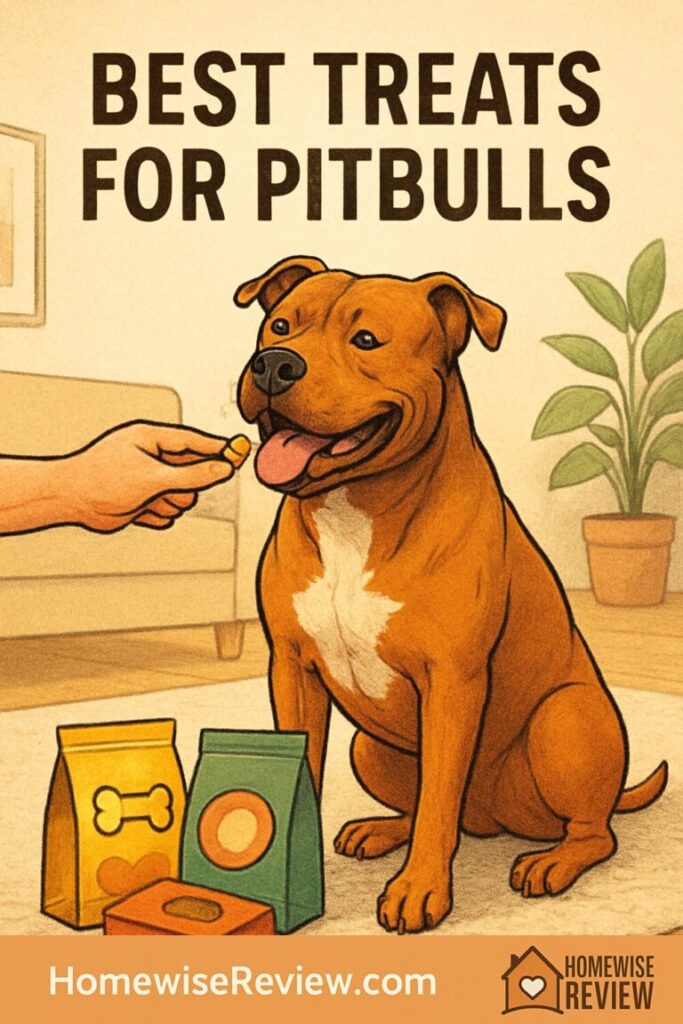
Finding treats that your Pitbull actually loves and that you feel good about feeding can be surprisingly hard, especially with powerful jaws and sometimes sensitive stomachs in the mix.
Pitbulls are enthusiastic, powerful dogs who love to eat, chew, and work for rewards. The challenge is finding treats that hold up to strong jaws, support good health, and still feel special enough to motivate them.
This guide compares some of the best treats for Pitbulls in real life situations like training sessions, crate time, and quiet evenings. You will find options for power chewers, sensitive stomachs, and everyday nibblers so you can reward your dog without worry.
✨ 2026 Spotlight
2026 Spotlight: Owners shopping for fresh options this year are paying closer attention to single-protein recipes, air-dried bites, and collagen-based chews that suit strong jaws without feeling overly heavy. Alongside staples like Zuke's Mini Naturals Chicken Recipe Training Treats and Natural Balance Limited Ingredient Grain Free Treats Sweet Potato & Fish, newer interest is centered on limited-ingredient rewards with shorter labels and more digestible formulas for dogs with touchy stomachs. If your Pitbull splits treats by use, it is worth keeping a soft, low-calorie training reward on hand and a separate longer-lasting chew for downtime.
Quick picks
- Zuke’s Mini Naturals Chicken Recipe Training Treats – Best overall treats for Pitbull training. Small, low calorie pieces that keep high energy dogs focused without overfeeding.
- Blue Buffalo Wilderness Trail Treats High-Protein Jerky – Best meaty, high value reward. Soft jerky strips that smell amazing and make a big impact for tough distractions.
- Nylabone Healthy Edibles Longer Lasting Bison Flavor Chew – Best long lasting edible chew. Firm enough to occupy power chewers while still being digestible.
- Natural Balance Limited Ingredient Grain Free Treats Sweet Potato & Fish – Best treats for sensitive Pitbull stomachs. Short ingredient list that suits many dogs with allergies or skin issues.
In-depth reviews
Zuke’s Mini Naturals Chicken Recipe Training Treats review
If you do a lot of training with your Pitbull, these are an excellent everyday reward. The pieces are tiny and soft, so you can give dozens during a walk or class without packing on extra pounds. Each treat is low calorie, which matters for muscular dogs who already get plenty of food.
The ingredient list focuses on chicken as the first ingredient, with added vitamins and minerals. They are moist but not greasy and do not crumble in a treat pouch, which makes them easy to carry. The smell is strong enough to hold a distracted Pitbull’s attention without being overwhelming for people.
Compared with the Blue Buffalo jerky, Zuke’s Mini Naturals are better for frequent, rapid fire rewards, especially for heelwork, recall practice, and tricks. If you mostly need a big, occasional payoff for tough situations, you might prefer the jerky, but for daily sessions these are usually the better choice.
Blue Buffalo Wilderness Trail Treats High-Protein Jerky review
Blue Buffalo’s Wilderness jerky treats shine when you need a high value reward that feels truly special. They are soft, meaty strips with real meat such as chicken or salmon near the top of the ingredient list and a higher protein content than many biscuits. Most Pitbulls find the smell and texture irresistible.
These treats are larger and more calorie dense than Zuke’s, so they work best when you cut them into smaller pieces or save them for harder challenges. Use them for recall work at the park, vet visits, or reintroducing tricky triggers such as other dogs at a distance. The jerky texture gives dogs more to chew than a quick training nibble, which adds to the sense of reward.
On the downside, they cost more per treat than basic training bites, and some sensitive dogs may not tolerate richer formulas as well. If your Pitbull tends to gain weight easily or has a delicate stomach, you may want to use the Natural Balance limited ingredient treats for everyday training and keep these jerky strips as special bonuses.
Nylabone Healthy Edibles Longer Lasting Bison Flavor Chew review
For Pitbulls who love to gnaw, Nylabone Healthy Edibles Longer Lasting chews offer an edible alternative to traditional bones. They are designed to be more digestible than rawhide while still giving a real chewing workout, which helps occupy busy minds and relieve boredom. The bison flavor is especially appealing for meat loving dogs.
These chews are firm and take time to work through, particularly for medium to large Pitbulls. They do not splinter like some natural bones, but you still need to supervise and size them correctly so your dog cannot swallow large chunks. Because they are richer than bite size treats, they are more like a snack, so count them toward your dog’s daily calories.
Compared with Blue Buffalo jerky, Nylabone Healthy Edibles last much longer and give more jaw exercise, but they are not suitable for rapid training rewards. If your main goal is behavior training, Zuke’s Mini Naturals remain the better fit, while Nylabone chews are perfect for crate time, post-walk wind downs, or days when you cannot offer as much active play.
Natural Balance Limited Ingredient Grain Free Treats Sweet Potato & Fish review
Many Pitbulls struggle with allergies or sensitive stomachs, and that is where these Natural Balance treats shine. They use a short ingredient list centered on sweet potato and fish, avoiding common proteins like beef or chicken and often skipping grains, dairy, and soy. That simplicity makes it easier to pinpoint what agrees with your dog.
The texture is crunchy but not rock hard, so most Pitbulls can bite them easily despite their strong jaws. You can break the bars into smaller pieces for training, or feed a whole biscuit as a bigger reward. They have a noticeable fish smell, which most dogs love, though people may want to store the bag in an airtight container.
Compared with Zuke’s and Blue Buffalo jerky, these treats are more about gentle nutrition than maximum excitement. If your Pitbull tolerates most foods, you might choose the other two for regular training and keep Natural Balance as a backup for upset stomach days. For dogs with itchy skin, chronic ear issues, or frequent digestive troubles, this limited ingredient option is often the safest starting point.
How to choose the best treats for Pitbulls
Pitbull type dogs tend to be muscular, food motivated, and strong chewers. That combination calls for treats that are both satisfying and safe. Before you grab a random bag from the shelf, it helps to think about your dog’s size, activity level, and what you will use the treats for.
For training, prioritize small, soft treats like Zuke’s Mini Naturals that your dog can swallow quickly without stopping to chew. You want many repetitions in a short time, so lower calorie options are ideal. For big rewards and confidence building, keep a higher value treat on hand such as Blue Buffalo jerky, cut into pea sized pieces.
For chewing and boredom relief, look at digestible chews specifically labeled as edible and safe to consume, such as Nylabone Healthy Edibles. Avoid very hard items that could crack teeth, including real bones that do not give under pressure. Pitbull jaws are powerful, and a broken tooth is painful and expensive.
If your dog has allergies or a history of digestive upset, scan ingredient lists with extra care. Look for limited ingredient treats like the Natural Balance formula that match the proteins and carbs your vet recommends. When in doubt, choose something with a short, simple list and introduce it slowly over a few days.
Healthy treat habits for powerful chewers
Even the best treats can cause problems if you overdo them. As a rough starting point, treats should make up no more than 10 percent of your Pitbull’s daily calories. That might be just a handful of jerky pieces or a couple of chews for an average adult dog, depending on their size and activity level.
Pay attention to your dog’s body condition. You should be able to feel ribs easily under a thin layer of muscle and fat and see a slight tuck at the waist from above. If treats are starting to blur that waistline, switch more of your training rewards to smaller bites or use part of their regular kibble for easy tasks.
For tough chewers, supervise any new chew the first few times. If your Pitbull tries to gulp big pieces or becomes frantic about finishing a chew, that product may not be a good fit. Look for options that encourage steady gnawing rather than snapping off chunks, and take chews away once they get small enough to swallow whole.
Rotate different types of treats to keep things interesting and to spread out any ingredients that might cause trouble in large amounts. You might use Zuke’s for most daily training, a Natural Balance biscuit after nail trims, and a Nylabone edible chew a few evenings per week. Variety keeps your dog curious and allows you to spot patterns if a certain ingredient consistently upsets their stomach.
Final thoughts
The best treats for your Pitbull depend on how you use them and what your particular dog can tolerate. For most owners, a combination of a tiny, low calorie training treat, a richer high value reward, and a safe edible chew covers almost every situation.
If you are unsure where to start, try Zuke’s Mini Naturals for daily training, Blue Buffalo Wilderness jerky for special challenges, and Nylabone Healthy Edibles chews to occupy strong jaws. If your dog has a history of allergies or tummy issues, reach first for Natural Balance Limited Ingredient treats and introduce anything new slowly with your vet in the loop.
See also
If you are not completely sure of your Pitbull’s exact breed mix or inherited risks, an Embark dog DNA test can give helpful context for choosing foods and treats that fit their unique health profile.
- For multi pet households with cats too, our detailed look at the Litter-Robot 4 self-cleaning litter box can help simplify litter box duty.
FAQ
How many treats can I give my Pitbull each day?
As a guideline, keep treats to about 10 percent or less of your Pitbull’s daily calories. For a healthy 60 pound adult dog, that often works out to roughly 60 to 100 calories in treats per day, depending on activity level. Use tiny training treats when you need lots of repetitions, and save higher calorie chews and jerky for occasional rewards.
What kinds of treats should Pitbulls avoid?
Pitbulls should avoid anything that is very hard or brittle, such as cooked bones that can splinter or extremely hard chews that could crack teeth. Be cautious with cheap rawhide, which some dogs do not digest well and which can pose a choking risk. Also watch for artificial sweeteners like xylitol, grapes or raisins in baked goods, and heavily seasoned human snacks, all of which can be unsafe for dogs.
Are rawhide treats safe for Pitbulls?
Traditional rawhide can be risky for strong chewers because they can soften and swallow large pieces, which may cause choking or intestinal blockages. Some dogs also get digestive upset from the processing chemicals used in certain rawhides. Many owners of Pitbulls prefer more digestible alternatives such as Nylabone Healthy Edibles, natural chews designed to break down, or firm rubber toys that are not meant to be eaten at all.
Can I use my Pitbull’s regular kibble as training treats?
Yes, regular kibble can work well for easy training tasks, especially indoors where distractions are low. Measure out a portion of your dog’s daily food and use that during training so you do not accidentally overfeed. For more challenging situations, like practicing recall in a busy park, you will still want something higher value such as jerky or soft training treats.
How should I introduce a new treat to a Pitbull with a sensitive stomach?
Start with a limited ingredient treat such as a sweet potato or fish based biscuit, and offer just one or two pieces on the first day. Watch for any signs of gas, loose stool, or itching over the next 24 to 48 hours before increasing the amount. If your dog stays comfortable, you can slowly work that treat into your routine, and if you see problems, stop and discuss alternatives with your veterinarian.
As an Amazon Associate, we earn from qualifying purchases made through links on our site.