

Steady low heat and a stove-safe All‑Clad insert let you brown, slow-cook, and skip extra pans for easy weeknight meals.
We may earn a small referral fee
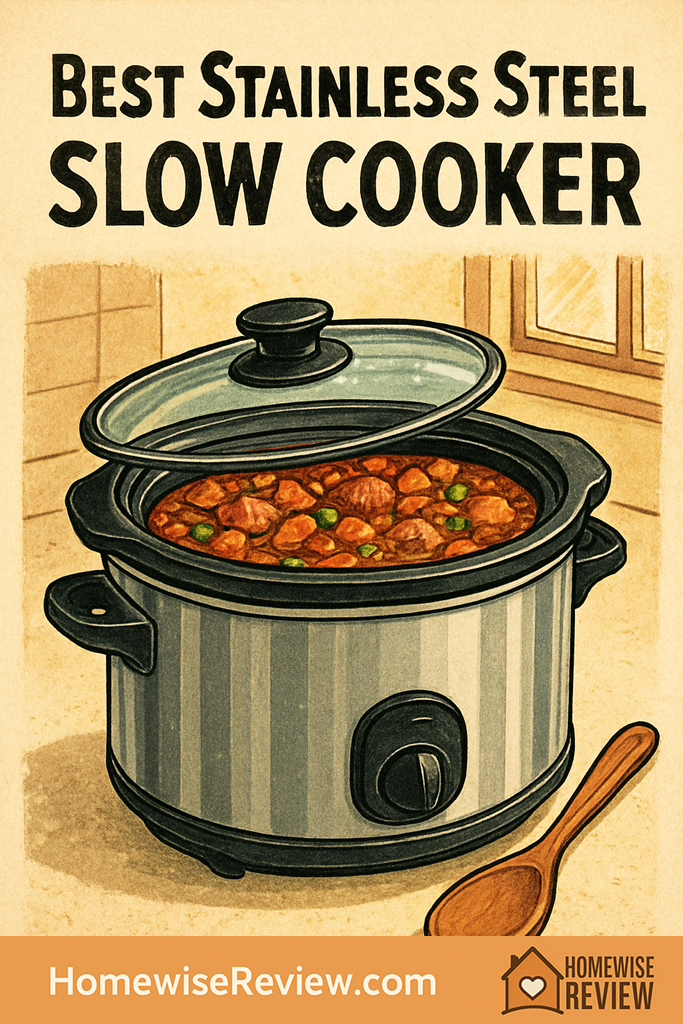
You want a slow cooker that stays steady for hours, cleans up without drama, and still looks good living on your counter. These stainless steel models are the dependable choices worth comparing.
In-depth Reviews
All-Clad Gourmet Plus Slow Cooker with All-Clad Insert
- Very consistent low-and-slow results with less edge scorching
- Insert supports browning, so you can build flavor without extra dishes
- Controls feel predictable and easy to live with
- Premium pricing compared with most slow cookers
- Heavier setup takes more storage space
Cuisinart Cook Central 3-in-1 Multi-Cooker (MSC-600)
- Browning and slow cooking in one pot reduces mess
- Insert is easier to lift and wash than heavy stoneware
- Good all-around option for soups, braises, and batch cooking
- Nonstick insert needs careful utensil choice
- Not the same as a dedicated skillet sear
Hamilton Beach Set & Forget Programmable Slow Cooker with Temperature Probe
- Probe-driven cooking helps prevent overcooking
- Hands-off timing is easier when dinner plans shift
- Straightforward everyday slow-cooker performance
- Probe adds a little setup and cleanup
- Stoneware is bulky to wash and store
Crock-Pot Cook & Carry Programmable Slow Cooker with Locking Lid
- Locking lid makes transport much easier
- Reliable for big-batch party food
- Programmable cooking with a practical warm mode
- Condensation can water down food slightly during long holds
- Stoneware insert is heavy when full
KitchenAid 6-Quart Slow Cooker (Stainless Steel Finish)
- Easy controls with steady everyday cooking
- Good lid fit for moist, tender results
- Stainless exterior holds up well to regular wiping and handling
- No built-in browning or sauté function
- Stoneware-only approach means more steps for deep flavor
Buying Guide
What We Wish We Knew Before Buying a Stainless Steel Slow Cooker
Stainless outside does not guarantee easier cleanup inside. The exterior wipes down nicely, but your day-to-day cleanup is determined by the insert. If you want the fastest wash-up, nonstick metal inserts usually win, but they require softer tools and a little more care. If you want maximum durability and don’t mind the weight, stoneware is forgiving and holds heat well.
Flavor usually comes from one extra step. Slow cookers are amazing at tenderizing, but they are not great at developing browning on their own. If you care about deeper flavor, pick a model that can brown or let yourself do a quick sear first. That single step often turns “fine” into “make it again.”
Small habits prevent big disappointments. Do not cook from frozen unless your manual explicitly says you can. Avoid lifting the lid repeatedly. And if you know dinner will sit on warm, build in a finishing step like adding fresh herbs, a squeeze of citrus, or a quick thickener right before serving to bring the dish back to life.
💡 Editor’s Final Thoughts
Final Verdict: The All-Clad Gourmet Plus Slow Cooker is our top pick because it cooks steadily and feels the most versatile in day-to-day use, especially if you like to brown first and slow cook after. If you want the easiest “set it and walk away” results on roasts, the Hamilton Beach Set & Forget is the smartest choice thanks to its probe-driven cooking.
What “stainless steel slow cooker” actually means
Most “stainless steel slow cookers” are stainless on the outside, with a removable cooking insert on the inside. That insert is usually stoneware (classic slow cooker style) or nonstick-coated metal (often found in multi-cookers that can also brown or steam). A few premium models offer a stainless insert you can use to brown on the stovetop, which can be a big deal for flavor and cleanup.
So when you compare options, decide what you actually want to be stainless: the exterior (for durability and looks) or the insert (for stovetop-to-slow-cooker convenience). Either can be the right choice, but they solve different problems.
Key features that matter more than the finish
- Temperature stability: A great slow cooker holds a true low simmer without scorching edges or drying out the top. This matters more than how many buttons it has.
- Keep-warm behavior: Some “warm” settings are gentle; others keep cooking. If dinner timing is unpredictable, this is a make-or-break detail.
- Lid fit and condensation control: A well-fitting lid reduces evaporation and helps prevent tough meat. Locking lids are great for transport but can trap condensation, so plan for a quick stir before serving.
- Insert practicality: Stoneware is forgiving and dishwasher-friendly, but it is heavy and cannot brown. Nonstick metal inserts are easier to lift and faster to clean, but you need to use soft utensils.
- Controls you will actually use: A simple dial can be perfect if you cook the same few recipes. Programmable timers and probes help when you are juggling work, kids, or errands.
Cleaning and care tips (so the “stainless” stays stainless)
For the exterior, a damp microfiber cloth right after cooking prevents that cooked-on haze that builds near vents and handles. If fingerprints drive you nuts, a tiny drop of dish soap in warm water usually beats specialty sprays, then buff dry to avoid water spots.
For inserts, match the tool to the surface. Stoneware can handle more scrubbing, but avoid thermal shock: let it cool before soaking. Nonstick metal inserts should be cleaned with a non-abrasive sponge and silicone tools only. If you have a stainless insert, treat it like cookware: soak if needed and use a paste of baking soda and water for stubborn spots.
See also
If you are deciding between a dedicated slow cooker and a multi-cooker, start with our Instant Pot Duo Plus review, then compare it with our guide to kitchen gadgets that truly earn their counter space.
- Best pots and pans for everyday, real-world cooking
- Kitchen tools home cooks actually reach for
- Kitchen accessories that upgrade daily cooking
Frequently Asked Questions ▾
Are stainless steel slow cookers stainless on the inside, too?
Usually, no. Most models have a stainless exterior and a removable stoneware insert (classic) or a removable nonstick metal insert (common in multi-cookers). If you want the inside to be stainless for stovetop browning or a cookware-like feel, look specifically for a stainless insert or a model designed for stovetop-to-slow-cooker use.
Can you brown meat in a slow cooker?
Most traditional slow cookers cannot brown well because they do not get hot enough on the surface. If browning matters to you, choose a model with a dedicated brown or sauté function, or one with an insert you can use on the stovetop. If you have a stoneware-only model, browning in a separate skillet first is still the most reliable way to build flavor.
What size slow cooker is best for most households?
For many homes, a mid-size cooker is the sweet spot: big enough for a batch of chili or shredded chicken, but not so huge that smaller recipes dry out. As a rule of thumb, you want to cook with the insert at least half full and not filled to the brim, so choose a size that matches how you actually cook and how often you want leftovers.
Is it safe to leave a slow cooker on while you are away?
Slow cookers are designed for long, unattended cooking, but you should still follow the basics: place it on a heat-safe, uncluttered surface with airflow around it, keep cords away from hot sides, and use the settings recommended in your manual. For food safety and better results, start with fully thawed ingredients and use the keep-warm setting only as intended, not as a long holding stage.
How do you keep slow cooker food from drying out?
First, stop lifting the lid to “check” on it since each peek releases heat and moisture. Use enough liquid for the recipe style, choose tougher cuts that benefit from long cooking, and cut ingredients into consistent sizes so they finish together. If a dish still looks thin at the end, thicken it after cooking (for example, with a slurry or a brief uncovered simmer if your insert allows it) rather than overcooking from the start.
As an Amazon Associate, we earn from qualifying purchases made through links on our site.