

Produces programmed, uniform batches so teams can serve café-quality coffee reliably during busy shifts.
We may earn a small referral fee
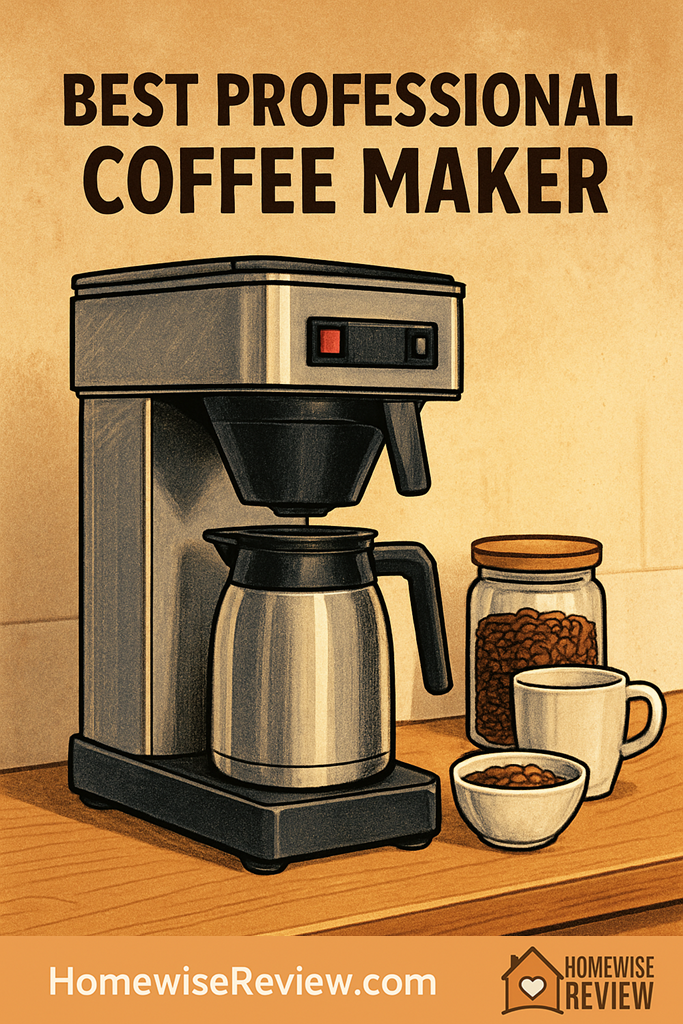
You need café-level coffee that stays consistent, even when multiple people are brewing back-to-back. These professional-grade machines prioritize repeatable results, reliable workflows, and maintenance you can actually keep up with.
✨ 2026 Spotlight
2026 Spotlight: This year’s standout additions in professional brewing lean toward app-based recipe storage, clearer maintenance alerts, and stronger water-management integration so quality stays steady across busy service windows. If you want a newer option to watch, the xBloom Studio has drawn attention for precision-focused pour-over automation in offices and premium home setups, while the Aiden Precision Coffee Maker stands out for guided brewing profiles and flexible batch control. These newer arrivals broaden the field for buyers who want polished workflow features alongside the dependable machines already featured here.
In-depth Reviews
FETCO Extractor V+ (CBS-2131XTS) Commercial Batch Brewer
- Highly repeatable results once recipes are set
- Designed for steady pace and continuous use
- Makes it easier to standardize coffee across staff
- Requires planning for installation, space, and workflow
- Overkill if you only brew occasionally
BUNN VP17-1SS Pourover Commercial Coffee Brewer
- Very simple workflow for shared spaces
- Reliable performance with minimal fuss
- Easy to keep running with basic routines
- Quality depends more on user habits and freshness
- Warmers can degrade flavor if coffee sits too long
Technivorm Moccamaster KBT Thermal Coffee Brewer
- Consistent, clean-tasting drip coffee with low effort
- Thermal holding preserves flavor better than warmers
- Great for shared use because it is straightforward
- Limited built-in programmability compared with commercial systems
- Not ideal for high-volume service
Breville Oracle Touch Espresso Machine
- Makes espresso workflow easier and more consistent for multiple users
- Strong milk-drink performance with less technique required
- Still allows tuning once you want to go deeper
- Requires regular cleaning to stay reliable and tasting right
- Not designed for true commercial-volume espresso service
Jura GIGA 10 Automatic Coffee Machine
- Fast, consistent drinks for many users with minimal training
- Supports variety without constant reconfiguration
- Strong fit for offices that want espresso-based drinks on demand
- Milk system upkeep is non-negotiable for taste and hygiene
- Less nuance than a dialed-in semi-automatic espresso setup
Buying Guide
Pro Setup Checklist: Water, Grind, Workflow
Start with water, not the machine. Professional brewers are less forgiving about bad water because they are built to run hot and consistently, which can also accelerate scale buildup. If your water tastes off, your coffee will taste off, no matter how good the brewer is. Before install day, decide whether you need simple taste filtration or scale reduction too, and put cartridge changes on a calendar so it actually happens.
Lock in dosing so the coffee is predictable for everyone. In shared spaces, consistency comes from repeatable inputs: a stable grinder setting, a measured dose, and a batch size you can finish while it still tastes good. Create a one-page brew card that lists the dose, the grind setting reference, and the target yield for your most common batch. When coffee tastes “weird,” you want a simple way to check what changed instead of guessing.
Design the counter like a mini production line. Place the grinder, brewer, filters, and trash so someone can brew without walking around the room with hot coffee. Keep cleaning tools within reach, especially if you have espresso milk drinks. Finally, decide on a freshness rule that fits your pace, then enforce it. Great equipment cannot save coffee that has been held too long or milk systems that are not cleaned on schedule.
💡 Editor’s Final Thoughts
Final Verdict: The FETCO Extractor V+ (CBS-2131XTS) is the top pick if you want true professional batch coffee with repeatable recipes and a workflow that stands up to real volume. For smaller teams, the Technivorm Moccamaster KBT is the easiest way to get consistently great drip coffee without turning your counter into a café back bar.
See also
For better flavor and fewer scale issues, start with the best kitchen water filters for taps, pitchers, and fridges, then tighten consistency with a kitchen scale that makes coffee dosing repeatable.
- Electric kettles that make brew-room and pour-over service easier
- Counter-space kitchen gadgets that are actually worth it
- Coffee-friendly kitchen accessories to upgrade your setup
Frequently Asked Questions ▾
What makes a coffee maker “professional,” not just expensive?
A professional coffee maker is built to deliver the same result repeatedly under stress: back-to-back brews, different users, and long operating hours. Look for stable brew temperatures, consistent water delivery, and a workflow that does not depend on perfect technique every time. The other “professional” tell is serviceability: parts access, clear cleaning routines, and a design that holds up when it is used all day instead of once or twice.
Should I choose a plumbed-in batch brewer or a manual-fill commercial brewer?
Plumbed-in batch brewers are the choice when volume and consistency matter most. Once installed correctly, they reduce user error and keep the pace moving because the machine manages water delivery, temperature, and repeatable recipes. Manual-fill commercial brewers are a smart fit when you cannot run a water line, need portability, or brew only in bursts. The trade-off is that the person brewing becomes part of the system, so training and simple checklists matter more.
Is a thermal carafe better than a glass decanter on a warmer?
For flavor, thermal is usually the win because it keeps coffee hot without cooking it on a hot plate. That matters in offices where a pot might sit while people grab cups over time. Glass decanters on warmers can still work well when coffee turns over quickly and someone is actively managing freshness. If you go the warmer route, aim for smaller, more frequent brews and a clear rule for dumping old coffee so the last cup tastes as good as the first.
How important is water filtration for a professional coffee maker?
It is one of the highest-impact upgrades you can make for both taste and machine longevity. Chlorine and off-flavors show up clearly in batch coffee, and mineral-heavy water can scale heating components and sensors, leading to temperature drift and downtime. If your local water is hard or inconsistent, a filter that addresses both taste and scale is worth prioritizing. Whatever system you choose, commit to changing cartridges on schedule because an overdue filter can become its own problem.
Do I need a better grinder to get “professional” results?
Almost always, yes. A strong brewer cannot fix uneven particle sizes or stale coffee. If you are serving a team, a burr grinder with stable settings and a simple way to dose consistently will do more for quality than most brewer upgrades. For drip, a consistent medium grind and accurate dosing will reduce bitterness and sourness swings. For espresso, grind consistency is even more critical because small changes quickly show up in flavor and shot timing.
As an Amazon Associate, we earn from qualifying purchases made through links on our site.