

Comfortable, durable harness that fits broad Lab chests, resists shifting, and offers front and back clips for easier control and training.
We may earn a small referral fee
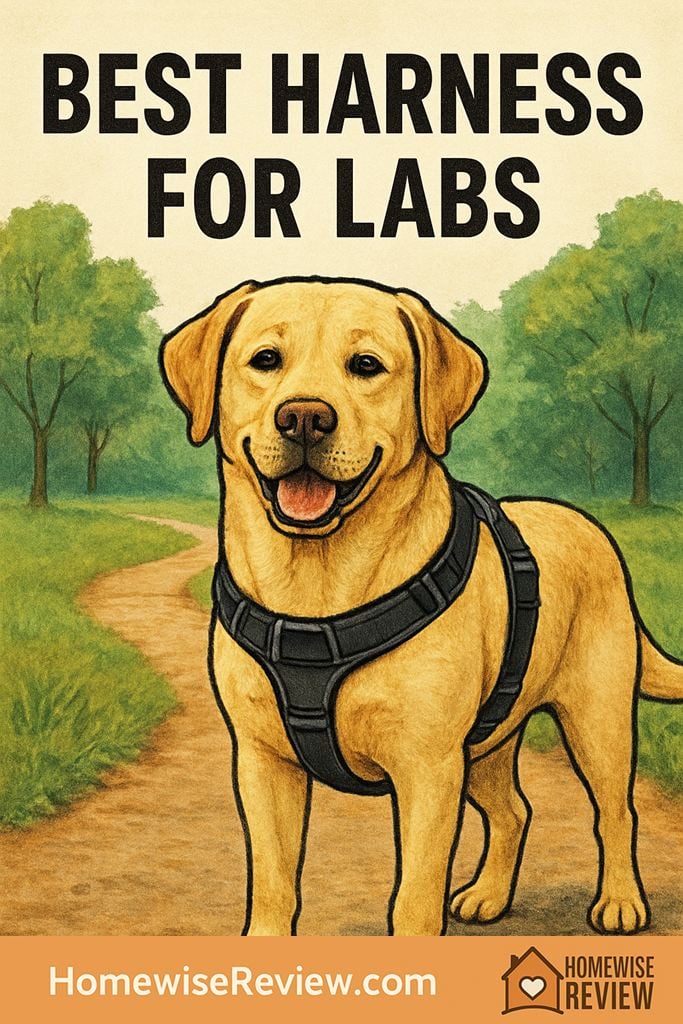
Labs are strong, enthusiastic walkers, and the wrong harness can rub, twist, or turn every outing into a tug-of-war. These harness picks balance comfort, control, and durability for real-life Lab routines.
In-depth Reviews
Ruffwear Front Range Dog Harness
- Stable on deep, broad Lab chests without constant readjustment
- Comfortable for longer walks and everyday use
- Front and back clipping makes training and casual walks simple
- Not the most “anti-pull” option for determined pullers
- Can hold water longer than minimalist strap-only harnesses
2 Hounds Design Freedom No Pull Harness
- Noticeably reduces pulling for many strong, enthusiastic Labs
- Dual-connection setup adds steering without harsh corrections
- Stays more centered than many front-clip harnesses
- Takes a couple walks to dial in the fit and leash setup
- Less “gear-like” padding than some hiking-focused options
Blue-9 Balance Harness
- Highly adjustable for Labs with tricky proportions
- Lightweight feel that works well for training and daily walks
- Good range of motion when fitted correctly
- Thinner straps can rub if left loose or placed too close to the armpit
- Initial setup takes more time than simpler harnesses
Kurgo Tru-Fit Smart Harness
- Supportive, secure feel for active Labs
- Stable fit that works well for hikes and busy outings
- Convenient for owners who want one harness for multiple routines
- Bulkier than minimalist harnesses for hot weather
- Less ideal for dogs that hate “over-the-head” gear (depending on version)
PetSafe Easy Walk Harness
- Affordable way to get front-clip control quickly
- Lightweight and simple to put on once adjusted
- Helpful training tool for reducing lunging and forging
- Can rub behind the front legs if fitted too loosely or too far back
- Not as stable for running, hiking, or high-motion play
Buying Guide
Lab-Proof Harness Setup: A 5-Minute Fit Check That Prevents Rubbing
Start with strap placement, not tightness. On a Lab, the most common mistake is letting the belly strap drift forward into the armpits. Before you tighten anything, slide the harness back so the belly strap sits behind the front legs, then center the chest piece on the breastbone. When it is in the right “zone,” you can snug it up without creating that pinchy, rub-prone angle that shows up after a longer walk.
Do a quick movement test before you leave the driveway. Ask for a sit, then a down, then a few steps of “touch” or an easy turn in place. Watch the shoulder area: if straps ride into the shoulder crease, your Lab is likely to chafe when they trot. If the harness rotates when your dog turns their head to sniff, it is too loose or the chest geometry is not matching your dog’s build. Fixing that now saves you from a mid-walk harness wrestle.
Use the leash clip strategically. For calm neighborhood loops, back-clip is usually smoother and more comfortable. For training and distractions, front-clip helps you redirect without escalating. If your Lab is strong and easily overstimulated, a dual-connection setup (front plus back) often feels like “power steering”: you still need training, but you get calmer, more controlled repetitions. Whatever you choose, rinse sand and grit after wet days and let the harness dry fully to prevent hidden friction on the next outing.
💡 Editor’s Final Thoughts
Final Verdict: For most Labrador Retrievers, the Ruffwear Front Range Dog Harness is the best mix of comfort, stability, and everyday durability, with both front and back leash options that make training and real life easier. If pulling is your biggest headache, step up to the 2 Hounds Design Freedom No Pull Harness for more noticeable steering and control.
See also
If you want to compare these Lab picks against other top performers, start with our best harnesses for dogs and cats guide, and you may also like our best harness for golden retrievers roundup for another athletic, deep-chested breed.
- Harness recommendations for German Shepherds
- Harness picks for other strong, muscular breeds
- Small-dog harness options for Chihuahuas
Frequently Asked Questions ▾
Should I use a front-clip or back-clip harness for a Lab?
If your Lab walks politely, a back-clip is usually the most comfortable and least “busy” setup. It keeps the leash line clean, avoids tangles, and feels great for long sniffy walks, hikes, and casual jogs. If your Lab forges ahead, a front-clip can be a game changer because it redirects the chest and makes pulling less rewarding without cranking on the neck.
Many Labs do best with a harness that offers both options. Use the back clip for decompression walks and trail time, and switch to the front clip for busy sidewalks, training sessions, and the phase where your Lab remembers squirrels exist.
How do I know the harness fits my Lab correctly?
A good Lab fit is snug, stable, and non-restrictive. You should be able to slide two fingers under each strap, but you should not be able to rotate the harness easily around the body. The chest piece should sit on the breastbone, not high on the throat, and the belly strap should sit behind the front legs where it will not pinch the armpit area.
After a short walk, do a quick “fur check.” If you see rubbed hair, red skin, or damp hot spots in the armpits or across the shoulders, the harness is either too loose and shifting, too tight, or the strap geometry is a poor match for your Lab’s build.
Do Labs need a padded harness?
Not always. Padding can help if your Lab has a broad chest, sensitive skin, or tends to pull, because it spreads pressure and reduces friction when the harness tightens under load. Padding also helps if you clip to the front ring frequently, since a front-clip setup can create more side-to-side movement.
On the flip side, heavily padded harnesses can stay wet longer after swimming, trap heat in warm weather, and collect grit if you hike dusty trails. If you’re regularly dealing with mud, sand, or lake days, a simpler harness that rinses clean and dries fast may be the more comfortable choice long term.
Can my Lab wear a harness all day?
For short stints around the house, many Labs are fine in a properly fitted harness. For all-day wear, it is better to remove it when you are not actively walking, training, traveling, or supervising. Even a good harness can create friction points if your dog sleeps in it, rolls around, or stays damp after water play.
If you need extended wear for outings or travel days, prioritize a harness that stays stable and does not sit in the armpits. Plan quick breaks: remove it during meals, towel-dry after swimming, and check skin under the straps at the end of the day.
What is the fastest, safest way to reduce pulling with a Lab?
Start with management and consistency. Use a front-clip or a dual-connection setup (front plus back) so you are not relying on pure arm strength when your Lab surges. Keep your leash short enough to prevent momentum, but not so tight that your dog hits constant pressure. Reward the exact moment the leash goes slack, and change direction before your Lab is fully braced and pulling.
Also look at the big picture: many Labs pull because they are under-exercised or overstimulated. A quick fetch session before a neighborhood walk, plus a few minutes of “find it” scent games, often improves leash manners faster than hardware alone.
As an Amazon Associate, we earn from qualifying purchases made through links on our site.