

Adjustable strap design prevents throat ride, fits wide chests, and stays stable through short, powerful pulls.
We may earn a small referral fee
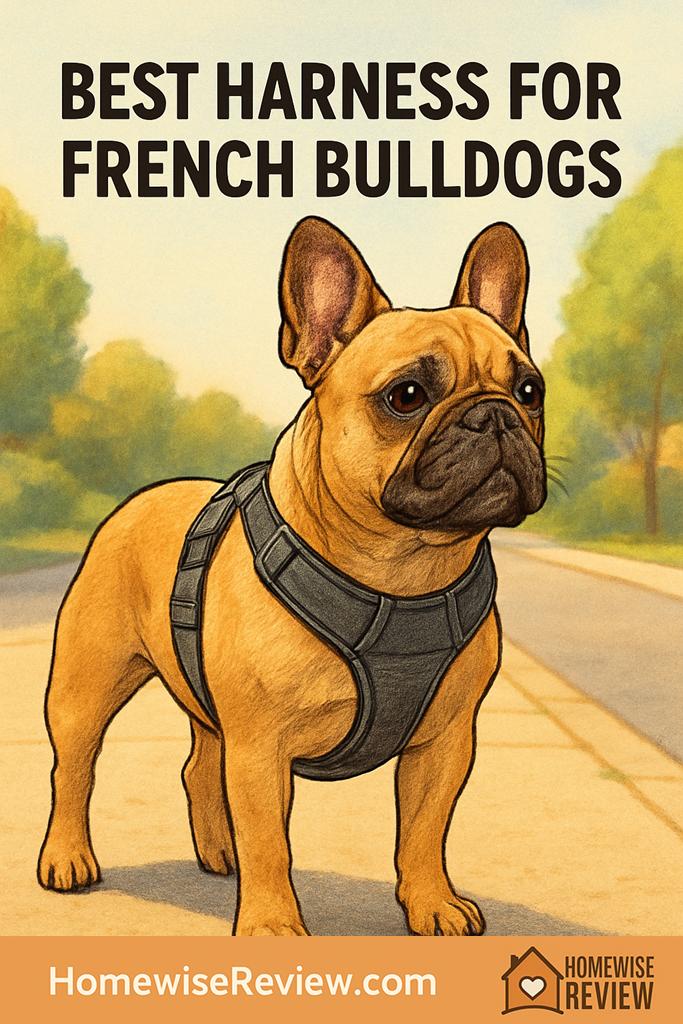
Frenchies are built like little tanks, which means a lot of harnesses slip, rub, or twist the moment they lean into the leash. These are the best harnesses that keep pressure off the neck, stay put on a broad chest, and make daily walks calmer.
In-depth Reviews
Blue-9 Balance Harness
- Highly adjustable for broad-chested, narrow-waisted builds
- Front clip helps reduce pulling without choking pressure
- Stays relatively stable instead of twisting to one side
- Less padding than vest-style harnesses for dogs who prefer plush coverage
- Fit takes a few minutes to fine-tune the first time
Ruffwear Front Range Harness
- Comfortable padding for regular neighborhood walks
- Durable build that holds up to daily use
- Front and back attachment options for flexibility
- Can rub some dogs behind the front legs if sizing is off
- Bulkier than minimalist strap harnesses
EzyDog Chest Plate Harness
- Supportive chest plate suits stocky builds
- Stays stable during quick direction changes
- Comfortable feel for dogs who dislike thin straps
- Bulk can feel warm on hot days
- Less micro-adjustable than some training-focused harnesses
PetSafe Easy Walk Harness
- Front-steering effect reduces pulling quickly for many dogs
- Lightweight and not bulky on compact bodies
- Good tool for retraining leash habits
- More likely to cause armpit rub if fitted poorly
- Some dogs need a short adjustment period to accept the feel
Puppia Soft Dog Harness (Air-Mesh)
- Soft, breathable feel for sensitive dogs
- Easy on and off for quick walks
- Comfortable for relaxed leash manners
- Not ideal for heavy pullers
- Less adjustable than multi-strap harnesses
Buying Guide
Frenchie Harness Fit Checklist (So It Doesn’t Rub, Twist, or Ride Up)
Start with strap placement, not tightness. On many French Bulldogs, rubbing happens because the chest strap sits too far back and lands right in the armpit crease. Adjust so the front section sits across the breastbone, and the side straps run behind the leg without cutting into that moving “hinge” area. If the harness style simply puts straps in the armpits no matter what, it is the wrong shape for your dog.
Do a “shake and sniff” test indoors. Clip the harness on, then let your Frenchie walk around the house and sniff for a few minutes. Watch what happens when they turn quickly, sit, and stand. A good harness stays centered on the chest and does not roll to one side when they pivot. If it rotates easily, you will fight it on every walk.
Check the neck opening every time you clip the leash. Frenchies have short necks, so a harness that creeps upward can start pressing on the lower throat even if it looked fine at first. Before heading out, make sure the front sits low on the chest and the neck opening is resting at the shoulders, not sliding forward. If it keeps migrating upward, try a more adjustable model or size down and re-check fit.
Use a short break-in period to prevent hotspots. Even a great harness can create irritation if you go from zero to a long walk on day one. For the first week, do a few shorter walks and inspect the coat and skin afterward, especially behind the front legs and along the breastbone. If you see consistent redness in the same spot, stop and adjust or switch styles before it becomes a sore.
Keep it clean, because grit turns into sandpaper. Frenchies are low to the ground, so chest panels pick up dust, pollen, and gritty sidewalk debris. A quick rinse and air-dry routine can make a big difference in comfort, especially with padded harnesses. If your dog has seasonal allergies, keeping the harness clean also helps reduce what gets rubbed into the coat during a walk.
💡 Editor’s Final Thoughts
Final Verdict: The Blue-9 Balance Harness is our top pick for most French Bulldogs because it offers excellent adjustment for broad chests, gives you both front and back leash control, and stays stable without adding bulky padding in the wrong spots. If your main issue is pulling, the PetSafe Easy Walk is the fastest behavior-shifting option, as long as you dial in the fit to avoid armpit rub.
See also
If you want to compare these picks against other top-rated options, start with our roundup of best harnesses for safe, comfortable walks.
- The best brush for French Bulldogs for quick shed control between baths
- French Bulldog toy guide for safer chewing and boredom busting
- Top treats for French Bulldogs that work well for training on walks
- Best harness for Chihuahuas if you’re shopping for a second, smaller dog
Frequently Asked Questions ▾
Is a harness better than a collar for a French Bulldog?
For most French Bulldogs, yes. Frenchies are brachycephalic, meaning anything that adds pressure to the neck can make breathing and airway comfort worse, especially when they get excited and pull. A well-fitted harness shifts force to the chest and body instead of the throat, which is usually safer and more comfortable.
If your dog wears a collar, treat it mainly as an ID holder. Use the harness for leash walks, and consider a short “safety” connector between collar and harness only if your dog is a known escape artist (and the harness already fits correctly).
How do I measure my Frenchie for a harness?
Use a soft tape and measure the girth, which is the widest part of the ribcage, usually just behind the front legs. Then measure the lower neck, which sits above the shoulders (not high on the throat like a collar). Compare those numbers to the brand’s size chart, because Frenchies often land between sizes due to a wide chest and shorter back.
When you try it on, do the two-finger check everywhere a strap touches: you should fit two fingers under the strap, but it should not sag or rotate easily. If you can slide the harness around your dog’s body with light pressure, it is too loose.
Front-clip or back-clip: which works best for French Bulldogs?
For calm walkers, a back-clip is often the simplest and most comfortable. For Frenchies who hit the end of the leash like a linebacker, a front-clip usually helps more because it redirects the chest and makes pulling less efficient. Many owners end up using both, depending on the walk.
A practical approach is to buy a harness with both attachment points. Use the front ring for training or busy sidewalks, then switch to the back ring for sniffy decompression walks when your dog is relaxed.
How tight should a French Bulldog harness be to prevent slipping out?
Snug, but not restrictive. The harness should not slide into the armpits, ride up into the throat, or rotate to one side when your dog turns. If your Frenchie can back up and the neck opening rolls over the shoulders, it is too big or adjusted too loose.
After a short walk, check the coat and skin under the straps. Redness in the armpits is a common sign the chest strap is too far back or the harness shape does not match your dog’s build.
Can my French Bulldog wear a harness all day?
It is better to treat a harness like outdoor gear, not all-day clothing. Leaving it on for hours can create pressure points, mat short hair, and hide rubbing until it becomes a sore spot. It can also snag during play, especially with other dogs.
If you need something on indoors for quick potty breaks, look for a soft, low-profile style and still remove it when your dog is resting for long stretches.
As an Amazon Associate, we earn from qualifying purchases made through links on our site.