

Tingly rosemary‑peppermint formula that soothes the scalp, fights dryness around follicles, and supports healthier regrowth with regular use.
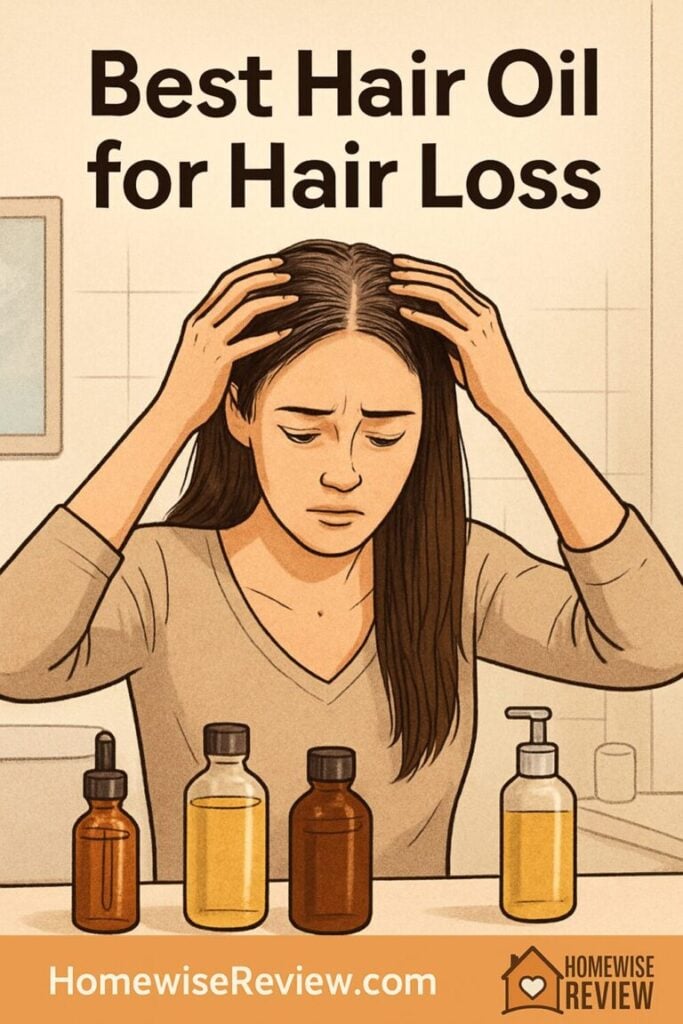
If hair is thinning, shedding in the shower, or looking sparse at the part, the right hair oil can calm your scalp and protect every strand you still have. Here are the few formulas that are actually worth your time and money.
When hair starts to thin or shed, it is easy to panic and grab whatever “growth oil” pops up online. In reality, a good hair oil will not magically regrow hair on a bald spot, but it can calm irritation, reduce breakage, and create a healthier environment for regrowth treatments to work.
This guide focuses on practical, realistic options. You will see which oils suit your type of hair loss, how they feel, and what tradeoffs to expect so you can pick one or two formulas and put them to work.
Quick picks
- Mielle Rosemary Mint Scalp & Hair Strengthening Oil – Best budget-friendly scalp stimulator. A popular, tingly oil blend with rosemary, peppermint, and biotin that feels energizing on the scalp and works well for early thinning or postpartum shedding.
- Pura D’or Organic Castor Oil for Hair, Lash & Brow – Best simple thickening oil for edges and sparse spots. Ultra-thick castor oil to coat fragile hair at the hairline, crown, or part and help reduce breakage.
- Briogeo Scalp Revival Charcoal + Tea Tree Scalp Treatment – Best for itchy, flaky scalps with shedding. A lightweight, scalp-focused treatment that helps remove buildup and soothe irritation that can worsen fall-out.
- Moroccanoil Treatment Original – Best for breakage-prone mid-lengths and ends. A smoothing argan oil blend that cuts down on snapping and frizz so your hair looks fuller while you tackle the root cause of loss.
In-depth reviews
Mielle Rosemary Mint Scalp & Hair Strengthening Oil review
This is a good fit if you want a stimulating, “active” feeling oil for early thinning, postpartum shedding, or protective styles. The formula combines rosemary and peppermint essential oils with biotin and a base of carrier oils like soybean and castor oil. It has a strong herbal-mint scent and a noticeable tingle that many people find satisfying.
Used correctly, it can help increase scalp microcirculation, reduce dryness around follicles, and support healthier new growth. Focus it on the scalp with the dropper, then massage gently for a couple of minutes. On fine or straight hair, it is safer as a pre-shampoo treatment once or twice a week so it does not weigh hair down or leave a greasy look.
The main drawbacks are the intensity of the essential oils and fragrance. If your scalp is very sensitive or you have eczema or psoriasis, this formula can be too strong. In that case, Briogeo Scalp Revival is usually kinder to the skin and a better choice, while Mielle suits people who like a strong tingle and a richer oil blend.
Mielle Rosemary Mint Scalp & Hair Strengthening OilPura D’or Organic Castor Oil for Hair, Lash & Brow review
Choose this if you want a straightforward, budget-friendly thick oil to protect fragile spots such as edges, temples, or the part line. It is simply cold-pressed, hexane-free castor oil, which is rich in ricinoleic acid and naturally very viscous. That thickness helps coat individual hairs and gives them a more substantial, fuller look while also reducing friction and breakage.
It works best as a targeted treatment instead of something you spread through your whole head. Use a cotton swab or the included applicators to dab a tiny amount on sparse areas before bed or as a pre-shampoo mask. Because it is extremely thick, you will usually need a double cleanse with shampoo to remove it from the scalp and roots.
The downside is how heavy and sticky it feels. On fine or oily hair, it can easily make roots look greasy if you are not careful. If you mainly want a daily, lightweight styling oil for your lengths, Moroccanoil Treatment Original is easier to wear during the day, while Pura D’or Castor Oil shines as a focused repair and thickening step for problem zones.
Pura D’or Organic Castor Oil for Hair, Lash & BrowBriogeo Scalp Revival Charcoal + Tea Tree Scalp Treatment review
If your main complaint is an itchy, flaky, or product-clogged scalp that seems to shed excessively, this treatment is worth a look. It has a fluid, serum-like texture with ingredients such as binchotan charcoal to draw out impurities, tea tree and peppermint oils to refresh, and soothing botanicals to calm redness. The dropper bottle makes it easy to place the treatment precisely along your part and trouble spots.
Unlike heavy oils, this sinks in quickly and dries down without a greasy film, which makes it friendlier for fine or oil-prone hair. Used a few times per week, it can cut down on inflammation and buildup around follicles, issues that often exaggerate shedding and make hair look thinner than it is. Many people find their scalp feels cleaner for longer and styling products work better afterward.
The drawbacks are price and the minty scent, which some find intense. It is also not the most moisturizing pick for dry mid-lengths and ends. If your scalp is sensitive and you want a treatment that feels more like skin care than a traditional oil, this is a better bet than Mielle Rosemary Mint; if you want a richer, oilier feel that coats the hair itself, Mielle or Moroccanoil will feel more satisfying.
Briogeo Scalp Revival Charcoal + Tea Tree Scalp TreatmentMoroccanoil Treatment Original review
This is for people whose “hair loss” is partly about breakage, frizz, and ends that disintegrate before they ever reach your shoulders. Moroccanoil Treatment blends argan oil with silicones to create a silky, lightweight serum that glides through damp or dry hair. It makes hair feel instantly smoother, adds shine, and helps detangle with far less snagging.
Used regularly on mid-lengths and ends, it can significantly cut down on mechanical damage from brushing, heat styling, and everyday friction. That means more of your existing hairs actually survive long enough to appear thick and full. A small amount on damp hair also helps protect during blow drying, and a drop on dry hair can tame flyaways.
There are a couple of tradeoffs. It contains silicones, which some people prefer to avoid, and it is not designed for direct scalp application because it can contribute to buildup. If you want to focus on scalp stimulation or flaky patches, choose Mielle or Briogeo for the roots and reserve Moroccanoil for your lengths. If you love a polished, salon-style finish while you work on underlying loss, this is an easy daily staple.
Moroccanoil Treatment OriginalHow to choose the best hair oil for your type of hair loss
Different patterns of hair loss call for different kinds of oils. Before you add anything to your cart, take a moment to pinpoint what you are really dealing with and what you want the oil to do.
- Lots of daily shedding or postpartum loss: Look for scalp-friendly formulas that support circulation and comfort without suffocating follicles. Mielle Rosemary Mint or Briogeo Scalp Revival both fit, but Briogeo is usually better for very sensitive scalps.
- Gradual thinning at the part or crown: No oil will reverse genetic pattern hair loss on its own. Use a gentle scalp oil to reduce irritation, then pair it with proven treatments such as minoxidil after talking with your dermatologist.
- Breakage, split ends, and fragile lengths: Your priority is protecting the hair you still have. A smoothing oil such as Moroccanoil Treatment Original reduces snapping during brushing and styling and makes hair appear fuller.
- Receding hairline or weak edges: A thick occlusive oil like Pura D’or Castor Oil can help guard these vulnerable hairs from friction from headbands, bonnets, or cotton pillowcases.
- Oily or acne-prone scalp: Avoid very heavy oils and rich butters that may clog follicles. Lighter, treatment-style formulas such as Briogeo are easier to tolerate, and you might prefer using them as a pre-shampoo step rather than leaving them on all day.
When in doubt, start with a formula that suits your scalp first, then layer in something for your lengths if you need extra softness or shine. That two-step approach keeps roots healthy while still addressing how your hair looks and feels.
How to apply hair oil for less shedding and better results
Technique matters as much as the formula. Rough oiling can actually pull out fragile hairs, while a careful routine can soothe your scalp and protect new growth.
- Start with clean or lightly dirty hair. On very oily scalps, it is usually best to oil as a pre-shampoo treatment once or twice a week. On drier scalps, you can apply small amounts between washes.
- Section your hair. Use the tip of the bottle or a dye brush to create clean parts so oil reaches the scalp instead of just sitting on top of hair.
- Use less than you think. With focused products like Mielle or Briogeo, a few drops per section are plenty. For castor oil, use a cotton swab for precision so you do not overload the area.
- Massage gently for 2 to 3 minutes. Use your fingertips, not nails, and light circular motions. The goal is to move the skin slightly, not to vigorously rub or tug at the hair.
- Decide on leave-in time. Heavier oils like castor work best as 30 to 60 minute pre-shampoo masks or overnight treatments with a towel on your pillowcase. Lightweight blends or Moroccanoil can be left in and styled as usual.
- Rinse thoroughly. If hair still feels coated after one shampoo, lather again, focusing on the scalp. Leaving thick oils on the scalp day after day can contribute to buildup that works against healthy growth.
If you also use minoxidil or another medicated treatment, apply the medication to a clean, dry scalp first and let it dry completely. Then use oil at a different time of day or as a pre-shampoo step so you do not dilute or block your treatment.
Final thoughts
Hair oils are not miracle cures for hair loss, but the right one can make a real difference in how much hair you keep and how healthy your scalp feels. If you are feeling overwhelmed, a simple starting combo is a scalp-focused product like Mielle Rosemary Mint or Briogeo Scalp Revival plus a lengths protector such as Moroccanoil Treatment Original.
Give any new routine at least 8 to 12 weeks, watch how your scalp responds, and adjust the amount or frequency rather than jumping from product to product. Most importantly, if you notice sudden, patchy, or rapidly progressing loss, pair your hair oil routine with a visit to a dermatologist so you are addressing both cosmetic care and the underlying cause.
See also
For a deeper dive into how oils support healthier, fuller hair, visit our hair oils and growth hub and see our guide to scalp care for thinning hair for long-term support.
- Compare nourishing options in our guide to the best olive oils for hair.
- Read our detailed Kerastase Genesis serum review for postpartum shedding if your loss started after pregnancy.
- See how a bond-repair formula stacks up in our Olaplex No. 7 bonding oil review.
FAQ
Can hair oil really stop hair loss?
Hair oil alone usually cannot stop true medical hair loss, such as genetic pattern thinning or autoimmune conditions. What it can do is reduce breakage, calm irritation, and support a healthier scalp environment so your existing hairs have a better chance to grow and stay attached. For ongoing or severe loss, you will get the best results by combining a well-chosen oil with medical advice and evidence-based treatments.
Which oil is best for hair loss overall?
There is no single best oil for everyone, but a good general rule is to match the oil to your main issue. Stimulating blends like rosemary and peppermint, found in products such as Mielle Rosemary Mint, suit early thinning and shedding. Thick castor oil works better as a spot treatment for weak edges, while light styling oils like Moroccanoil are ideal when breakage and frizz are making hair look thinner.
How long does it take to see results from using hair oil?
Most people notice softer hair and a more comfortable scalp within a week or two. Visible changes in fullness and less breakage usually take at least 8 to 12 weeks because hair grows slowly and must pass through its normal growth cycle. If you see no improvement at all after three months, or your loss is getting worse, it is time to speak with a dermatologist.
Can oiling my scalp cause more shedding?
Too much oil, harsh massaging, or using heavy products on a very oily or sensitive scalp can temporarily increase shedding. To avoid that, use small amounts, focus on gentle fingertip pressure, and rinse thick oils thoroughly. If your scalp feels sore, very itchy, or you notice pimples or scaly patches after oiling, stop and check in with a professional before continuing.
Should I still use hair oil if I am on minoxidil or other treatments?
You usually can, as long as you separate the timing and do not layer thick oils directly on top of your medication. Apply minoxidil to a clean, dry scalp and let it dry fully. Use hair oil as a pre-shampoo mask or at a different time of day, and keep heavy oils mainly on the lengths so they do not interfere with absorption.
When should I see a doctor instead of relying on hair oil?
Make an appointment promptly if your hair loss is sudden, patchy, accompanied by pain or intense itching, or associated with other symptoms such as fatigue or weight changes. You should also get evaluated if you have a strong family history of early balding, if you see visible widening of your part, or if over-the-counter changes have not helped after several months. Hair oils are great supportive care, but they cannot diagnose or treat underlying medical conditions that might be causing the loss.
As an Amazon Associate, we earn from qualifying purchases made through links on our site.