

Stainless-steel surface stays cool and slick, so it glides with minimal oil and won’t tug on easily irritated skin.
We may earn a small referral fee
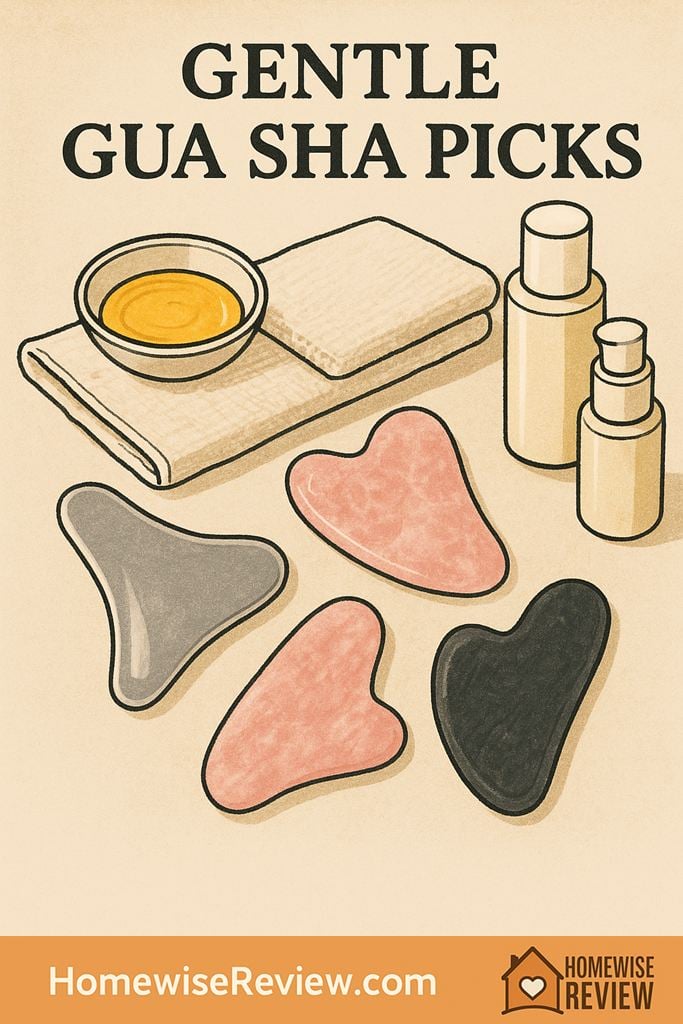
Sensitive skin does not tolerate rough edges, dragging, or overly sharp tools. The right gua sha should stay smooth, cool, and easy to control so you can get a calming massage without stirring up redness.
In-depth Reviews
SACHEU Stainless Steel Gua Sha
- Very smooth glide
- Easy to sanitize
- Cooling feels soothing
- Can feel too cold at first
- Heavier around delicate areas
Mount Lai Rose Quartz Gua Sha Facial Lifting Tool
- Rounded, gentle edges
- Comfortable control
- Soothing stone feel
- Breakable if dropped
- Needs more careful cleaning
Wildling Empress Stone
- Easy to keep flat
- Excellent on neck and cheeks
- Less pokey than smaller shapes
- Bulky around tiny contours
- Takes practice to orient
Lanshin Pro Gua Sha Tool
- Excellent contour precision
- Great for targeted tension
- Refined sculpting control
- Expensive
- Less forgiving for beginners
Skin Gym Sculpty Heart Stainless Steel Gua Sha
- Affordable stainless option
- Easy to clean
- Nice cooling feel
- Shape feels less refined
- Less premium in hand
Buying Guide
How to Gua Sha Without Angering Sensitive Skin
The biggest mistake with sensitive skin is using too little slip. If the tool makes your skin ripple, skip, or tug, stop and add a bland facial oil, balm, or richer moisturizer. Gua sha should feel like guided glide, not scraping. The tool should move your product first and your skin second.
Pressure should feel lighter than most people expect. One or two slow passes per path is usually enough, especially on the cheeks and neck. If your face stays hot, blotchy, or stingy well after you finish, the session was too long, too dry, or too forceful. Back off before you blame the tool itself.
Keep the tool flat, avoid active breakouts, rashes, and freshly exfoliated skin, and wash the tool every single time you use it. If you like a chilled feel, cool it briefly instead of leaving it ice cold for a long stretch. A plain moisturizer afterward is often the smartest finish, especially on nights when your skin is already a little reactive.
💡 Editor’s Final Thoughts
SACHEU Stainless Steel Gua Sha is the top pick because it glides effortlessly, stays cool, and is the simplest tool here to keep clean. If you prefer the feel of stone, Mount Lai Rose Quartz Gua Sha Facial Lifting Tool is the gentlest traditional option for most sensitive skin routines.
See also
If your gua sha routine reaches your temples or part line, start with the best SPF for scalp and hairline and our guide to scalp acne basics to avoid trading massage for irritation.
- Hair masks that help a dry, tight scalp feel more comfortable
- Scalp treatments worth trying for flakes and itch
- Practical scalp care tips under wigs
Frequently Asked Questions ▾
What material is usually best for sensitive skin?
Stainless steel is the safest blind buy because it is nonporous, easy to sanitize, and consistently smooth. A well-made rose quartz or jade tool can feel lovely too, but stone quality varies more, so rough edges or tiny chips are a bigger concern. If your skin reacts easily and you want the least guesswork, metal is often the gentlest place to start.
Can gua sha make sensitive skin more red?
It can, especially if you press too hard, use too little slip, or work over already irritated areas. Mild temporary pinkness can happen, but lingering heat, stinging, or blotchy redness means the session was too aggressive. Keep the tool flat, shorten the routine, and avoid using it over active breakouts, rashes, or damaged skin.
How often should sensitive skin use gua sha?
Start with two or three short sessions a week. That is enough to see whether your skin tolerates the friction and pressure without piling on unnecessary irritation. If your skin stays comfortable afterward, you can slowly increase from there, but daily use is not required. Consistency with a light touch matters more than frequency.
What should you put on skin before gua sha?
Use a fragrance-free oil, balm, or richer moisturizer that gives real slip. Watery serums alone usually evaporate too quickly and make the tool drag, which sensitive skin notices right away. If your skin is acne-prone, choose a lightweight, non-irritating product and clean the tool right after each use so residue does not sit on the surface.
When should you skip gua sha entirely?
Skip it over sunburn, raw or peeling skin, inflamed acne, eczema patches, rosacea flares, or any area with broken capillaries that worsen with friction. It is also smart to avoid gua sha on the same night as strong exfoliating acids, retinoids, or a fresh facial. When your skin barrier is unhappy, less is usually more.
As an Amazon Associate, we earn from qualifying purchases made through links on our site.