

Delivers near-espresso flavor with no power needed — compact, simple to heat and rinse, and suits most campers' setups.
We may earn a small referral fee
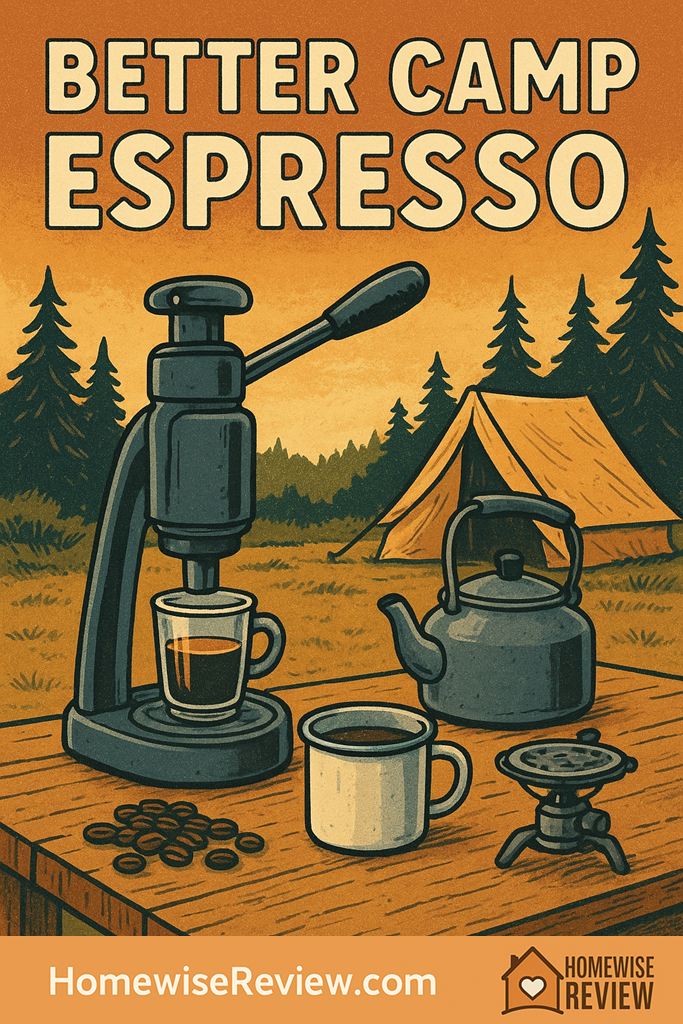
A campsite espresso setup has to pack small, work with your heat source, and clean up fast. The best choice for most campers is a manual brewer, but the right answer changes with how you camp.
Camping espresso is harder than regular campsite coffee because you are working around heat, wind, pack space, and sometimes zero electricity. The best espresso machine for camping is usually not a full countertop model. For most campers, a manual portable brewer gives the best balance of real espresso flavor, portability, and reliability outdoors.
That said, the best option depends on your setup. Backpackers need something light, car campers usually want a smoother routine, and RV travelers may be able to use a compact electric machine. The smartest buy is the one that fits your camp style, not the one with the flashiest pressure claims.
What makes an espresso machine good for camping?
A camping-friendly espresso maker has to solve a few practical problems before it ever pulls a shot. It needs to be easy to pack, simple to heat, durable enough for travel, and quick to clean when water is limited. If a machine adds too many steps or too much bulk, it stops being enjoyable very quickly.
- Low power needs: Hand-powered or stovetop options work almost anywhere and remove the stress of finding enough electricity.
- Compact size: A good camp brewer should fit in a tote, camp kitchen box, or side pocket without taking over the whole setup.
- Durable materials: Stainless steel, aluminum, and sturdy food-safe plastic usually travel better than fragile trim or glass-heavy designs.
- Simple cleanup: Used grounds should come out easily, and the brewer should need only a quick rinse, not a full sink.
- Fast routine: The best camping machine does not require a long warm-up, a lot of extra tools, or several rounds of fiddling.
One more thing matters here: true espresso and strong camp coffee are not the same. Some products marketed for camping make a concentrated, bold cup that tastes great outside, but it is not technically espresso. That difference is important if you care about crema, texture, and a more classic shot profile.
The main types of camping espresso makers
Most camping espresso setups fall into four groups: manual portable brewers, moka pots, compact electric machines, and pod-based portable machines. Each one solves the problem differently, and each comes with tradeoffs in taste, weight, cost, and ease.
| Type | Heat or power needed | What the cup is like | Best for | Main drawback |
|---|---|---|---|---|
| Manual portable espresso maker | Hot water from a kettle or stove | Closest to true espresso | Most campers who want real shots | Usually makes one shot at a time |
| Moka pot | Camp stove or burner | Rich, concentrated coffee, not true espresso | Budget setups and small groups | Lacks true espresso texture and pressure |
| Compact electric espresso machine | Reliable outlet or high-capacity power source | Can be very good if the machine is solid | RVs, cabins, and powered campsites | Heavy, bulky, and power-hungry |
| Pod-based portable machine | Hot water, battery, or outlet depending on design | Consistent and convenient | Fast mornings with minimal fuss | Higher ongoing cost and more waste |
Manual portable espresso makers
If you want the closest thing to real espresso while camping, this is the category to start with. These brewers use either a hand pump or a lever system to force hot water through finely ground coffee. They are compact, independent from outlets, and much easier to carry than even the smallest home espresso machine.
For most people, a manual brewer is the best overall answer. The shot quality can be excellent when the coffee is fresh, the water is hot enough, and the brewer is preheated. The tradeoff is speed. Many models make only one serving at a time, so they are best for solo trips, couples, or anyone who does not mind a slower morning routine.
Moka pots
A moka pot is not a true espresso machine, but it belongs in this conversation because it works so well outdoors. It is inexpensive, durable, and ideal for a camp stove. The result is bold and concentrated, which scratches the espresso itch for many campers, especially in milk drinks.
This is the best value choice if budget matters or if you are making coffee for more than one person. It is also easier to master than a finicky portable espresso brewer. Just go in with the right expectation: a moka pot makes strong coffee with espresso-like character, not café-style espresso.
Compact electric espresso machines
Electric machines make sense only when you have dependable power and enough space to use them comfortably. That usually means an RV, a cabin, or a campsite with hookups, not a picnic table and a battery pack you hope will last the weekend. Many small espresso machines still draw a lot of wattage, especially when heating water.
Before buying, check the machine’s power requirements against your inverter, power station, or campsite supply. A machine that asks for more power than your setup can deliver will be frustrating at best and unusable at worst. If you do have solid power, though, an electric model can give the easiest home-like routine.
Pod-based portable machines
Capsule-compatible camping machines are about convenience first. They are fast, clean, and predictable, which can be appealing when mornings are busy or you simply do not want to deal with grinders and tamping. Some portable models accept both pods and ground coffee, which gives you a little more flexibility.
The downside is cost, trash, and usually less control over flavor. Pods can be handy for short trips, but they are rarely the best long-term value. If you care about minimizing waste or getting the best taste for your money, manual ground-coffee brewers are usually the better buy.
How to choose based on your camping style
The same espresso machine will not feel equally practical on every kind of trip. Choosing by camping style keeps you from buying a brewer that looks clever online but stays home once packing day comes around.
Backpacking or very limited space
Only bring an espresso-specific brewer if espresso is a real priority for the trip. Weight adds up quickly once you include the brewer, cup, coffee, stove, and water. In this case, the best choice is a very compact manual brewer with minimal parts. If it feels like too much gear, that is a sign to simplify.
Car camping
This is where portable manual espresso makers really shine. You have room for a kettle, a small grinder, and a sturdier brewer without counting every ounce. A manual brewer plus a reliable way to heat water is usually the best balance of quality and convenience for car campers.
RV travel or powered campsites
If you have an outlet and decent counter space, a compact electric machine becomes realistic. Even then, choose carefully. A smaller unit with fast heat-up and straightforward cleanup is more useful on the road than a feature-heavy machine with too many loose accessories.
Group camping
This is where many tiny espresso makers become annoying. Pulling four individual shots before breakfast can feel like a chore. If you are serving several adults, a moka pot or another larger-batch coffee option is usually the better fit, even if your favorite morning drink at home is espresso.
Features worth paying for before you buy
Good camping espresso depends more on the right features than on marketing language. A few details matter a lot once you are outdoors.
Pressure and brew control
Do not get too distracted by huge pressure numbers on the box. Stable hot water, a proper fine grind, a good seal, and steady pressure matter more than a big claimed peak number. A well-designed manual brewer can outperform a cheap electric machine that never gets hot enough or leaks pressure during extraction.
Capacity and repeat shots
Many portable brewers make a single 40 to 60 ml shot. That is perfectly fine for one person, but it feels slow when two or three people want drinks. If you share coffee with others, look for a brewer that reloads quickly and does not require a full cool-down between shots.
Heat source compatibility
Some brewers only need hot water. Others need direct stove heat. That sounds small, but it affects your whole setup. If you already carry a kettle, a hot-water-only manual brewer is simple. If you rely on a burner and want fewer separate pieces, a moka pot may be more natural.
Build quality and spare parts
Camping gear gets bumped around. Gaskets, baskets, seals, and lids matter more than polished looks. It is a good sign when replacement parts are easy to find, because those are the pieces most likely to wear out first. A machine with too many tiny loose parts can be frustrating when you are setting up outside.
Cleanup and water use
At home, messy cleanup is just a nuisance. At a campsite, it becomes a real drawback. Look for a brewer that lets you knock out used grounds cleanly and rinse with very little water. The less sticky residue and splatter you deal with, the more likely you are to use it regularly.
Best option by camping scenario
- Best overall for most campers: A manual portable espresso maker. It gives the most espresso-like result without needing an outlet and packs far more easily than a home machine.
- Best budget choice: A stainless moka pot. It is affordable, sturdy, and great for stronger coffee at camp, even though it is not true espresso.
- Best for RVs and powered campsites: A compact electric espresso machine with confirmed wattage compatibility. It is the most familiar routine if your power setup can handle it.
- Best for convenience: A pod-compatible portable brewer. It is fast and tidy, but it costs more per cup and creates more waste.
- Best for serving several people: A moka pot or another larger-batch brewer. Single-shot portable machines get slow when the whole campsite wants coffee.
How to get better espresso at camp
- Heat extra water. Use some for brewing and some for preheating the brewer and cup so the shot does not cool too fast.
- Use the right grind. Fine espresso-friendly grounds make the biggest difference in flavor and body.
- Shield your setup from wind. Wind steals heat from both your kettle and your brewer, which can flatten the shot.
- Keep your dose consistent. Repeating the same amount of coffee each morning makes it much easier to dial in taste.
- Pull smaller, stronger shots. Portable brewers usually taste better when you do not try to stretch them into oversized drinks.
- Clean right away. Used grounds rinse out more easily while the brewer is still warm.
Water quality matters too. If your camp water tastes flat, metallic, or heavily mineralized, your espresso will show it. Good beans help, but clean-tasting water and proper heat do just as much heavy lifting outdoors.
Common mistakes that ruin camping espresso
- Buying based on bar numbers alone: Marketing pressure claims do not guarantee a better shot.
- Skipping preheat: Cold metal or plastic steals heat and leads to sour, weak espresso.
- Using drip-ground coffee: Most portable espresso brewers need a finer grind to build resistance.
- Ignoring power math: Electric machines only work well when your power source truly matches the wattage demand.
- Choosing a tiny single-shot brewer for a crowd: What feels fun for one person can feel tedious for four.
- Expecting a moka pot to taste exactly like espresso: It can be excellent, but it is a different style of drink.
💡 Editor’s Final Thoughts
For most campers, the best espresso machine is a manual portable brewer that uses hot water from a kettle or camp stove. It offers the closest thing to real espresso without depending on outlets, and it is usually the easiest option to pack and trust outdoors. If budget, batch size, and simplicity matter more than true espresso texture, a moka pot is still one of the smartest camp coffee buys you can make.
See also
If your coffee setup depends on quick hot water, start with our guide to electric kettles for fast boiling on the go and pair it with portable water filters and pitchers for clean water.
- Kitchen accessories that make camping coffee easier
- Space-saving kitchen gadgets for small setups
- What stood out in our SodaStream Terra review
Frequently Asked Questions ▾
Can you make real espresso while camping?
Yes, but the closest result usually comes from a manual portable espresso maker that uses finely ground coffee and separately heated water. A moka pot makes strong, concentrated coffee, but it is not true espresso.
Is a 15-bar camping espresso machine better than a 9-bar one?
Not necessarily. Claimed pressure numbers can be more about marketing than real performance. Stable hot water, a fine grind, a good seal, and consistent pressure through the shot matter more than a big number on the package.
What is the easiest espresso option for car camping?
For most people, a manual portable brewer paired with a kettle is the easiest balance of quality and convenience. If you want something cheaper and faster for more than one person, a moka pot is often the more practical choice.
Do I need a grinder for camping espresso?
A grinder gives you the best results, especially with manual espresso makers, because freshness and grind size matter a lot. If you want to pack lighter, buy freshly ground coffee suited to your brewer and store it in an airtight container for the trip.
As an Amazon Associate, we earn from qualifying purchases made through links on our site.