

Hand-shaped design lifts and defines short layers with gentle, controlled airflow; pairs best with light, evenly distributed product to avoid weighed-down ends.
We may earn a small referral fee
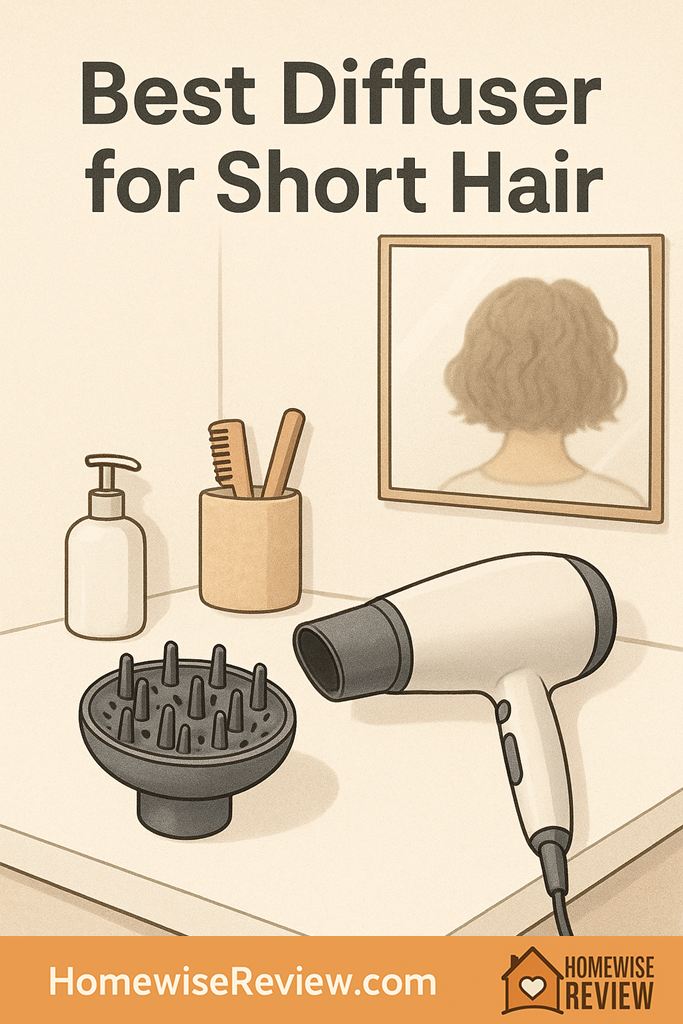
When I wore my hair short, my usual diffuser felt like trying to style with a leaf blower: one wrong tilt and my roots were flat while the ends puffed up. I borrowed a hand-shaped diffuser and suddenly I could get right into the crown and sides without tossing my cut around. It made me picky about two things for short hair: controlled airflow and a shape that lets you lift at the roots without over-drying the ends.
In-depth Reviews
DevaCurl DevaFuser Universal Hand-Shaped Diffuser
- Easy to target roots for lift on short cuts
- Helps waves clump instead of puffing out
- Controlled airflow for less frizz
- Can feel bulky if you prefer a classic bowl shape
- Fit depends on your dryer barrel shape
Dyson Supersonic Diffuser Attachment
- Very controlled, even airflow
- Great for quick drying without frizzing up the crown
- Secure, fuss-free attachment
- Only works with Dyson Supersonic
- Premium price if you are buying into the system
Drybar The Bouncer Diffuser
- Reliable definition for short waves and textured bobs
- Good balance of lift and smoothness
- Feels sturdier than many “included” diffusers
- Not the smallest option for very short pixies
- Universal fit still requires measuring your dryer barrel
Xtava Black Orchid Diffuser
- Excellent root lift and overall fullness
- Encourages stronger wave or curl pattern
- Great when your hair tends to fall flat fast
- Large size can feel awkward on short cuts at first
- Can create frizz if paired with high airflow
Conair InfinitiPRO Universal Hair Diffuser
- Affordable and widely available
- Improves texture and volume versus rough-drying
- Simple, no-fuss shape for beginners
- Fit can be finicky on unusually shaped dryer nozzles
- Not as refined airflow as pricier options
Buying Guide
Quick Wins: A Short-Hair Diffusing Routine That Actually Works
Use less product than you think, and apply it evenly. Short hair gets weighed down fast. Rub styling product between your palms first, then glaze it lightly over the surface before scrunching. If you concentrate product just on the ends, you will get crunchy tips and frizzy roots.
Set the shape first, then dry. For most short cuts, the easiest method is a two-step: hover-diffuse at the roots and hairline to set a smoother “shell,” then cup small sections for definition. If you go straight to aggressive cupping while hair is very wet, you can bend pieces in random directions and lock in that uneven shape.
Keep your diffuser working like new. Once vents are coated with hairspray or cream, airflow becomes patchy and heat can feel harsher. A quick weekly wash makes a noticeable difference in frizz control. Also, always let the diffuser cool before storing it, especially if it is packed in a drawer or travel bag.
💡 Editor’s Final Thoughts
Final Verdict: The DevaCurl DevaFuser is my top pick for short hair because it is easy to place right at the roots, gives definition without blasting your cut out of shape, and plays nicely with most dryers. If you already own a Dyson Supersonic, the Dyson Diffuser is the cleanest, most controlled option for fast drying and consistent results.
See also
If you still need a dryer to pair with your diffuser, start with our best hair dryer for short hair roundup, and if you are debating an all-in-one option, our Shark FlexStyle air styling system review can help.
- Easy hair styling tools that are actually foolproof
- Travel-friendly hair tools for EU and US voltage
- Silk heatless curl sets compared (for no-heat texture)
Frequently Asked Questions ▾
What makes a diffuser better for short hair specifically?
Control and placement matter more than “coverage.” For short hair, a diffuser that sits close to the scalp without swallowing your whole cut is easier to aim at the roots for lift, then move to the ends for definition. Shorter prongs or a shallower bowl can help you avoid bending hair in odd directions, which is where that uneven, frizzy look comes from.
Also, gentler airflow is your friend. Short hair dries fast, so you usually need less force and less time than someone with long curls.
How do I know if a universal diffuser will fit my hair dryer?
Look at how the diffuser attaches. The most reliable “universal” styles use an adjustable collar, silicone sleeve, or multi-step ring that tightens around the barrel. If your dryer has an oval nozzle, a very wide barrel, or a tapered shape, fit can be hit or miss, so a diffuser made for your exact dryer is the safest option.
Before buying, check whether the diffuser requires a smooth barrel edge to grip. If your dryer has pronounced ridges or a very short nozzle, choose a diffuser with a deeper attachment collar so it has more surface to hold on to.
How do I diffuse short hair for volume without frizz?
Start with damp, not dripping hair. Apply your styling cream or mousse evenly, then lightly scrunch. Use low to medium heat and low airflow if your dryer allows it. Hover-diffuse first (hold the diffuser close without touching) to set a soft cast, then “cup” sections for a few seconds at a time to build shape.
For root lift, tip your head slightly side-to-side rather than fully upside down if your hair frizzes easily. Once fully dry, break the cast with clean hands or a drop of lightweight oil, and avoid brushing it out.
Can a diffuser help short, mostly straight hair?
Yes, but think “lift and bend,” not “spiral curls.” A diffuser can add airy volume at the roots and encourage any natural wave you already have, especially if you use a volumizing mousse and scrunch while drying. The key is using gentle airflow and drying in short bursts so you do not blow your hair flat or flip the ends in random directions.
If your hair is truly pin-straight, you may like a diffuser mainly for smoothing and controlled drying, especially around a cowlick or a tricky crown area.
How do I clean a diffuser (and how often should I do it)?
Product buildup blocks airflow and can make hair look dull or feel crunchy. Once a week (or whenever you notice residue), pop the diffuser off and wash it with warm water and a little dish soap. Use a soft toothbrush or cotton swab to clean around vents and prongs, then rinse well and air dry completely before snapping it back on.
If your diffuser is silicone, avoid very hot water if the manufacturer warns against it, and keep it away from direct heat while it is empty and attached.
As an Amazon Associate, we earn from qualifying purchases made through links on our site.