

Adjustable divider and two doors speed potty training and simplify placement—durable wire crate that cleans up easily after accidents.
We may earn a small referral fee
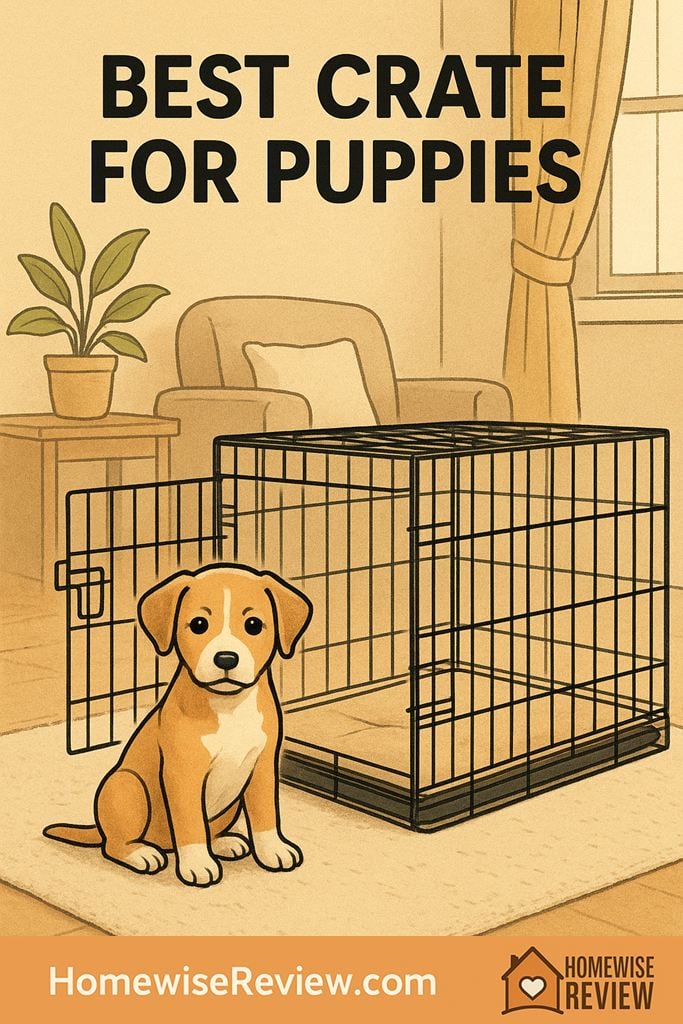
A good puppy crate speeds up potty training and gives your pup a calm, safe “off switch.” The wrong crate can mean sleepless nights, bent wires, and constant messes, so these picks focus on security, comfort, and real-world practicality.
In-depth Reviews
MidWest iCrate Double Door Folding Metal Dog Crate with Divider Panel
- Divider makes growing-room sizing simple
- Two doors make placement and training easier
- Easy wipe-down cleanup for everyday accidents
- Some puppies rattle the wire when they are first adjusting
- Pan can get scratched by determined chewers
Frisco Fold & Carry Double Door Collapsible Wire Dog Crate
- Good value for a functional, everyday crate
- Folds down fast for closets or car trunks
- Straightforward to assemble and move
- Not as sturdy for strong chewers or bar-benders
- Tray and hardware can feel lighter than premium options
Petmate Ultra Vari Kennel (Hard-Sided Dog Carrier)
- More den-like and calming for many puppies
- Great containment for car travel and vet visits
- Easy to sanitize after messes
- Bulkier to store than a folding wire crate
- Less flexible for training access than a two-door wire crate
Diggs Revol Collapsible Dog Crate
- Collapses and sets up with less fuss than typical crates
- Less rattly, more refined day-to-day use
- Looks more at home in a living area
- High cost compared with wire basics
- Still not the best match for serious escape attempts
Impact Dog Crates High Anxiety Crate
- Much more secure than standard wire crates
- Better choice for dogs that bend bars or break latches
- Helps reduce injury risk from escaping attempts
- Expensive and heavier to move around
- Overkill for most easygoing puppies
Buying Guide
What We Wish We Knew Before Buying a Puppy Crate
Plan for the first two weeks, not the next two years. Early crate training is mostly about calm repetition: short, successful sessions that end before your puppy panics. Set the crate up where your household naturally is, then quietly reward for stepping in, turning around, and choosing to lie down. If you only use the crate when you leave, many puppies start to predict separation and resist.
Make cleanup effortless, or you will avoid using the crate. Accidents happen, especially during growth spurts and after big play sessions. Keep enzyme cleaner, paper towels, and a spare liner or towel in a little bin next to the crate so you can reset fast without feeling frazzled. If the tray is sliding or popping, a thin non-slip shelf liner underneath can make the whole setup feel steadier and quieter.
Do not “decorate” the crate too soon. It is tempting to add a fluffy bed, cute blanket, and plush toys on day one. For many puppies, that turns into shredding, ingesting fabric, or a late-night potty mess that soaks into bedding. Start with a flat, washable pad or towel and one safe chew, then add comfort in layers once your puppy proves they can settle without destroying what is inside.
Use the crate to teach an off switch. After meals, potty, and a short play window, guide your puppy into the crate with a chew and let them practice resting. Many “hyper” puppies are actually overtired puppies. A predictable rhythm of play, potty, crate rest, then play again often improves biting, zoomies, and barking more than adding extra activity.
💡 Editor’s Final Thoughts
Final Verdict: The MidWest iCrate Double Door with Divider Panel is my top pick for most puppies because it is easy to size correctly as they grow, simple to clean, and straightforward to live with day to day. If you travel often, add a plastic kennel like the Petmate for the car and keep the wire crate as your main home base.
See also
For more size-by-size picks (including travel options), see our best crate picks for home and travel, and keep teething mouths busy with our guide on chews for puppies.
- Puppy food options for sensitive stomachs
- Furbo 360 dog camera review for checking in during crate time
- Supportive bed picks for dachshunds
Frequently Asked Questions ▾
What size crate is best for a puppy?
You want enough room for your puppy to stand up, turn around, and lie down comfortably, but not so much space that they can potty in one corner and sleep in the other. For most puppies, a crate with a divider is the easiest way to get sizing right now and adjust as they grow. If you are between sizes, it is usually safer to size up only if you can use a divider to keep the space appropriately small during training.
Do I really need a divider panel?
If your puppy is still growing, a divider is one of the most helpful features you can buy. It lets you keep the den space cozy for potty training, then expand the crate gradually without buying a second crate. Even with a calmer puppy, the divider helps you fine-tune space so the crate stays a resting spot, not a playroom.
Wire crate or plastic kennel for a puppy?
Wire crates are great for airflow, visibility, and using a divider, which is why they are a classic choice for house training. Plastic kennels feel more den-like and can be less visually stimulating, which some puppies settle into faster, especially in busy households. If your puppy tends to chew bars or gets frantic, a sturdier style (plastic or heavy-duty) can be a better match than lightweight wire.
Should I put a bed or blanket in the crate right away?
For many puppies, starting simple is best: a flat, washable pad or even just a towel you do not mind replacing. Some puppies shred bedding during teething, and swallowed fabric is not something you want to risk. Once your puppy consistently settles and leaves bedding alone, you can upgrade to a thicker mat or a more supportive bed.
How do I keep the crate from sliding and rattling?
A rubber-backed mat under the crate helps with both noise and floor protection, especially on hardwood. Make sure all latches are fully seated and consider using a crate cover if your puppy settles better with fewer visual distractions. If the tray pops or flexes, adding a thin, non-slip liner under the tray can reduce vibration without making cleanup harder.
As an Amazon Associate, we earn from qualifying purchases made through links on our site.