

Stable power and rock-solid adjustments let you make straight, shop-ready cuts—use a fine-tooth blade for tear-free plywood edges.
We may earn a small referral fee
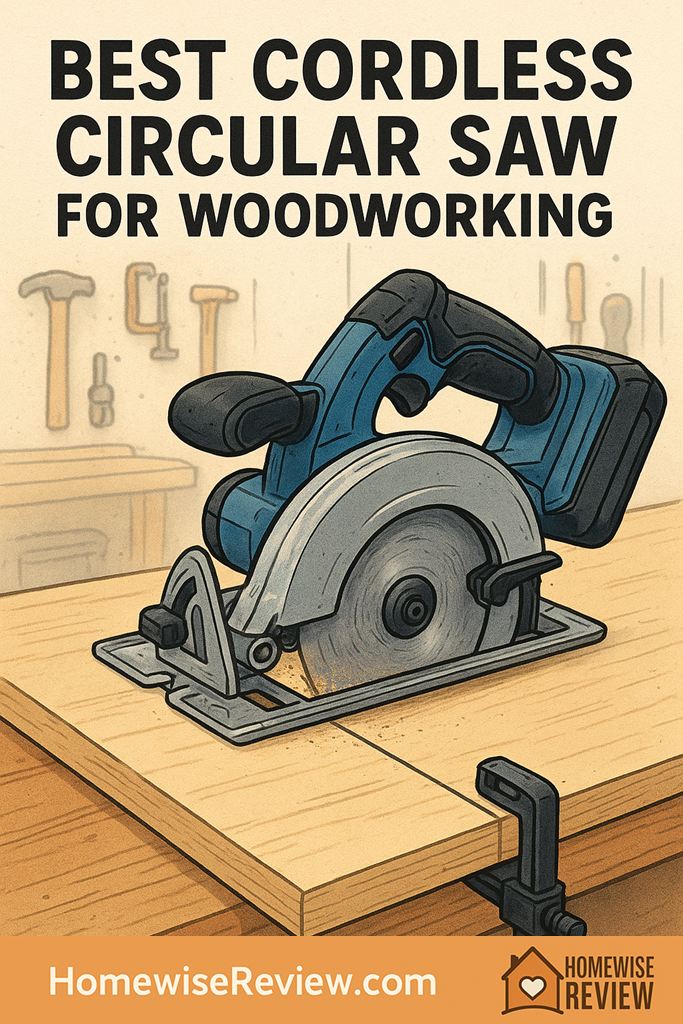
You want crisp, straight cuts in plywood and hardwood without dragging a cord across your workbench. The right cordless circular saw makes that feel easy instead of fussy.
In-depth Reviews
Makita XSH06Z 18V X2 (36V) LXT Brushless 7-1/4 in Circular Saw (AWS-capable, tool only)
- Steady cutting feel that helps reduce wander
- Holds bevel and depth settings reliably
- Plays well with dust management for cleaner layouts
- Requires a pair of batteries to run
- Tool-only cost is typically on the higher side
Milwaukee 2732-20 M18 FUEL 7-1/4 in Circular Saw (tool only)
- Strong, confident ripping performance
- Predictable tracking against guides
- Fast stopping for efficient repeat cuts
- Dust ejection is forceful if you are not connected to a vac
- Can feel bulky for small, delicate parts
DeWalt DCS565B 20V MAX 6-1/2 in Brushless Circular Saw (tool only)
- Light, controlled handling for shop-style cuts
- Good visibility for following layout lines
- Great match for straightedge-guided plywood cuts
- Less depth capacity than a 7-1/4 in saw
- Thick bevel cuts may require a second pass
DeWalt DCS577B FLEXVOLT 60V MAX 7-1/4 in Worm Drive Style (rear handle, tool only)
- Tracks well on long rip cuts
- Plenty of torque for dense material
- Comfortable posture for big panels and subfloor-style cuts
- Heavier feel for small or overhead work
- Not the most convenient for quick, delicate trim cuts
Makita XSH03Z 18V LXT Brushless 6-1/2 in Circular Saw (tool only)
- Smooth, controlled feel for cleaner edges
- Comfortable for lots of short, accurate cuts
- Less fatiguing than full-size saws
- Slower in thick hardwood ripping
- Smaller blade limits deep bevel work
Buying Guide
Woodworking Pro Tip: Make Any Cordless Circular Saw Cut Cleaner
Start with the blade. A sharp, clean, fine-tooth blade does more for “woodworking results” than upgrading to a bigger battery. If you are getting fuzzy edges on plywood, swap blades first, then clean pitch buildup with a degreaser and a nylon brush so the teeth can actually do their job.
Support the work so the kerf stays open. Most ugly cuts come from binding, not lack of power. For sheet goods, cut on rigid foam so both sides stay supported and nothing sags at the end of the cut. For boards, use two supports and keep the offcut from dropping early.
Guide it like you mean it. Clamp a straightedge and measure from the blade tooth that faces your cut line, not the edge of the shoe. Take a gentle lead-in so the blade establishes a clean kerf, then keep a steady pace. If you see scorch marks, slow down slightly and check for a dull blade or a pinching setup.
💡 Editor’s Final Thoughts
Final Verdict: The Makita XSH06Z is my top pick for woodworking because it balances power with control, holds adjustments well, and plays nicely with dust management. If you want something lighter for shop builds and quick breakdown cuts, the DeWalt DCS565B is the compact choice that still feels accurate.
See also
For keeping your workspace tidy between cuts, bookmark our power-cleaning degreasers for stubborn workshop grease and these garden tool organizers for sheds and garages.
- Home printers for plans, labels, and project templates
- Compact appliances and tools for tiny apartments
- Home pizza ovens for indoors and out
Frequently Asked Questions ▾
What blade should I use for clean woodworking cuts?
For plywood and cabinet-grade cuts, use a fine-finish blade with a higher tooth count and an ATB-style grind, then keep it clean and sharp. For solid hardwood ripping, a general-purpose blade is often smoother and faster than forcing a finish blade through thick stock. No cordless saw feels “precise” with a gummed-up or dull blade, so blade care matters as much as the tool.
Is a 6-1/2 inch cordless circular saw big enough for woodworking?
Yes, for most furniture parts, cutting down sheet goods, and trimming boards, a 6-1/2 inch saw is plenty and often easier to control. Where it gets limiting is thick stock and deep bevel cuts, where you may need to flip the workpiece or step up to a 7-1/4 inch model. If you regularly cut 2x material at angles or want more depth headroom, go larger.
How do I get straight cuts without buying a track saw?
Use a rigid straightedge guide and clamp it on both ends, then measure from the blade’s tooth (not the shoe edge) so your line is actually where the cut happens. Support sheet goods on foam insulation so the offcut cannot sag and pinch the blade, which is a big reason “straight” cuts wander. Take a short, slow lead-in to establish the kerf before you settle into a steady pace.
As an Amazon Associate, we earn from qualifying purchases made through links on our site.