

Creams fats and sugar evenly and tackles cookie dough reliably—built for regular baking without a luxury price.
We may earn a small referral fee
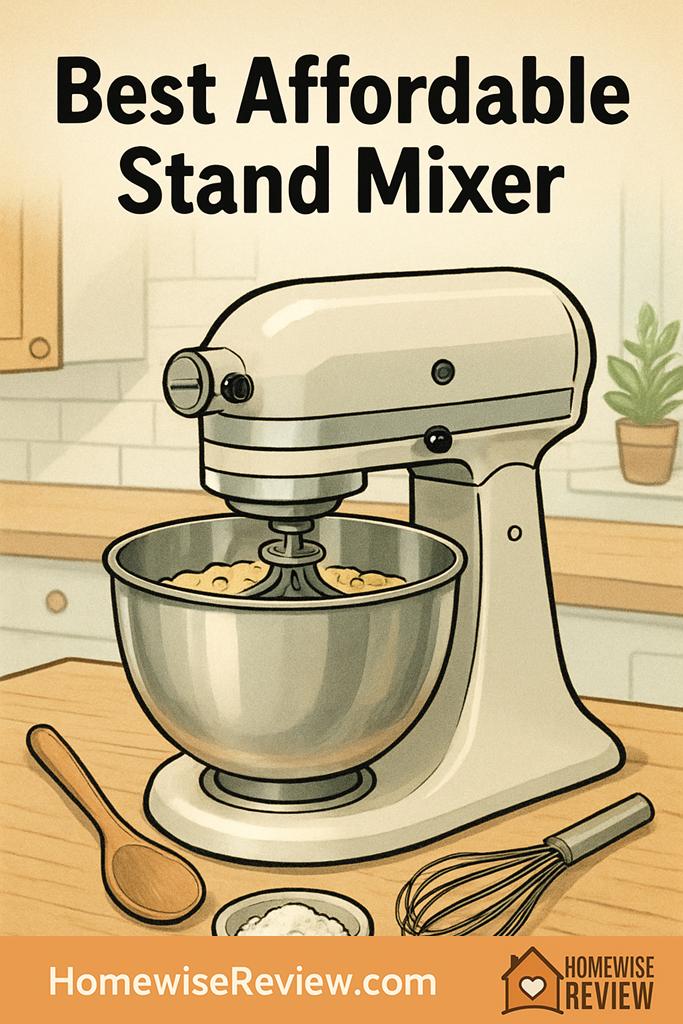
You want a stand mixer that can handle real baking, not just stir batter, but you do not want a luxury price tag. These affordable stand mixers are the ones worth making room for on your counter.
In-depth Reviews
KitchenAid Classic Series 4.5-Quart Tilt-Head Stand Mixer (K45SS)
- Consistent creaming and mixing with minimal “hot spots”
- Stays steady on the counter for most everyday doughs
- Strong attachment ecosystem for future upgrades
- Not the fastest option for large, stiff bread dough batches
- You may still need occasional scrape-downs for very small amounts
Cuisinart Precision Master 5.5-Quart Stand Mixer (SM-50)
- Handles heavier mixtures with less slowdown
- Roomy bowl for bigger batches
- Fine control for gentle folding and fast whipping
- Can still leave some ingredients clinging high on the bowl
- Heavier footprint if you plan to move it in and out of storage
KitchenAid Artisan Mini 3.5-Quart Tilt-Head Stand Mixer (KSM3316X)
- Strong performance for small and medium batches
- Easier to lift, store, and use in tight kitchens
- Excellent for frosting, whipped cream, and weeknight baking
- Less headroom for big double batches
- Not ideal for frequent, heavy bread kneading
Hamilton Beach 4-Quart 7-Speed Stand Mixer (63221)
- Good everyday performance for batters and frosting at a low price
- Simple controls that are easy to master quickly
- Works well when you mix in smaller stages
- Less stable with very stiff, heavy doughs
- More bowl scraping needed compared with higher-end mixers
Sunbeam Mixmaster Stand Mixer (2594)
- Fast, effective mixing for batters and creamed mixtures
- Easy to add ingredients while mixing
- Comfortable choice for frequent dessert bakers
- Not the best match for heavy bread dough routines
- Performance varies more with dough thickness than premium mixers
Buying Guide
What We Wish We Knew Before Buying a Budget Stand Mixer
Budget mixers do better with a “stage it” workflow. Instead of dumping everything in at once, start by creaming fats and sugars thoroughly, then add eggs, then alternate dry and wet ingredients. Thick dough is where inexpensive motors feel strained, so add flour gradually and stop once the dough comes together. For bread, mix to a shaggy mass, rest for 10 minutes, then knead briefly again. You often get better gluten development with less stress on the machine.
Most “bad mixer” complaints are really beater-to-bowl issues. If you see unmixed ingredients hugging the bottom or sides, check whether your mixer allows beater height adjustment and set it correctly. Even when adjustment is not available, you can improve results by using a flexible-edge beater if the brand supports it, or by planning one or two intentional scrape-downs at key moments. That single habit is the difference between a lumpy batter and a smooth, bakery-style crumb.
Protect the motor and you protect your investment. Keep mixing times reasonable on thick doughs, do not run the mixer unattended when working near its limits, and avoid overfilling the bowl just because it technically fits. After messy jobs like frosting, wipe the head and hub area so grease and sugar do not migrate into seams over time. A few minutes of care helps an affordable mixer last years longer.
💡 Editor’s Final Thoughts
Final verdict: The KitchenAid Classic Series 4.5-Quart is the best affordable stand mixer for most people because it mixes consistently, stays stable, and gives you long-term flexibility with attachments. If you want more power and a larger bowl for the money, the Cuisinart Precision Master 5.5-Quart is the value upgrade.
See also
If you are building a small-but-mighty kitchen, start with the kitchen gadgets that truly earn their counter space and pair it with the kitchen tools home cooks reach for every day.
- Home ice cream makers for pints, families, and parties
- Kitchen accessories that upgrade everyday cooking
- Time-saving kitchen gadgets for busy moms
Frequently Asked Questions ▾
Is an affordable stand mixer strong enough for bread dough?
Some are, but most budget-friendly mixers are happiest with lower-hydration doughs and smaller batches. If you bake bread weekly, prioritize a mixer that stays steady under load and does not “walk” on the counter, and plan to knead in shorter bursts so the motor can cool. For occasional pizza dough or a single loaf, the stronger mid-priced options usually do fine. For big batches of stiff dough, you will get better results by mixing until shaggy, then finishing with a short hand-knead.
For typical home baking, a mid-size bowl is the sweet spot: big enough for a double batch of cookie dough, but not so wide that small amounts get stuck on the sides. If you often make just one small cake or a single stick-of-butter frosting, smaller bowls can actually mix better because the beater contacts the ingredients sooner. If you regularly bake for parties or meal-prep muffins, step up in capacity so you are not splitting batters into multiple rounds.
Are tilt-head mixers less durable than bowl-lift mixers?
Tilt-head models are not automatically “less than.” They are simply optimized for convenience: you can access the bowl fast, scrape down easily, and swap attachments quickly. Bowl-lift designs tend to feel more planted for heavy dough and large batches, but many affordable stand mixers are tilt-head by design. If your main jobs are cookies, frosting, whipped cream, and cakes, a good tilt-head is usually the most practical choice.
Do attachments matter on a budget mixer, or should I buy them later?
The basics matter most: a flat beater for batters and cookies, a whisk that actually aerates, and a dough hook that kneads without just spinning dough around the bowl. Extra accessories are optional, but pay attention to whether a brand supports add-ons long-term. If you think you will want a pasta roller, shredder, or meat grinder later, choosing a mixer ecosystem with widely available attachments can save money over time. If you only want a reliable beater-and-whisk workhorse, prioritize performance over expandability.
Is it smart to buy a used stand mixer to save money?
It can be a great value if you can test it. Listen for grinding, squealing, or inconsistent speeds, and check that the head locks firmly and the bowl seats securely. Ask whether it was used for frequent bread dough, which can be harder on budget motors over years. Also confirm that the key attachments are included, since replacing them can eat up your savings. If you are not able to inspect it closely, buying new with a warranty is often the safer “affordable” move.
As an Amazon Associate, we earn from qualifying purchases made through links on our site.