

Predictable resistance steps and compact loops that work for warm-ups, full-body sessions, glute work, and travel.
We may earn a small referral fee
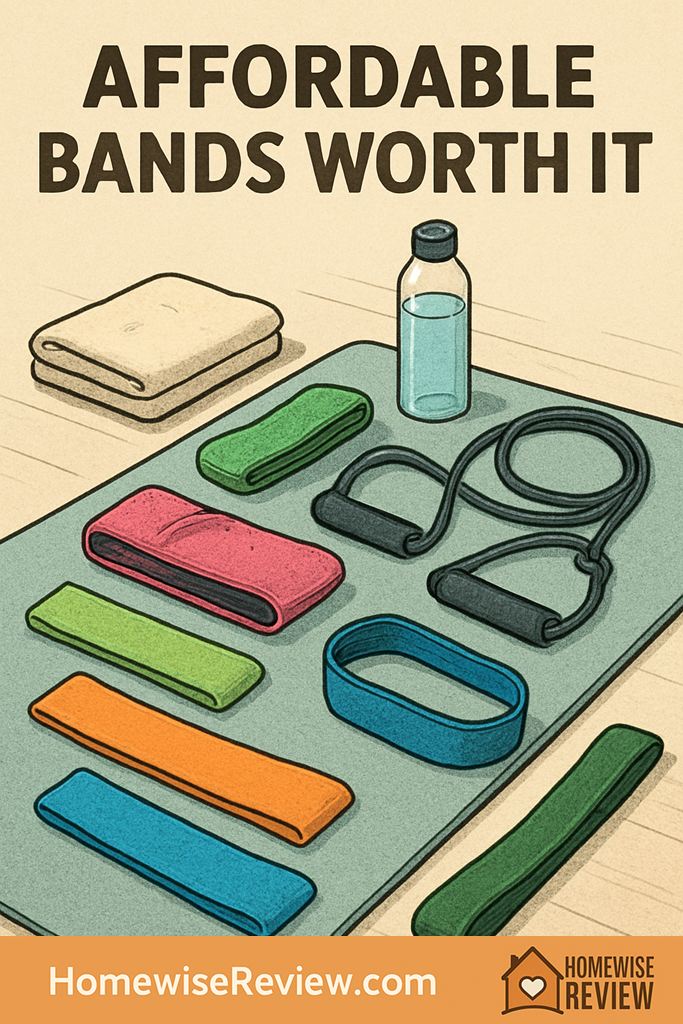
A cheap resistance band that rolls, snaps, or feels useless is no bargain. The best affordable options give you smooth tension, enough progression to grow with, and a design that matches the way you actually train.
In-depth Reviews
Fit Simplify Resistance Loop Exercise Bands
- Versatile for full-body training
- Clear progression between bands
- Easy to pack and store
- Can roll during some lower-body moves
- Not the best choice for pull-up assistance
Renoj Resistance Bands Set
- Stays put better than latex loops
- More comfortable on thighs
- Great control for glute work
- Less useful for upper-body training
- Bulkier than standard loop sets
Whatafit Resistance Bands Set
- Feels more cable-like for upper-body work
- Useful accessory kit for full routines
- Comfortable handles for longer sessions
- More setup than simple loop bands
- Hardware needs regular wear checks
THERABAND Resistance Bands Set
- Smooth, controlled stretch
- Excellent for rehab and mobility
- Easy to adjust for specific exercises
- Not ideal for heavier strength work
- Can stick to skin during some movements
WSAKOUE Pull Up Assistance Bands Set
- Better range for pull-ups and mobility
- Works well for bigger compound movements
- Strong value for long-loop training
- Bulkier than short loop sets
- Overkill for small rehab exercises
Buying Guide
Quick Care Guide: Make Budget Bands Last Longer
Affordable bands can last surprisingly well if you treat them like real training gear instead of tossing them into a hot car or a cluttered drawer. Latex breaks down faster with heat, direct sun, and sharp folds, so store bands loosely coiled in a cool, dry spot. Fabric bands hold up best when they stay clean and dry between workouts.
Before each session, run your fingers along the full length of the band and check for rough spots, thinning, or surface cracks. On tube sets, inspect the ends, stitching, clips, and door anchor first. Most failures start near connection points, not in the middle.
If a band suddenly feels too easy, you may not need a whole new set yet. Step wider on the band, slow down the lowering phase, add a pause where tension is highest, or use unilateral moves like split squats and single-arm presses. Those small changes can make an affordable set feel much more useful without spending another dollar.
What Most Reviews Miss
Cheap bands usually do not snap in the middle. They fail first at the clips, stitching, and tube ends, so the listed resistance matters less than those connection points if you train hard at home. The common buying mistake is comparing tension numbers and ignoring the parts that actually determine how long a budget set lasts.
💡 Editor’s Final Thoughts
If you want one affordable set that suits the widest range of workouts, Fit Simplify Resistance Loop Exercise Bands is the safest pick. They are simple, dependable, easy to store, and useful for far more than just warm-ups, which makes them the best value for most people.
See also
If you’re building a better gym bag, start with deodorants that work for stress sweat and a few multipurpose beauty products for gym bags.
- Best silk scrunchies for working out
- Iced coffee machines for post-workout mornings
- Bedroom humidifiers for better sleep
Frequently Asked Questions ▾
Are affordable resistance bands good enough for real strength training?
Yes, for most people they are. A solid band set can take you surprisingly far with squats, presses, rows, glute work, core training, and mobility. The main limit is very heavy strength work, where dumbbells or barbells eventually make more sense. For beginners and many intermediate home workouts, good bands are absolutely enough to build consistency and make progress.
Which type of resistance band should I buy first?
If you’re not sure, start with a basic loop set. It gives you the most flexibility for warm-ups, lower-body training, travel workouts, and quick full-body sessions. Choose fabric bands if you mainly care about glute work, tube bands if you want handle-based exercises that feel more like cables, and flat therapy bands if you’re focused on rehab or very controlled mobility drills.
How can I tell when a band needs to be replaced?
Look for cracks, thinning, whitening, dry patches, or areas that stretch unevenly. On tube bands, check the ends, clips, stitching, and door anchor first, since those are common failure points. If a band feels sticky, brittle, or visibly nicked, retire it right away. It is not worth risking a snap to save a few more workouts.
What resistance levels should a beginner get?
A mixed set is usually the smartest buy. Most beginners need a lighter option for shoulders, mobility, and higher-rep arm work, plus one or two stronger options for squats, bridges, and rows. Going too heavy too fast often leads to sloppy form, so a set with a clear progression is more useful than one extra-heavy band you can barely control.
As an Amazon Associate, we earn from qualifying purchases made through links on our site.