

Stackable tubes let you micro-adjust tension like a compact cable machine—smooth resistance, sturdy hardware, and anti-snap safety for real strength work.
We may earn a small referral fee
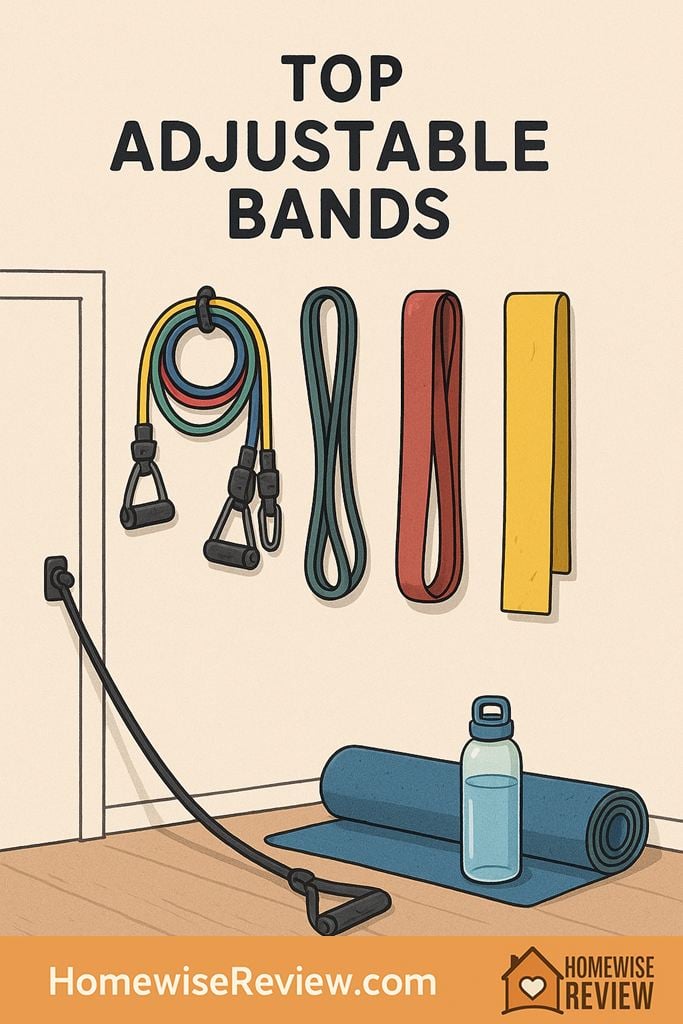
Good adjustable resistance bands should scale from warm-up work to genuinely challenging strength training without twisting, snapping, or eating up closet space. The strongest picks here stand out for smoother tension, sturdier hardware, and progression that feels practical instead of frustrating.
In-depth Reviews
Bodylastics Stackable Tube Resistance Bands Set
- Easy to micro-adjust tension
- Smooth, secure upper-body training
- Useful accessories for full-body workouts
- Less natural for heavy lower-body patterns
- More pieces to store and organize
Rogue Monster Bands
- Consistent tension under load
- Excellent for pull-ups and lower-body work
- Durable feel for regular training
- No handles for quick grab-and-go exercises
- Less beginner-friendly for pressing moves
TheraBand Professional Latex Resistance Bands
- Gentle, controllable resistance
- Easy to scale by grip and length
- Great for shoulder and rehab work
- Not ideal for serious strength goals
- Can roll if used carelessly
X3 Elite Band System
- Very high resistance ceiling
- More stable feel than loose bands alone
- Compact alternative to larger home gear
- Expensive compared with standard sets
- Takes longer to learn and set up
Undersun Fitness Resistance Band Set
- Compact and easy to travel with
- Smooth tension for general workouts
- Good progression across the set
- No handles for cable-style movements
- Pressing exercises need cleaner technique
Buying Guide
What the Printed Resistance Number Doesn’t Tell You
The resistance printed on a band is best treated as a range, not a perfect match to a dumbbell or cable stack. Loop bands usually get much harder near the top of the rep, while tube bands often feel smoother through the middle. That is why two bands with similar advertised tension can feel completely different in actual training.
Starting length matters just as much. A long loop band may feel too light for rows when it begins slack, then suddenly feel much tougher when you choke it shorter around a sturdy post. If you want consistent progression, pay attention to how much pre-stretch you use from session to session, not just which band color you grabbed.
For lifespan, simple habits matter more than fancy storage. Keep bands out of direct sun and hot cars, wipe off sweat now and then, and retire anything with visible nicks, cracking, or loose hardware. That small bit of care goes a long way, especially if you use bands several days a week.
💡 Editor’s Final Thoughts
Final verdict: Bodylastics is the easiest recommendation for most shoppers because the stackable design, solid accessory package, and added safety cord make progression simple without taking over your space. If your workouts lean heavier or center on pull-ups and lower-body work, Rogue Monster Bands are the stronger long-term upgrade.
See also
After sweaty band workouts, our post-workout skincare picks pair naturally with the best deodorant for stress sweat when you need a quick reset.
- Gentle hair ties and clips that stay comfortable during training
- Dry shampoos without heavy white cast for fast gym-day refreshes
- Cooling body products for overheating after exercise
Frequently Asked Questions ▾
Are adjustable resistance bands enough to build muscle?
Yes, if you use them with enough tension and train close to true fatigue. Bands work especially well for presses, rows, curls, triceps work, split squats, glute exercises, and core training. The biggest difference from dumbbells is that resistance usually climbs as the band stretches, so setup matters more. A good adjustable system lets you increase tension in small steps, which is what makes progressive overload realistic instead of guessing with a single band.
Should I buy tube bands or loop bands?
Choose tube bands if you want the easiest all-purpose home setup for upper-body training, door-anchor exercises, and quick tension changes. Choose long loop bands if you care more about pull-up assistance, mobility, squats, deadlift variations, and heavier full-body work. Flat therapy bands are the gentlest option for rehab and shoulder exercises. None is universally better, but each feels best in different movements, so matching the style to your workouts matters more than the brand name.
What resistance range is best for beginners?
Most beginners do better with a set that covers light, medium, and heavier tension instead of one very strong band. That gives you room for shoulder work, rows, presses, and lower-body exercises without forcing every move into the same resistance level. Stackable systems are especially beginner-friendly because you can fine-tune difficulty. If you are deciding between two sets, pick the one with smaller progression steps rather than the one advertising the biggest top-end number.
How do I use a door anchor safely?
Place the anchor on the hinge side of a sturdy door whenever possible, then close the door firmly and tug-test the setup before starting your set. Make sure the door closes away from you so it cannot pop open under tension. Keep the band flat rather than twisted, and avoid sharp door edges that can chew into latex or tubing. If anything slips, creaks, or pinches, reset it. A strong band is only as safe as the anchor point holding it.
When should I replace resistance bands?
Replace a band when you see cracks, thinning, deep nicks, rough spots, or hardware that no longer feels secure. With latex loop and flat bands, a chalky, sticky, or dried-out feel is also a warning sign. Tube systems should be retired if the outer tube looks abraded or the handle connection loosens. Store bands out of direct sun and heat, wipe off sweat now and then, and do a quick visual check before heavy sets. That simple routine helps them last much longer.
As an Amazon Associate, we earn from qualifying purchases made through links on our site.