

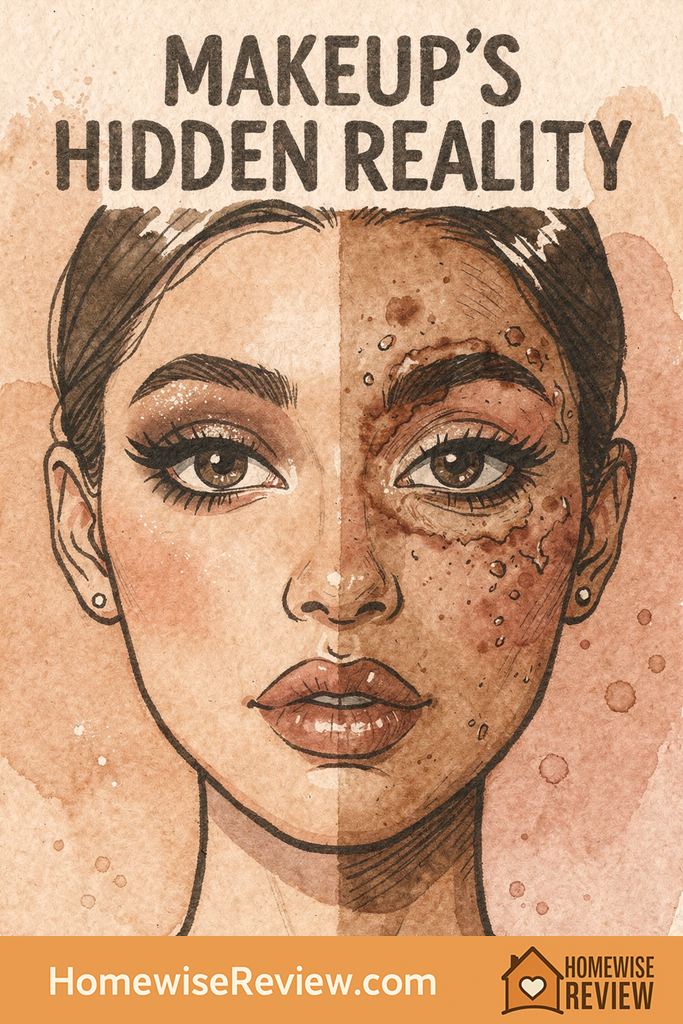
A cosmetics label can tell you a great deal, but phrases such as “FDA approved,” “hypoallergenic,” and “clean” do not all carry the meaning shoppers may assume.
Cosmetics sold in the United States are regulated, but most do not go through FDA premarket approval. That distinction matters when you compare products, interpret safety claims, or decide what to do after a reaction. A polished package is not proof of FDA endorsement, while a long ingredient list is not proof that a formula is unsafe.
This guide focuses on what a U.S. shopper can actually learn from the label, what remains uncertain, and which habits reduce avoidable risk. It does not rank individual products or diagnose allergies.
What the label can and cannot tell you
- Most cosmetics are not FDA approved before sale. Manufacturers and distributors are responsible for product safety and proper labeling. Most color additives are the important premarket-approval exception.
- Retail cosmetics generally need an ingredient declaration. Ingredients usually appear in descending order of predominance, subject to labeling rules and exceptions.
- Fragrance can appear as one collective term. A label may say “fragrance” instead of naming every component in a fragrance mixture.
- “Hypoallergenic” has no federal definition. FDA does not require a company to prove that a product carrying this word causes fewer reactions.
- A preservative-free claim is not automatically a safety advantage. Water-containing cosmetics need protection against harmful microbial contamination during manufacturing, storage, and use.
Most cosmetics are not pre-approved by FDA
FDA states that cosmetic products and ingredients generally do not require approval before entering the market. The main exception is color additives, which must be approved for their intended uses unless specifically exempt. Cosmetic labeling is not pre-approved either.
This does not mean cosmetics are outside the law. A product must not be adulterated or misbranded, and its labeling must be truthful and not misleading. A company whose name appears on the label is responsible for meeting applicable requirements. FDA can inspect, issue warnings, coordinate recalls, and take enforcement action when products do not comply.
The Modernization of Cosmetics Regulation Act of 2022, known as MoCRA, expanded FDA authority. Among other provisions, it created requirements involving facility registration, product listing, serious adverse-event reporting, safety substantiation records, and good manufacturing practice rulemaking. Registration or listing still should not be read as FDA approval of an individual product.
How to read the ingredient declaration
For a retail cosmetic, the ingredient panel is the best place to check for a substance you already know you need to avoid. It is more useful for that task than broad front-label promises. FDA labeling rules generally require ingredients to be declared, although the rules include details for color additives, incidental ingredients, small packages, and other circumstances.
Position on the list is not a simple measure of risk or effectiveness. Ingredients present at more than 1 percent are generally listed in descending order, while ingredients at 1 percent or less may be listed in any order after those present above 1 percent. Color additives may follow. The panel also does not tell you the exact concentration of every ingredient.
Why “fragrance” is different
FDA permits fragrance or flavor components to be declared collectively as “fragrance” or “flavor.” Fragrance formulas can contain multiple natural or synthetic components, and some people are allergic or sensitive to particular components. A compliant label therefore may not let a fragrance-sensitive shopper identify the exact trigger.
If you have reacted to fragranced cosmetics, choosing a fragrance-free product and checking the full ingredient panel is a reasonable first filter. “Unscented” is not necessarily equivalent: a product can contain fragrance ingredients used to mask another odor. When the panel does not answer your question, contact the manufacturer and keep the package and lot information.
Claims that deserve a closer look
“FDA approved”
For an ordinary cosmetic, this phrase is a warning sign. FDA does not pre-approve cosmetic products or their labeling, although it does approve most color additives for specified uses. A product that is also a drug, such as an acne treatment or sunscreen sold in the United States, has additional drug requirements that are separate from its cosmetic claims.
“Hypoallergenic”
FDA says there is no federal standard or definition governing this term. It is not a guarantee that a product cannot cause irritation or allergy, and manufacturers do not have to submit proof of hypoallergenicity to FDA. If you know a trigger, the ingredient panel and advice from a qualified clinician are more useful than the word on the front.
“Clean,” “non-toxic,” and “natural”
These words can describe a retailer or brand standard, but they do not by themselves identify a uniform federal cosmetics safety threshold. Ask what the standard excludes, whether the full policy is public, and whether it addresses contamination, stability, packaging, and intended use. Natural origin does not prevent an ingredient from causing irritation or allergy.
“Dermatologist tested”
The phrase gives little useful information without the study design. Look for the number and type of participants, the test method, the comparison product, the duration, the measured outcome, and whether the finished formula or only an ingredient was tested.
What the PFAS makeup study did – and did not – show
A 2021 peer-reviewed study screened 231 cosmetics purchased in the United States and Canada for total fluorine. Fifty-two percent had high fluorine under the study’s screening threshold. The proportions were 63 percent for foundations, 58 percent for eye products, 55 percent for lip products, and 47 percent for mascaras. A smaller subset underwent targeted analysis for selected PFAS.
Those findings demonstrated that fluorinated chemistry was common in the sampled products and was often not apparent from ingredient lists. They did not establish that every high-fluorine result represented the same PFAS, exposure, or health risk. The products were a sample, not a market census, and the study did not support judging every long-wear cosmetic by its marketing language alone.
FDA’s December 2025 assessment reached a cautious conclusion: available information was insufficient to determine the safety of PFAS use in cosmetic products. That is evidence of an important data gap, not evidence that every PFAS-containing cosmetic is either proven dangerous or proven safe. Shoppers who want to limit PFAS can check ingredient lists for explicitly fluorinated ingredients and ask brands for a specific PFAS policy, while recognizing that a label may not capture every fluorinated substance detected by testing.
Preservation and contamination matter too
Ingredient debates often focus on what a formula contains, but contamination can make a cosmetic harmful. FDA identifies contaminated raw materials or water, poor manufacturing, ineffective preservation, unsuitable packaging, storage conditions, and consumer use as possible routes for bacteria or fungi to enter or grow in cosmetics.
Do not add water or saliva to dried mascara or another cosmetic. Doing so can introduce microorganisms and dilute the preservative system. Keep containers clean and closed, follow storage instructions, do not share eye makeup, and stop using a product if its color or smell changes. If you develop an eye infection, FDA advises discarding the eye-area cosmetics you were using and seeking medical care.
A practical label audit
- Identify the product type. A cosmetic, a drug, and a cosmetic-drug combination can have different requirements. Claims to treat acne, alter body structure, or prevent disease can move a product into drug territory.
- Read the warnings and directions. Intended use, eye-area restrictions, ventilation instructions, and other cautions matter more than informal social-media use.
- Check the ingredient panel for known triggers. Do not rely on “hypoallergenic,” “clean,” or “natural” as substitutes.
- Notice collective terms. “Fragrance” can represent a mixture. Ask the manufacturer when a specific allergy makes more detail necessary.
- Interrogate test claims. Look for a published method, sample size, duration, and measured result.
- Keep traceability information. A photo of the package, ingredient panel, lot code, and receipt can help a clinician, manufacturer, or FDA investigate a reaction.
When to report a problem
Stop using a cosmetic that causes a reaction. Seek urgent medical help for serious symptoms such as trouble breathing, facial swelling, severe eye pain, or vision changes. Consumers can report cosmetic problems to FDA through the agency’s adverse-event reporting channels. Include the product name, manufacturer, lot code, where and when it was purchased, how it was used, the reaction, and any medical treatment.
Related HomeWise guides
For a step-by-step approach to the back of a skincare package, see how to read skincare ingredient lists. If combining active products is the concern, use the ingredient clash guide. Readers choosing makeup for reactive skin may also find the makeup allergen guide useful.
Frequently Asked Questions
Does FDA approve makeup before it is sold?
No. FDA does not pre-approve most cosmetics, cosmetic ingredients, or cosmetic labeling. Most color additives are the main exception and must be approved for their intended use.
Does hypoallergenic mean a cosmetic cannot cause a reaction?
No. FDA has no federal definition or testing requirement for the claim. Check known triggers in the ingredient panel and discuss persistent or serious reactions with a qualified clinician.
Is a shorter ingredient list safer?
Not necessarily. Safety depends on the ingredients, concentrations, formulation, preservation, intended use, and the individual user. A short list can still contain an allergen, while a longer formula can be stable and well tolerated.
Should I avoid all preservatives?
No. Preservatives help control harmful microbial growth in susceptible formulas. The useful question is whether the complete product has an effective, appropriate preservation system and is used and stored correctly.
As an Amazon Associate, we earn from qualifying purchases made through links on our site.