

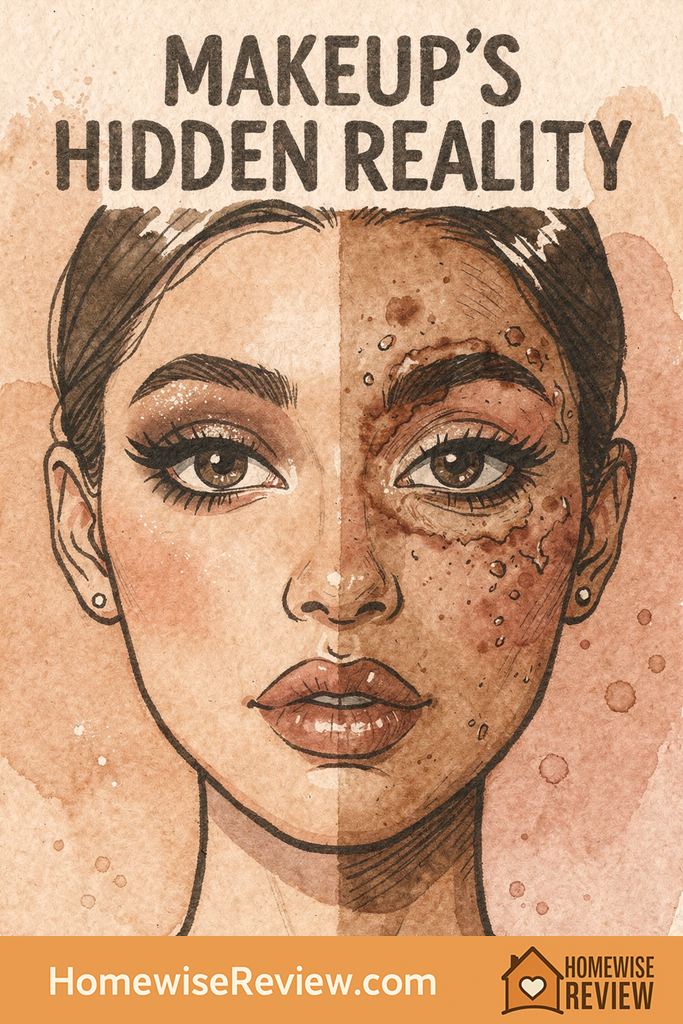
Makeup can look “clean” on the outside while hiding complex chemistry and surprisingly loose disclosure rules. The biggest gaps show up where shoppers trust labels most: fragrance, long-wear claims, and what regulators do not require brands to prove.
- A peer reviewed screening study found organic fluorine (a PFAS marker) in 52% of 231 makeup products, including 63% of foundations and 47% of mascaras.
- A fragrance emissions study identified 156 VOCs from 37 fragranced products, with only 1 VOC disclosed on any product label.
- ECHA estimates EU microplastics restrictions could prevent about 500,000 tonnes of microplastics from being released over 20 years.
- In the US, most cosmetics are not FDA pre-approved before sale, with most color additives as a key exception.
Cosmetics are one of the few daily-use consumer categories where what feels normal is not always the same as what is fully disclosed, independently verified, or consistently regulated. Researchers keep finding the same pattern: a polished label can coexist with hidden ingredient mixtures, performance-driven chemistries, and marketing terms that sound official but are often undefined.
Here is the data snapshot that tends to stop people mid-scroll.
- PFAS markers showed up in 52% of 231 makeup products tested in a peer reviewed study, including 63% of foundations and 47% of mascaras.
- A fragrance emissions study detected 156 volatile organic compounds (VOCs) from 37 fragranced products, with only 1 VOC disclosed on any product label.
- EU regulators estimate new microplastics restrictions could prevent about 500,000 tonnes of microplastics from being released into the environment over 20 years.
- In the US, most cosmetics are not “FDA approved” before sale, with a notable exception for most color additives.
Myth No. 1: “If it’s sold, it must be pre-approved”
This is the biggest knowledge gap, and it is where that “75%” feeling comes from. Many shoppers assume the same pre-market approval logic used for drugs applies to everyday makeup, but US cosmetics work differently.
In plain terms: the FDA does not pre-approve most cosmetic products or cosmetic ingredients before they hit shelves. Brands are legally responsible for safety, and the FDA can take action when products are adulterated, misbranded, or cause harm, but that is not the same as routine pre-market approval. The major pre-market exception is color additives, which have their own approval rules for many uses.
The regulatory picture is also changing. The Modernization of Cosmetics Regulation Act (MoCRA) expanded FDA authority and introduced new requirements (like facility registration and product listing), which is a meaningful step toward tighter oversight. Still, MoCRA does not instantly turn cosmetics into a category where every ingredient is screened before consumers buy it.
The fragrance loophole: one word, dozens to hundreds of chemicals
If you have ever scanned an ingredient list and felt reassured because it was short, “fragrance” is the big asterisk. Fragrance is often a blend, not a single substance, and disclosure rules can treat components as trade secrets. That means the label can be technically compliant while still leaving out what many people would consider important details.
Why it matters: fragrance is not just a scent, it can be a mixture of ingredients that may include allergens or sensitizers for some users. That is not a statement that fragrance is “bad” across the board. It is a statement that the label often gives you very little to work with if you are trying to avoid specific triggers.
The lab side of the story is even more blunt. In a published emissions study, researchers identified 156 VOCs coming off fragranced consumer products. Only one of those VOCs was disclosed on any product label. This gap is why people who react to “something” in a product can struggle to pinpoint what to avoid next time.
Long-wear makeup and PFAS: when staying power has a chemistry cost
Long-wear, waterproof, smudge-proof, and “all day” claims are performance promises. The chemistry that makes those claims possible can overlap with a chemical family called PFAS (per and polyfluoroalkyl substances), valued for oil and water resistance.
Here is the data point that has fueled so much conversation: in a peer reviewed study that screened 231 makeup products, 52% showed high organic fluorine, a common indicator that PFAS may be present. Product types varied, but the rates were especially high in foundations (63%) and notable in mascaras (47%) and lip products.
Two important nuances keep this grounded. First, organic fluorine is a screening signal, not a full ingredient disclosure. Second, “detected” is not the same as “dangerous at any level.” The real takeaway for daily shoppers is simpler: if you prioritize minimizing PFAS risk, performance claims can be a useful clue. The more a product advertises extreme staying power, the more it is worth checking for explicit “PFAS-free” commitments and transparent ingredient policies.
Microplastics and glitter: the tiny ingredients regulators are targeting
Microplastics show up in beauty in two main ways: as intentionally added solid particles (for texture, slip, shimmer, or exfoliation) and as incidental shedding from packaging or applicators. Glittery looks are not the villain here, but the materials used to create that effect can persist in water and soil.
EU regulators have taken a broad approach, targeting intentionally added microplastics across many product categories. Their estimate is eye-opening: restrictions could prevent about half a million tonnes of microplastics from entering the environment over 20 years. Cosmetics are only part of that total, but it signals where policy is headed.
What this means for your makeup bag: if you use rinse-off products (scrubs, shimmer body washes, some glitter gels), those are the first places to watch. For makeup, shimmer and glitter products vary widely by formula, so the practical move is to look for brands that clearly disclose whether glitter is plant-based, synthetic, or mineral, and how it is bound to reduce fallout.
Preservatives are unpopular, but contamination is real
“Preservative-free” sounds wholesome, but cosmetics are not sterile by default, and many formulas are water-based. Without a preservation system, products can become a better home for microbes, especially when they are opened daily, applied with fingers, or stored in warm bathrooms.
This creates a real trade-off that marketing rarely explains: people want fewer preservatives, but they also want products that stay stable and safe during normal use. When contamination happens, it is not just a nuisance. It can be serious for the eye area, compromised skin barriers, and anyone with heightened sensitivity.
Practically, the “safer” choice is not always the shortest ingredient list. It is often the best balanced formula, paired with smart habits: keeping lids closed, not adding water to “revive” products, washing tools, and following realistic replacement timelines for mascara and liquid liners.
Marketing terms that sound regulated (but usually are not)
Some of the most confidence-inspiring phrases on packaging are not standardized the way shoppers assume. A few that commonly mislead:
- “Clean” or “non-toxic”: Often a brand philosophy, not a legal definition. Standards vary widely, and two “clean” brands can exclude totally different ingredient sets.
- “Dermatologist tested”: Testing can range from a small, short patch test to more robust studies. Without details, it is a weak signal.
- “Hypoallergenic”: Not a guarantee of zero reactions, especially if fragrance, botanical extracts, or certain preservatives are present.
- “Natural”: Natural ingredients can still be potent allergens. “Natural” is about origin, not automatically about skin compatibility.
The data-backed mindset shift is this: treat front-label claims as marketing headlines. Treat the ingredient list, brand transparency, and independent testing as the real fine print.
A five-question label audit that takes 60 seconds
If you want something practical that matches the evidence without turning makeup shopping into a chemistry exam, this quick audit helps.
- Is “fragrance” listed? If yes and you are sensitive, consider fragrance-free or fully disclosed essential oil free options.
- Are extreme wear claims the main selling point? If yes, be extra alert for PFAS signals and look for clear brand statements about fluorinated ingredients.
- Is it an eye product in a wet formula? Prioritize freshness, hygienic packaging, and a solid preservative system over “preservative-free” vibes.
- Is it a rinse-off shimmer or scrub product? Check whether the brand addresses microplastics or glitter composition and cleanup.
- Does the brand explain its standards? Look for specifics like restricted ingredient lists, contaminant testing (heavy metals as impurities), and how they handle fragrance disclosure.
Methodology note
This report synthesizes publicly available regulatory information (US FDA cosmetics and color additive rules, and MoCRA implementation materials), EU ingredient reference resources, EU policy analysis on microplastics, and peer reviewed lab studies on fragrance emissions and PFAS indicators in makeup. The emphasis is on repeatable, citable numbers and on explaining what those numbers do and do not prove in everyday decision making.
Buying Guides Based on This Data
If you want to lower risk without overspending, start with the formulas that consistently perform well in our best budget makeup picks. If your main issue is irritation or breakouts from heavy application, better tools can help you use less product, so see the best makeup brushes for faster blending. And if you are navigating drier skin or more noticeable texture, our guide to makeup for older women focuses on finishes and ingredients that tend to wear more gracefully.
Frequently Asked Questions ▾
Are cosmetics FDA approved before they are sold?
In the US, most cosmetics and their ingredients do not go through FDA pre-market approval. A key exception is that many color additives must be approved for their intended uses, and the FDA can take enforcement action when products are unsafe or mislabeled.
What does “fragrance” really mean on an ingredient list?
“Fragrance” typically indicates a blend of multiple scent-related ingredients, and individual components may not be listed because of trade secret rules. If you are sensitive, “fragrance-free” is usually a clearer signal than “unscented,” which can still contain masking fragrance.
Does PFAS detection mean my makeup is unsafe?
Not automatically. The strongest takeaway from current screening studies is that PFAS indicators appear frequently in certain high-performance categories, so shoppers who want to minimize PFAS exposure can use wear-claim cues and look for more transparent brand policies.
How can I reduce microplastics from my beauty routine without giving up shimmer?
Start with rinse-off products, since those go directly down the drain. For shimmer makeup, look for brands that clearly describe glitter composition and use binding formulas that reduce fallout.
As an Amazon Associate, we earn from qualifying purchases made through links on our site.