

Dependable sonic brushing with a pressure sensor, gentle on gums and ideal for first-time electric buyers.
We may earn a small referral fee
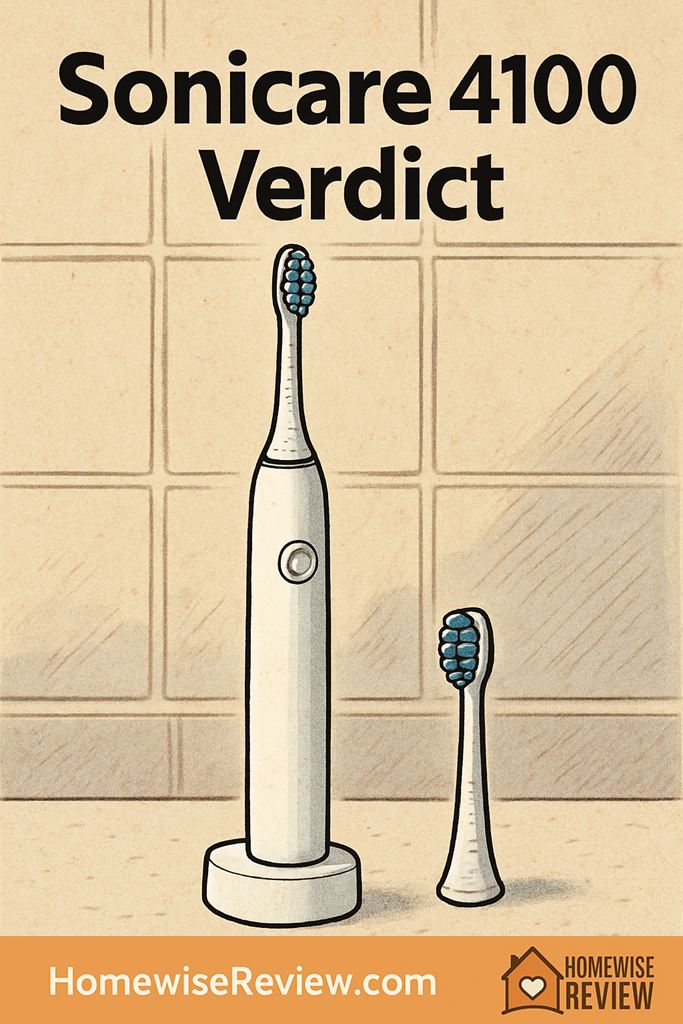
The Philips Sonicare ProtectiveClean 4100 is worth it if you want a dependable sonic toothbrush that feels gentle on gums, includes a pressure sensor, and keeps things simple. It is best for first-time electric toothbrush buyers, people who brush too hard, and adults who want better daily cleaning without app features or a pile of modes. Compared with cheaper options like the Oral-B Pro 1000 and Aquasonic Black Series, the 4100 feels more refined and easier to live with, but the jump is not so dramatic that every budget shopper needs it.
Overview
The Philips Sonicare ProtectiveClean 4100 is a rechargeable sonic toothbrush from Philips, built as a straightforward everyday model rather than a feature-packed luxury pick. Its core promise is simple: better plaque removal than a manual brush, plus a pressure sensor and timer, without pushing you into smart features you may never use.
Key Specs
| Type | Rechargeable sonic electric toothbrush |
|---|---|
| Size | Standard adult handle with a slim profile |
| Brushing modes | 1 mode: Clean |
| Intensity levels | 2 |
| Pressure sensor | Yes |
| Timer | 2-minute SmarTimer with QuadPacer interval pacing |
| Brush head system | Compatible with snap-on Sonicare heads, with BrushSync replacement reminder support |
| Battery life | About 2 weeks per charge with typical twice-daily use |
| Charging | Compact charging stand |
Who It’s For
This brush fits adults who want an easy upgrade from manual brushing and do not want to babysit an app or sort through extra settings every morning. It is especially well suited to people with sensitive gums, people who tend to press too hard, and shoppers who want a recognizable brand with a proven cleaning style.
- Good for first-time electric toothbrush users
- Good for sensitive gums and heavy-handed brushers
- Good for anyone who wants a simple, low-fuss routine
- Less ideal for shoppers who want whitening modes, travel extras, or the cheapest replacement heads
Performance & Feel
The ProtectiveClean 4100 delivers the classic Sonicare experience: a fast, high-frequency vibration that cleans by gliding along the teeth rather than scrubbing at them. If you are coming from a manual brush, the first few uses can feel a little ticklish, especially on the front teeth. Once you adjust, the cleaning is impressive. Teeth feel noticeably smoother after a full two-minute cycle, and the slim head makes it easier to reach back molars and the gumline without feeling bulky.
One thing Philips gets right here is the overall feel. This brush is gentler than many entry-level rotating models, including the Oral-B Pro 1000, especially around tender gums. That does not mean weak. It still removes the fuzzy plaque buildup that collects along the gumline and behind the lower front teeth, but it does it with less of that direct, scrubby sensation some people dislike. If your mouth runs sensitive or you have ever made your gums sore by brushing too aggressively, that difference matters.
The pressure sensor is one of the main reasons to choose the 4100 over a bargain electric toothbrush. When you press too hard, the handle changes its brushing response enough to get your attention. It is a simple feature, but genuinely useful. Many adults brush harder than they think, and this kind of feedback helps build better habits quickly. The two intensity levels help too. The lower setting is a smart place to start if sonic brushes feel intense at first, while the higher setting gives a more thorough clean once you are used to it.
There are trade-offs. You only get one brushing mode, so there is no dedicated whitening or gum-care option. For many people that is not a real loss, but if you like customization, the 4100 may feel basic. The included plaque-control style head cleans well, though some users may prefer switching to a softer Sonicare head after the first few weeks. Battery life is solid, usually around two weeks in normal use, and the charger is compact enough for a bathroom counter. Long-term ownership is where you need to think a little harder, because genuine replacement heads are not the cheapest part of the package and the BrushSync reminder works best with compatible Philips heads.
Pros & Cons
Pros
- Strong daily cleaning with a gentler feel than many rotating brushes
- Pressure sensor is genuinely helpful, especially for people who brush too hard
- Simple controls and only one main mode, which keeps the routine easy
- Good battery life and a slim handle that is comfortable to hold
Cons
- Only one brushing mode, so there is not much room to customize
- Replacement heads can be a more expensive long-term commitment than budget brands
- Some first-time users need a few days to adjust to the sonic vibration
How It Compares
| Product | Key Difference | Check Price |
|---|---|---|
| Philips Sonicare ProtectiveClean 4100 | Simple sonic toothbrush with a pressure sensor and two intensity levels, aimed at buyers who want gentle daily cleaning without extra modes. | View on Amazon |
| Oral-B Pro 1000 | Uses a round oscillating brush head that feels more scrubby and direct, but it is louder and less gentle at the gumline. | View on Amazon |
| Philips Sonicare ProtectiveClean 5100 | Keeps the same Sonicare brushing feel but adds more modes and flexibility for users who want extra customization. | View on Amazon |
| Aquasonic Black Series | Offers more accessories and settings, though the handle and brush-head ecosystem feel less polished over time. | View on Amazon |
💡 Editor’s Final Thoughts
Yes, the Philips Sonicare ProtectiveClean 4100 is worth buying for most adults who want a dependable, uncomplicated electric toothbrush from a trusted brand. It hits a nice middle ground between bare-bones brushes and overbuilt premium models. Buy it for the gentle cleaning, pressure sensor, and solid battery life. Skip it if you know you want multiple modes, travel accessories, or the lowest ongoing brush-head cost.
See also
If you like practical, everyday gadget reviews with a similar focus on long-term usability, start with our Keurig K-Slim single serve coffee maker review.
- Revlon One-Step Volumizer Plus review for fast at-home styling
- Bio Ionic 10X styling iron review for smoother, quicker straightening
- Shark SpeedStyle Pro Flex hair dryer review for compact power
Frequently Asked Questions ▾
Is the Philips Sonicare ProtectiveClean 4100 good for sensitive gums?
Yes. That is one of its strongest selling points. The sonic action feels gentler than many rotating brushes, and the pressure sensor helps stop you from brushing too hard. If your gums are tender or you are switching from a manual brush, start on the lower intensity setting for the first few days.
Does the ProtectiveClean 4100 have multiple brushing modes?
No. It keeps things simple with one main Clean mode, plus two intensity levels. For many people that is enough, since consistent technique matters more than cycling through specialty modes. If you want whitening or gum-care presets, you will need to move up to a higher model.
How does it compare with the Oral-B Pro 1000?
The biggest difference is brushing feel. The Oral-B Pro 1000 uses a round oscillating head that feels more direct and scrubby, while the Sonicare 4100 feels smoother and gentler. Both clean well when used properly. I would lean toward the 4100 for sensitive gums and toward the Oral-B if you prefer a more mechanical, tooth-by-tooth cleaning sensation.
How long does the battery last in real use?
About two weeks is a realistic expectation for most people brushing twice a day for two minutes. That is enough for normal bathroom use and short trips, though it is still smart to pack the charger for longer travel. Battery life will shorten gradually over time, as it does with most rechargeable brushes.
Can you use other Sonicare brush heads on the 4100?
Yes, it works with many snap-on Sonicare heads, which is helpful if the included plaque-control style feels too firm. Just keep in mind that some reminder features work best with compatible Philips heads. If you want the most predictable fit and performance, genuine Sonicare heads are still the safer choice.
As an Amazon Associate, we earn from qualifying purchases made through links on our site.