

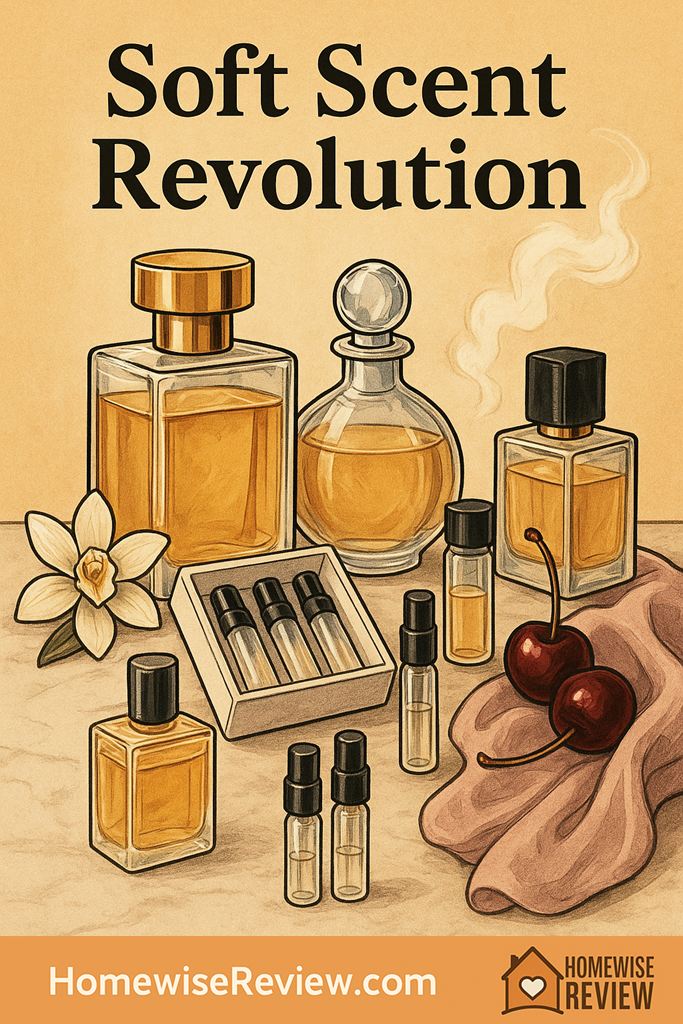
Fragrance shoppers are not hunting for one dramatic perfume anymore. The strongest signals now point to softer, layerable, everyday scents that work across mists, oils, travel sprays, and full bottles.
- Circana reported U.S. prestige beauty sales rose 14% in 2023 to a record high, underscoring fragrance's continued momentum.
- Grand View Research projects the global perfume market to grow at a 5.9% CAGR from 2024 to 2030.
- Five-year U.S. Google Trends comparisons show recurring, elevated interest in skin scent, perfume dupe, and layering perfume.
- Search demand now clusters around concrete notes like vanilla and cherry, which are easier to imagine and sell online than more abstract scent profiles.
U.S. prestige beauty hit a record high in 2023, global perfume forecasts still cluster around roughly 5% to 6% annual growth through 2030, and search behavior keeps moving toward plain-English fragrance terms like skin scent, vanilla perfume, and perfume dupe. Those are not disconnected signals. Together, they suggest that fragrance is shifting from an occasional luxury purchase to an everyday, multi-item habit.
That changes what the next big thing looks like. After 2023, the most credible answer is not one magic ingredient or one theatrical bottle. It is the rise of the fragrance wardrobe: softer, layerable, easier-to-describe scents sold in flexible formats that make repeat buying feel normal.
The biggest finding: fragrance is moving from statement to system
For years, perfume marketing was built around the hero bottle. One scent was meant to stand in for a whole personality. The latest sales and search signals point in a different direction, one where people keep a clean musk for daytime, a cozy gourmand for evenings, a mist for quick refreshes, and a travel spray for convenience.
This shift matters because wardrobes create more touchpoints. A category that once relied on a few high-stakes purchases can now grow through minis, discovery sets, hair perfume, body mists, and refills. When consumers buy fragrance as a set of moods instead of one lifelong signature, the market gets wider, not just more expensive.
It also fits the way people discover scent now. Social recommendations rarely end with one definitive winner. They create a short list, and short lists naturally turn into collections.
Finding #1: comfort notes are beating challenge notes
The strongest post-2023 scent language is comforting, familiar, and easy to picture. Vanilla, cherry, warm musk, milk, soft woods, rice, tea, and salted skin accords all benefit from something older perfume marketing did not need to prioritize: instant mental imagery. If a shopper cannot smell through a screen, the next best thing is a note profile they can imagine in seconds.
That gives warm gourmands and clean skin scents a structural advantage online. They are descriptive without being technical, emotional without being abstract, and broad enough to work across price points. In plain terms, a fragrance described as soft vanilla skin translates faster in a short video than a perfume built around a more demanding resinous or animalic story.
Challenge notes are not disappearing. Oud, leather, incense, and bold white florals still have loyal audiences. They just look less likely to drive the broadest wave of growth, because mass digital discovery rewards immediacy over explanation.
Finding #2: intimacy is replacing projection as the default ideal
One of the clearest behavior changes is that shoppers increasingly value closeness. The modern compliment fragrance is often described as something noticed in a hug, not from across a room. That is a meaningful change from the era when performance was often reduced to projection alone.
Search interest around skin scent reflects that shift. So does the popularity of clean musks, airy ambers, soft woods, and barely-sweet gourmands that sit closer to the body. Consumers still want longevity, but the goal is often lasting softly, not dominating a space.
This is partly aesthetic and partly practical. Office wear, travel, shared spaces, and daily use all favor fragrances that feel polished without turning every room into a sillage test. Quiet luxury did not stay in fashion and interiors. It moved into perfume too.
Finding #3: the format war matters as much as the formula
The next fragrance winner is likely to be built as a system, not just a bottle. Travel sprays, discovery sets, body mists, scented oils, hair perfume, and refillable formats solve several post-2023 problems at once: tighter budgets, lower tolerance for bad blind buys, and a stronger desire for variety.
These formats also support the wardrobe model. A shopper can test a fragrance in mini form, add a mist for daytime, upgrade to a full bottle later, and still feel in control of spending. That journey is more flexible than the old department-store pattern of sampling once and committing on the spot.
In other words, the big shift is not only what fragrance smells like. It is how the category is packaged for experimentation. The brands that understand that will probably outperform the ones still acting like one full bottle should do all the work.
Finding #4: algorithm-friendly perfume is becoming a real advantage
Online discovery now rewards fragrances that can survive compression. A perfume does better when it can be summarized in a few vivid words, compared to something familiar, and slotted into a mood or microtrend. That is why simple note narratives keep outperforming more complex stories in public conversation.
The implication is bigger than marketing copy. Development itself starts to change when brands know a scent has to be memorable as text, voiceover, and thumbnail-level conversation. Easy-to-grasp profiles like cherry liqueur, vanilla cream, clean skin musk, or tea and woods do not just smell appealing. They are also easier to recommend, rank, and search.
This does not mean perfumery is getting less sophisticated. It means the commercial edge increasingly belongs to scents that hide their complexity behind clarity. The blockbuster fragrance of the next few years will probably be elegant, but it will also be explainable.
What probably will not be the next big thing
A few popular predictions look weaker when the data is stripped of hype. Pure novelty can generate attention, but repeat purchasing still follows wearability. Price alone is not a moat anymore, because consumers now move between prestige, mini luxury, and budget-friendly options with very little stigma.
It is also risky to assume louder automatically means better. Strong performance still matters, but closer-wearing fragrances are increasingly defining what people mean by versatile, expensive-smelling, and daily worthy. The future looks less like a single maximalist statement and more like controlled variety.
What Most Reviews Miss
The big change is not a new note. People are buying fragrance as a set: a light skin scent for day, a sweeter scent for night, plus mists, oils, travel sprays, and refills to layer or swap in. If you judge these softer scents like an old all-day signature perfume, you will miss the point and likely buy the wrong thing.
💡 Editor’s Final Thoughts
After 2023, the most durable opportunity in fragrance looks behavioral, not merely olfactive. Consumers want comforting notes, close-to-skin wear, lower-risk formats, and stories that make sense online. Put together, those forces point to a category built around layering, rotation, and everyday use.
That is why the strongest candidates for the next major wave are clean musks, polished gourmands, tea and rice fragrances, soft woods, and skin-like ambers sold across full bottles, minis, mists, and companion products. Signature scents will not disappear, but the real growth engine now looks like a small, flexible fragrance wardrobe rather than one all-purpose icon.
Methodology
This report synthesizes public prestige beauty retail signals, broad perfume market forecasts, and five-year U.S. Google Trends comparisons across fragrance behavior and note terms. Instead of predicting one specific bestseller, it looks for the overlap between category growth, repeated search intent, and the formats that make experimentation easier.
Buying Guides Based on This Data
If the move toward fewer, better bottles appeals to you, our guide to the best signature scents for minimalists shows how this shift looks in a tighter scent wardrobe. For the price-conscious side of the same trend, see our guide to best perfumes under $50 highlights where accessible fragrance is strongest. And if you are weighing whether one exceptional bottle still earns its place, best luxury perfumes for milestone moments maps where a true splurge still stands apart.
Frequently Asked Questions ▾
Is the next big thing a specific note like vanilla or cherry?
Not exactly. Those notes matter because they are easy to imagine and easy to discuss online, but the larger shift is behavioral. The real change is toward fragrance wardrobes made up of comforting, wearable scents that can be rotated and layered.
Are bold, high-projection perfumes losing relevance?
No. They still have a place for collectors, evenings out, and anyone who loves a strong scent trail. The data simply suggests that the broadest everyday growth is leaning toward closer-wearing, office-safe fragrances and flexible formats.
Does this mean signature scents are over?
Not at all. Signature scent buying still exists, but it now sits beside discovery sets, travel sprays, body mists, and companion products. Loyalty is becoming more modular, which is why one person can have a signature style without wearing one bottle every day.
As an Amazon Associate, we earn from qualifying purchases made through links on our site.