

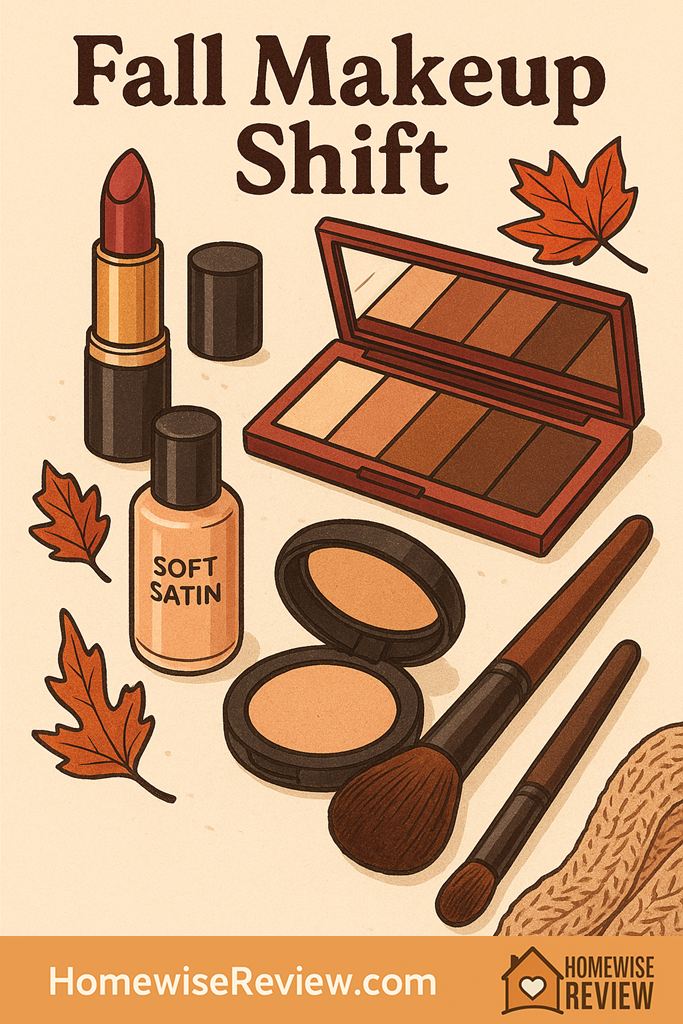
A useful fall makeup update is a response to conditions, not a demand to buy a new color story. Cooler air and indoor heating may change how skin feels; lower or more variable light can change how color reads; heavier clothing and longer schedules can change where makeup rubs or fades. Audit those differences first, then adjust preparation, finish, color depth, and wear only where your current routine stops working.
Run a seasonal audit before changing products
Wear your normal routine for a full day and check it in morning daylight, indoor light, and late afternoon. Note the failure, not just the appearance. Does foundation catch on dry patches? Does a summer shade look too bright next to darker clothes? Does lipstick transfer to cups and scarves? Does powder look heavy by midday? A specific failure leads to a smaller, cheaper fix.
| What changed | Likely cause to test | Lowest-effort adjustment |
|---|---|---|
| Base looks flaky or tight | Drier skin, harsh cleansing, too much powder, incompatible layers | Improve moisturization, reduce powder, and apply thinner base layers |
| Base separates around nose or mouth | Surface oil over dehydrated areas, rubbing, excess product | Use less product, press rather than drag, and set only moving zones |
| Summer colors feel disconnected | Different wardrobe contrast or indoor light | Sheer the shade, mix with a neutral, or move color placement |
| Lips need constant repair | Dryness, transfer, or formula unsuited to the day | Prep lips and choose balm, stain, liner, or long-wear color by occasion |
| Makeup rubs onto collars or scarves | Coverage extends into friction zones | Use less base at the jaw and set the contact edge selectively |
Adjust skin care only if skin behavior changed
The American Academy of Dermatology notes that lower temperature and humidity, along with dry indoor heat, can make it harder for skin to retain moisture. It recommends applying moisturizer after washing and using a cream or ointment when extra dryness requires it. That does not mean every person needs a heavy cream under makeup on the first cool day.
If your usual moisturizer still leaves skin comfortable, keep it. If makeup begins catching on flakes or skin feels tight, test one change at a time: a gentler cleanse, a richer moisturizer in dry zones, less exfoliation, or a shorter wait between washing and moisturizing. Let skin care settle before makeup so you can distinguish dryness from pilling.
Persistent redness, itching, cracking, or a rash is not a finish problem to hide with foundation. Stop irritating products and seek medical advice when self-care does not resolve the change.
Keep sun protection in the routine
Cooler weather does not switch off ultraviolet exposure. Dermatologists recommend sun protection year-round, including in winter. Follow guidance appropriate to your skin and activities; for exposed skin, AAD commonly recommends broad-spectrum, water-resistant SPF 30 or higher.
Makeup with SPF can be useful, but do not assume the thin amount used for color will deliver the labeled sunscreen performance. Use sunscreen as directed, allow it to form an even layer, then apply makeup without aggressive rubbing. If products pill, reduce layer thickness, add settling time, or test a more compatible combination rather than skipping protection.
Move from all-over finish to zone control
Seasonal advice often declares that dewy is out and matte is in. Real faces rarely need one finish everywhere. The center of the face may become shiny while cheeks feel dry; under-eyes may crease while the forehead wears well.
Build the base by zone:
- Use moisturizer where skin feels tight, not as a blanket solution for every area.
- Apply foundation or tint in thin layers, concentrating coverage where tone needs it.
- Press a small amount of powder onto crease-prone or high-contact zones.
- Leave comfortable areas alone instead of repeatedly adding primer, base, and powder.
- Add controlled luminosity with blush or highlight only where you want dimension.
This creates a satin or natural result without requiring a new foundation. If your base consistently fails, the makeup base builder guide can help separate skin preparation, formula compatibility, amount, and application technique.
Change color by depth, temperature, or placement
You can make an existing palette feel seasonal in three independent ways:
- Depth: apply a familiar color in a slightly deeper layer or anchor it with a darker liner.
- Temperature: choose a warmer, cooler, or more muted neighbor that works with your undertone and wardrobe.
- Placement: concentrate color near the lash line, diffuse blush farther back, or use a blurred lip instead of a sharp edge.
Berry, brick, cocoa, plum, olive, bronze, and cinnamon are common fall references, but none is universally flattering or mandatory. Translate the family rather than copying a named shade. A cool berry, warm brick, neutral brown, and muted plum create different contrasts on different complexions.
Test color beside the clothes and lighting you actually wear. A lip that looks balanced in bright bathroom light may read much darker in a restaurant. Take a daylight photo and an indoor photo before deciding that a shade is wrong.
Build a wearable eye update
For a subtle change, keep your usual shape and replace one variable. Swap black liner for deep brown, plum, navy, or olive; add a satin tone over a familiar matte; or deepen only the outer lash line. This preserves technique while changing the mood.
Use products only in their labeled area. FDA regulates color additives by intended use, and a color permitted in a lip or face cosmetic is not automatically permitted around the eyes. Do not repurpose lip liner as eyeliner merely because the shade fits a trend.
Keep eye products and tools clean, do not share them, and discard products used during an eye infection. Stop immediately if an eye cosmetic irritates the area.
Choose lip strategy by comfort and maintenance
A fall lip can be sheer, glossy, satin, stained, or matte. Decide how often you are willing to check it. Balm or tinted balm prioritizes comfort and easy reapplication. A stain can leave color with less transfer, although some formulas feel drying. Liner plus lipstick gives precision and depth but may require a mirror. Long-wear liquid color can reduce transfer but should not be forced onto already cracked lips.
Apply lip care before the makeup routine so it has time to settle. Before precise color, blot excess product that would make the edge slide. For a lower-commitment version of a deep shade, tap it onto the center and blur outward rather than buying a separate sheer formula.
Engineer wear around the actual day
Long wear is not a single product category. Match the control to the failure:
- For shine, carry blotting paper or a small powder and touch only the shiny area.
- For fading blush, apply thin even layers and avoid rubbing the cheek during the day.
- For scarf transfer, keep base away from the lowest jaw and neck where possible.
- For creasing concealer, use less, let it settle, smooth the crease, then set lightly.
- For lip transfer, use a liner or stain strategy and bring the exact product for repair.
A waterproof setting spray is not automatically the answer to dry patches, incompatible layers, or friction. The setting-spray guide is most useful after you identify that a spray’s tested wear characteristics match the problem.
A no-buy fall update
Before shopping, create three looks from your existing kit:
- Soft transition: normal base, deeper blush placement, brown liner, blotted lip.
- Color focus: minimal base, one plum, berry, olive, or bronze accent, neutral balance elsewhere.
- Long day: thin base, selective powder, controlled eye definition, low-maintenance lip, one planned touch-up product.
Photograph each in relevant light and note what is genuinely missing. Buy only for a defined gap such as a shade that creates the intended contrast, a base that remains comfortable on newly dry skin, or a formula that survives a specific schedule.
Bottom line
Fall makeup does not need a statistic, trend forecast, or full replacement bag. Observe how weather, light, clothing, and schedule affect your existing routine. Improve moisture where skin needs it, keep sun protection, control finish by zone, shift color through depth or placement, and solve wear at the point of failure. The best seasonal update is one you can explain in practical terms and reverse when conditions change again.
Frequently Asked Questions
Do I need a matte foundation for fall?
No. Choose finish according to skin behavior and preference. You can create more control with thin layers and selective powder without replacing a comfortable foundation.
Can I wear lipstick as eyeshadow for a fall color?
Only use a product in areas permitted by its label. A color additive allowed for lips or general cosmetic use may not be approved for the eye area.
Should I stop sunscreen when summer ends?
No. Dermatologists recommend year-round sun protection. Use a suitable broad-spectrum sunscreen as directed and build makeup over it carefully.
Sources and evidence notes
- American Academy of Dermatology: Cold weather and your skin – lower humidity, indoor heat, moisturization, and irritation guidance.
- American Academy of Dermatology: year-round sun-protection guidance – broad-spectrum SPF 30 or higher, including in winter.
- FDA: Color Additives and Cosmetics – intended-use and eye-area restrictions.
- FDA: Eye Cosmetic Safety – hygiene, irritation, and area-of-use precautions.