

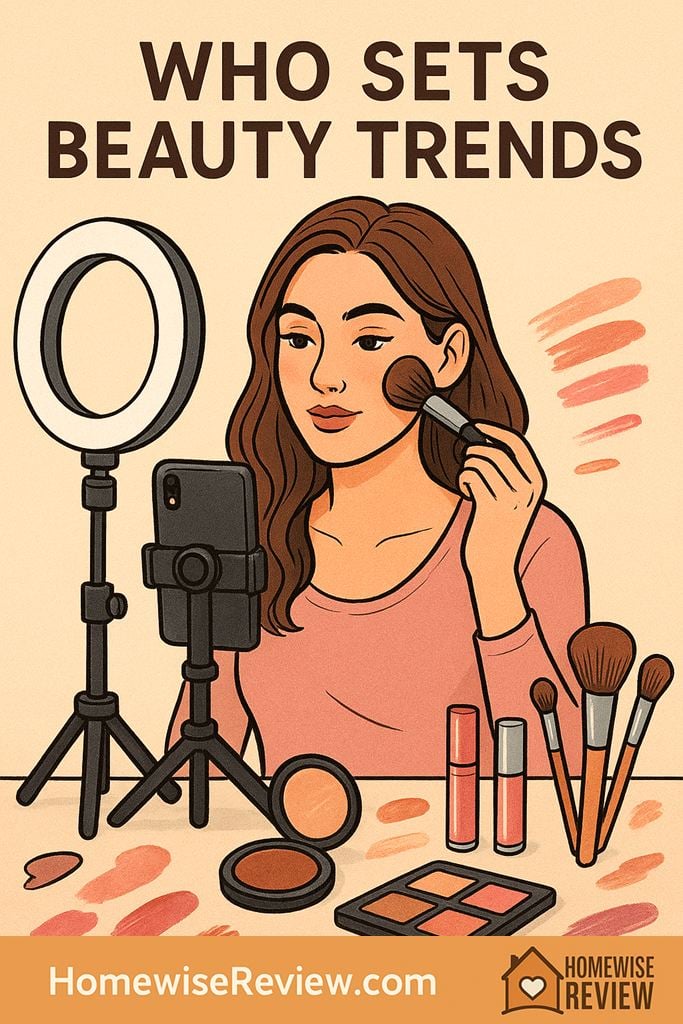
Beauty influencers can turn one makeup demonstration into a named trend that millions of viewers can recognize, copy, and adapt. Their real power is not proof that a product is universally good; it is the ability to make a result visible, memorable, and easy to repeat. This guide explains how that process works and gives you a practical way to separate useful technique from persuasive editing, sponsorship, and personal preference. The evidence here supports conclusions about platform reach, advertising disclosure, and cosmetic regulation, not claims that a viral product will work on every skin type, tone, climate, or routine.
Why influencer-led makeup trends spread so efficiently
A traditional beauty advertisement shows a finished result. A creator video can show the sequence: where the product is placed, which brush or finger technique is used, how much is applied, and what the finish looks like from several angles. That demonstration turns an abstract promise such as “soft-focus skin” into a routine a viewer can attempt.
Creators also give looks short, repeatable names. Once many people use the same label, viewers can search for variations, tutorials, corrections, and lower-cost interpretations without knowing a particular product name. The label becomes a shared recipe rather than a single brand campaign.
The audience is large enough for that repetition to matter. In its 2025 survey of 5,022 U.S. adults, Pew Research Center found that 50% reported using Instagram and 37% reported using TikTok. Use was especially concentrated among younger adults: 80% of adults ages 18 to 29 reported using Instagram. Those figures establish reach, not the sales effect of any individual creator or trend.
The four steps from demonstration to trend
- A visible result attracts attention. High-contrast changes (such as blush placement, lip-liner shape, brow structure, or a luminous finish) are easier to recognize in a short clip than subtle changes in wear, comfort, or irritation risk.
- A repeatable technique lowers the barrier. Viewers can imitate a placement map or layering order with products they already own. That makes a technique capable of spreading even when the featured item is unavailable or expensive.
- A memorable label organizes imitation. A named look gives creators and viewers a common search term. Different faces, skin tones, budgets, and product choices then become variations on the same template.
- Repetition creates familiarity. Seeing the same finish across multiple videos can make it feel established. Familiarity is evidence of exposure, however, not evidence that the product is durable, safe for every user, or better than an existing alternative.
What a makeup video can: and cannot: prove
| Question | What a careful video can show | What still needs verification |
|---|---|---|
| Color and finish | Approximate opacity, reflect, texture, and placement on the creator in the shown lighting | How the shade reads on your undertone and in daylight, indoor light, and photographs |
| Application | The creator’s tools, sequence, amount, and immediate blending result | Whether the method works with your base products, skin preparation, and skill level |
| Wear | A useful wear test when the start time, elapsed time, conditions, and unfiltered close-ups are clear | Performance in your climate and on your skin, plus transfer, comfort, and removal over repeated use |
| Value | Package size, listed price at the time recorded, and how much product the creator used | Current price, cost per use, return policy, and whether you already own a functional substitute |
| Safety or suitability | The creator’s own reaction and clearly stated skin characteristics | Your allergies, sensitivities, ingredient restrictions, label directions, and professional advice when needed |
A clip is strongest as evidence of what happened to one person under stated conditions. It becomes weaker when it silently generalizes that result to every viewer. Camera exposure, filters, smoothing, strategic cuts, lighting, and a freshly applied finish can all hide information that matters after several hours.
How sponsorship changes the way to read a recommendation
A paid or gifted relationship does not automatically make a recommendation false. It does give you information about the incentive behind the post, which is why disclosure placement matters. The Federal Trade Commission says a material connection can include payment, free or discounted products, employment, or a personal or family relationship. The disclosure should be hard to miss and placed with the endorsement itself; burying it after a “more” link, at the end of a video, or in a cluster of hashtags can make it easy to overlook.
Research also suggests that clarity affects how viewers interpret an endorsement. In a 2020 experiment with 321 participants, ambiguous disclosure produced lower perceived transparency than clear disclosure when participants recognized a possible financial relationship. That experiment measured perceptions and purchase intentions in a controlled setting; it did not test whether the promoted products actually performed well.
Use disclosure as context, not as a pass-or-fail verdict. Then ask whether the creator identifies meaningful drawbacks, shows the exact product and shade, explains test conditions, and distinguishes personal preference from a broadly verifiable fact.
- Name the result you want. Write down the finish, coverage, color family, wear time, or technique you are trying to achieve. If the trend has no benefit beyond feeling current, waiting may be the best choice.
- Find the relationship disclosure. Look and listen in the post itself for clear language such as “ad,” “sponsored,” or an explanation that the product was free. Do not assume a creator is independent because the caption sounds casual.
- Confirm the exact item. Match the product name, formula, shade, size, and region. A reformulation, similarly named version, or different shade can make another person’s demonstration poor evidence for the item in your cart.
- Audit the test conditions. Note lighting, filters, skin preparation, tools, base products, application amount, elapsed wear time, climate, and whether the creator shows texture at normal viewing distance and in close-up.
- Look for failure information. A useful review explains who should skip the product, what it does poorly, and which conditions caused fading, creasing, patchiness, transfer, or discomfort. Pure praise gives you little help matching the product to your routine.
- Check facts outside the video. Read the current label, directions, ingredient list, net quantity, manufacturer information, and retailer return terms. For cosmetics in the United States, FDA explains that products and ingredients generally do not receive premarket approval, apart from color additives. A phrase such as “FDA approved makeup” therefore deserves scrutiny.
- Use a cooling-off period. Compare the proposed purchase with products you already own. If the appeal survives a day or two and the product fills a specific gap, the decision is more likely to be about fit than momentum.
Judge the technique separately from the featured product
Many viral looks are really placement or layering ideas. You can test a blush position, lip combination, powder placement, or softer brow shape with your current collection before buying anything. This separates the creative value of the tutorial from the commercial value of the recommendation.
If the technique works but your product does not create the desired finish, identify the exact missing property: a more emollient texture, finer shimmer, stronger opacity, cooler undertone, smaller applicator, or longer setting time. That property is a better shopping criterion than the trend name.
Routine compatibility matters too. A complexion product that looks smooth over the creator’s skincare and primer may pill over yours. A glossy lip combination may be unsuitable if transfer resistance is your priority. If you are still defining the finish you need, this guide to choosing a foundation finish can help turn a visual preference into practical criteria.
Red flags that weaken an influencer recommendation
- The product or shade is not identified clearly.
- The clip jumps from bare skin to a finished look without showing application.
- A wear claim has no start time, duration, or conditions.
- Beauty filters, smoothing, or lighting changes are not addressed.
- The creator makes medical, treatment, allergy-safe, or universal-suitability claims without appropriate evidence.
- Every product is described as essential, flawless, or the best, with no meaningful tradeoff.
- The recommendation relies on sellout claims, urgency, or popularity instead of explaining performance.
- The disclosure is vague, hidden, or separated from the endorsement.
FDA requires cosmetic labeling to be truthful and not misleading, and claims that a product treats or prevents disease can place it in drug territory. A creator’s confident delivery does not change that regulatory boundary. Stop using a product if it causes a concerning reaction, follow the label, and seek appropriate medical advice for persistent or severe symptoms.
Suppose a creator places liquid blush high and outward toward the temples, then claims the method “lifts every face.” The useful evidence is narrower: on that creator, with that face shape, base, applicator, amount, and lighting, the placement created a particular visual effect.
Test the placement with blush you already own on one side of your face and your normal placement on the other. Check both sides in daylight and from the front rather than only at a three-quarter camera angle. If the new position suits you, you learned something valuable without buying. If your current blush is difficult to diffuse, the shopping need is now specific (perhaps a sheerer formula or a tool that applies less product) rather than “the viral blush.”
The bottom line
Beauty influencers shape makeup trends by translating products into visible, named, repeatable routines. That makes them powerful teachers and discovery channels, but it does not make every recommendation independent, complete, or suitable for you. Treat the demonstration as one piece of evidence. Verify the commercial relationship, exact variant, test conditions, current label facts, and fit with your own routine. The smartest response to a trend is often to try the technique first and shop only when you can name the specific problem a new product will solve.
Frequently Asked Questions
Does a sponsored post mean the creator is dishonest?
No. Sponsorship describes a relationship, not whether a statement is true. A clear disclosure lets you weigh that incentive alongside the quality of the demonstration, the creator’s test conditions, and independent product facts.
Can a short makeup video be a real wear test?
It can provide useful evidence when it identifies the start and end times, conditions, preparation, other products used, and unfiltered close-ups. It still reports one person’s result and cannot guarantee the same wear on another skin type or in another climate.
What should I do when I like the look but do not need the product?
Recreate the placement, color family, or layering order with products you own. If the result falls short, identify the missing property before shopping. That preserves the creative idea without turning every trend into a purchase.
Sources and evidence notes
- Pew Research Center, Americans’ Social Media Use 2025: nationally representative survey methods and platform-use estimates cited above.
- Federal Trade Commission, Disclosures 101 for Social Media Influencers: material-connection and disclosure-placement guidance.
- Evans et al., effects of influencer transparency on product efficacy and purchase intentions: 321-participant experiment on clear versus ambiguous disclosure.
- U.S. Food and Drug Administration, Cosmetic Ingredients: premarket-approval limits and manufacturer safety responsibility.
- U.S. Food and Drug Administration, Cosmetics Labeling Claims: truthful-labeling and cosmetic-versus-drug claim boundaries.