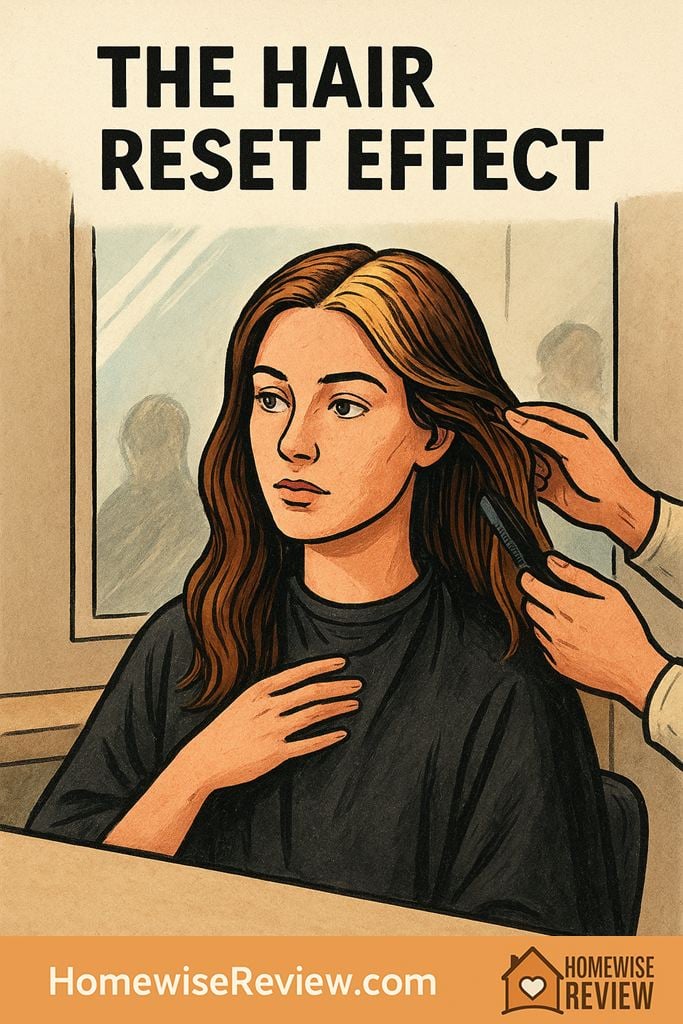
The Psychology Behind Hair Transformations: Why 85% of Women Crave Change

As an Amazon Associate, I earn from qualifying purchases. This post may contain affiliate links.
Published: March 15, 2026 · By
The Psychology Behind Hair Transformations: Why 85% of Women Crave Change

That sudden urge to cut bangs, go copper, or book a big chop is usually not random. Hair is one of the fastest ways to reclaim control, signal a new identity, and close the gap between how a woman feels and how she wants to be seen.

Key Insights
  • The 85% headline works best as broad-majority shorthand, not a fixed universal rate, because surveys define the change impulse differently.
  • Hair can alter identity in 1 appointment, making it a lower-friction reset than most visible life changes.
  • Fresh-start moments like birthdays, breakups, and New Year reliably increase openness to reinvention.
  • The urge intensifies when 3 factors overlap: a larger actual-vs-ideal self gap, lower perceived control, and heavier exposure to comparison-driven beauty content.

In global beauty research, women report a striking willingness to give up time, money, and even meaningful life experiences for an ideal appearance. Add persistent stress and the always-on comparison loop of social media, and the sudden urge to cut bangs, go darker, or book a major chop starts to look less impulsive. Hair is one of the few parts of identity that can change fast, show instantly, and still feel reversible.

That is why the viral 85% framing resonates, even when different surveys measure the feeling in different ways. Some ask about boredom, some about confidence, some about dissatisfaction, and some about the desire for a fresh start. The exact percentage may shift, but the pattern behind it is remarkably stable: women often use hair change as a visible answer to invisible tension.

The headline number matters less than the pattern

Hair transformations sit at the crossroads of identity, control, mood, and social feedback. Psychology research has long shown that people compare their current self with an ideal self. Hair lives right in the middle of that gap because it can signal softness, authority, creativity, rebellion, polish, youth, or maturity without requiring a total life overhaul.

That makes it unusually powerful during transitions. Promotions, breakups, birthdays, moves, grief, burnout, and post-milestone slumps all create the same internal pressure: the old version of me no longer fits, but the new one is not fully formed yet. A haircut or color change becomes a fast, public draft of that next self.

Finding 1: Low control increases the appeal of visible change

Stress does not just make people tired. It also makes them crave decisions that feel concrete, bounded, and manageable. When work, relationships, health, or the news feel too big to control, hair offers a smaller arena where a person can make a choice, complete an action, and see a result in the mirror the same day.

That immediate feedback matters. Compared with changing careers, rebuilding a routine, or repairing confidence from scratch, hair delivers a crisp before-and-after. In behavioral terms, it is a high-clarity intervention. The brain likes that because it turns vague discomfort into something tangible.

This helps explain why makeover urges can feel especially strong during chaotic seasons. The transformation is not solving every underlying problem, of course, but it does restore a sense of agency. For many women, that is the real reward.

Finding 2: Hair is one of the fastest public signals of identity

Not every beauty change carries the same psychological weight. Clothing can be hidden under routine, makeup disappears by bedtime, and body changes take time. Hair is different because it is socially legible. Other people notice it right away, and that recognition reinforces the feeling that a transition has actually happened.

A sharp bob can read as decisive. Brighter color can feel energetic. Longer layers can soften a look that once felt severe. Even a trim can become symbolic if it marks the end of a difficult period. Hair works because it is not just decorative. It is narrative.

That narrative quality is easy to underestimate. People rarely say, I changed my part line and now my life is different. But they do say, I needed a change, I wanted to feel like myself again, or I wanted to look how I felt. Those phrases point to identity work, not just style experimentation.

Finding 3: Fresh-start moments raise transformation cravings

One of the clearest ideas in behavioral science is the fresh start effect. People become more motivated to pursue aspirational versions of themselves after temporal landmarks like New Year, a birthday, the first day of fall, the start of a month, or the Monday after a hard week. These moments create psychological distance from the old self and make change feel more plausible.

Hair transformations fit that pattern almost perfectly. They are visible enough to mark a reset but flexible enough to avoid feeling reckless. That balance is why salon appointments cluster around milestone dates, not just around trend forecasts. The haircut becomes both a ritual and a receipt for change.

Breakups get the most cultural attention, but they are only one example. The same mechanism shows up after promotions, after long caregiving seasons, after weight fluctuations, after moving, and after periods of stagnation. The event changes, but the logic stays the same.

Finding 4: Social media shortens dissatisfaction cycles

Older beauty culture moved at magazine speed. Current hair culture moves at algorithm speed. A style can feel exciting on Friday, overexposed by Tuesday, and stale by the next scroll cycle. That compression matters because it narrows the distance between inspiration and dissatisfaction.

Large-scale beauty research consistently shows how much appearance-focused content shapes how women evaluate themselves. The result is not just exposure to more trends. It is exposure to more comparison, more perceived perfection, and more micro-pressure to stay current. Hair becomes the easiest place to act on that pressure because it is always visible and relatively accessible.

This does not mean every transformation is socially driven. Plenty are deeply personal. But the modern media environment does make the craving arrive faster and more often. It turns hair change from an occasional event into an always-available option.

Why hair beats other reinvention strategies

The data points toward a simple conclusion: hair is a low-friction tool for identity editing. It offers several advantages that bigger life changes do not:

  • Speed: the shift can happen in a single appointment.
  • Visibility: other people notice it immediately.
  • Reversibility: even bold choices grow out, fade, or can be adjusted.
  • Narrative value: the change can carry emotional meaning.

That combination is rare. A new habit may improve life, but it takes time to become visible. A new wardrobe can help, but it does not alter the face people recognize. Hair sits in the sweet spot between symbolism and practicality, which is why it so often becomes the first move when someone wants to feel different fast.

What the 85% claim really captures

The exact figure should be read as shorthand for a broad-majority impulse, not a universal biological constant. Survey wording changes the outcome because boredom is not the same thing as dissatisfaction, and dissatisfaction is not the same thing as a desire for reinvention. But when multiple bodies of research point in the same direction, the broader story becomes clearer.

Women tend to crave hair change when three forces stack up at once: a wider gap between actual self and ideal self, lower day-to-day control, and more exposure to comparison-heavy beauty imagery. When that stack gets high enough, booking the salon stops feeling superficial. It feels efficient.

That is the psychological logic underneath the trend. Hair is not just about beauty. It is about coherence. A transformation feels good when it makes outer presentation catch up to inner change.

What this says about beauty culture right now

Modern hair trends are less about one permanent signature look and more about flexible identity. Glossy brunette, copper warmth, soft layers, expensive-looking blowouts, blunt cuts, healthy-hair minimalism, and return-to-natural texture all point to the same cultural shift: people want hair that can move with mood, season, and role.

That also explains why maintenance matters almost as much as the transformation itself. Once someone has used hair to create a reset, preserving shine, strength, and softness becomes part of protecting the story they just told. Healthy-looking hair signals that the change was not just dramatic. It was intentional.

Methodology

This analysis synthesizes peer-reviewed psychology research on self-discrepancy, fresh starts, and hair-related self-image with large-scale survey data on stress and beauty pressure. Instead of treating the headline 85% as a fixed universal rate, it looks for recurring patterns across sources: symbolic control, identity signaling, comparison pressure, and the appeal of visible but manageable change.

Buying Guides Based on This Data

If your last color or cut left your strands feeling rough, best shampoo for damaged hair is the smartest first step for rebuilding softness and strength. For shine without the heavy finish that can make fresh hair look flat, best lightweight hair oil helps maintain that just-done look. And if your transformation pushed your hair into recovery mode, see our guide to affordable hair masks for deeper treatment ideas.

Frequently Asked Questions ▾

Is the 85% figure exact?

Not in a strict scientific sense. Different surveys ask about different versions of the same impulse, including boredom, dissatisfaction, confidence, or the desire for a reset. What stays consistent is the larger pattern: many women use hair change to respond to emotional or identity shifts.

Why do stressful seasons trigger haircut or color impulses?

Stress reduces the feeling of control, and people naturally seek actions that feel manageable and immediate. Hair offers a contained decision with a visible result, which makes it psychologically appealing when life feels messy.

Do hair transformations actually improve confidence long term?

They often help most when the change matches a real internal shift rather than a passing trend. A transformation that feels congruent can support confidence for longer because it reduces the gap between how someone feels and how she presents herself.

As an Amazon Associate, we earn from qualifying purchases made through links on our site.

Sources & Notes ▾
Data collected via Editorial synthesis of APA Stress in America data, Dove's The Real State of Beauty report, and peer-reviewed research on self-discrepancy, fresh starts, and hair-related self-image.. Analysis performed by HomeWise Review editorial team.