

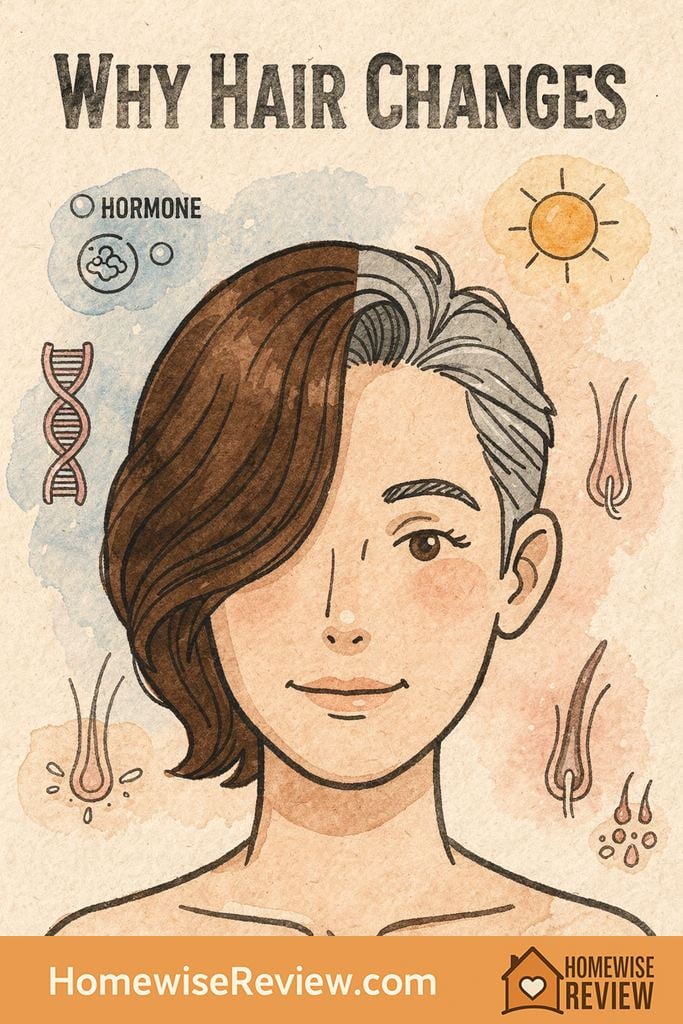
If your hair feels thicker, frizzier, flatter, or suddenly sheds more at certain times of year, it is not your imagination. Seasonal shifts change the hair fiber, the scalp environment, and even when shedding shows up.
- Common clinical references cite normal shedding around 50 to 100 hairs per day, making it easy to misread short seasonal spikes as sudden hair loss.
- A major “surprising” mechanism is timing: telogen effluvium classically appears about 2 to 3 months after a trigger, so summer stressors can surface as fall shedding.
- Hair fiber behavior changes with moisture: hydrated hair can swell, altering curl pattern and friction, which helps explain why humidity can reshape frizz and volume without any true change in density.
- The UV Index defines “very high” UV exposure starting at 8, supporting the idea that summer sun can drive measurable hair-shaft weathering (fading, roughness) even when the scalp seems unaffected.
Seasonal hair “moods” are usually a real, measurable mix of biology and physics. The surprise is that what you notice today is often caused by conditions from weeks or months ago, and many changes happen to the hair shaft itself, not just the scalp.
- Shedding has a built-in delay: some common shedding patterns can lag a trigger by about 2 to 3 months.
- Humidity changes hair size: when hair takes up water, the fiber can swell, altering curl pattern, frizz, and how styles hold.
- Sun “ages” hair like fabric: high-UV days accelerate roughness, fading, and dryness even if your scalp feels fine.
- Indoor winter air is its own climate: heated rooms often create a low-humidity environment that encourages static and breakage.
Methodology (what this report is based on)
This overview synthesizes findings from dermatology and hair-science references (hair cycle timing, shedding mechanisms, hair-shaft weathering), plus public environmental standards for UV exposure and climate variability. Where individual studies vary, the emphasis is on patterns that show up repeatedly across clinical descriptions, lab measurements of hair fibers, and widely used environmental scales.
Finding 1: Your hair cycle makes “seasonal” changes show up late
The hair you shed today is not necessarily hair that “got worse” today. Most scalp hair cycles through growth (anagen), transition (catagen), and rest (telogen). After a stressor nudges more hairs into telogen, those hairs often release later, which is why many people connect shedding to the wrong month.
The lag effect is the sneaky part. A sunburned scalp, travel stress, abrupt diet change, illness, new medication, or a major sleep disruption in midsummer can show up as increased shedding in early fall. Clinically, this delayed shedding pattern is one reason “seasonal shedding” gets blamed for everything, even when a specific trigger was involved.
What to watch: short-term increases that settle within a couple of months are common. A steadily widening part, thinning at the temples, or shedding that persists past a season change points away from a simple seasonal swing and toward something worth evaluating (iron status, thyroid, androgenetic hair loss, inflammatory scalp conditions, and more).
Finding 2: Humidity changes your hair’s geometry, not just its feel
Humidity is not just a styling inconvenience. It changes the water content of the hair fiber, and hair is built to interact with water. The cortex inside the hair shaft contains keratin structures that respond to moisture, while the cuticle acts like a protective roof that can be lifted and roughed up by weathering.
Why frizz spikes in humid seasons: water temporarily disrupts and reforms hydrogen bonds along the hair fiber. In practical terms, that means your carefully smoothed blowout is fighting chemistry all day. Curly and wavy hair often reacts most dramatically because its shape is more sensitive to small changes in swelling and bonding.
Why hair can feel “bigger” in summer: hydrated hair can swell in diameter, increasing volume but also increasing fiber-to-fiber friction. More friction can mean more tangling and more breakage during detangling, even if shedding from the root has not changed.
Counterintuitive twist: humidity can also make some hair look flatter. If the cuticle is compromised, moisture uptake can make strands clump together into larger “ropes,” reducing visible fullness at the root while still producing frizz and flyaways around the perimeter.
Finding 3: UV is a hair fiber problem as much as it is a skin problem
Most people associate sun exposure with skin damage, but UV and heat also affect the hair shaft. Unlike living skin, the visible part of hair is dead material. That sounds comforting until you realize it cannot biologically “repair” itself. Damage accumulates as weathering.
What UV does to hair: it can contribute to oxidation of pigments (color fading), changes in surface lipids (less slip, more roughness), and protein degradation over time. If you color your hair, UV becomes even more obvious because fading and brassiness are easier to see than microscopic cuticle changes.
Why this feels seasonal: the UV Index tends to rise in warmer months, which often coincide with more outdoor time. Pool and ocean exposure stack on top of sun exposure, adding chlorine, salt, and more mechanical stress from rinsing and detangling.
A surprising scalp angle: the scalp is skin, and sun exposure can trigger inflammation. Inflammation does not have to be dramatic to matter. Mild irritation can increase sensitivity, itching, and flaking, which can then change how aggressively someone shampoos or scratches, indirectly increasing breakage.
Finding 4: Winter dryness is mostly friction plus static, not “your hair dying”
Cold outdoor air holds less water vapor than warm air, and indoor heating often lowers relative humidity further. Low humidity changes how hair behaves electrically and mechanically.
Static is physics: dry hair in dry air builds and holds electrostatic charge more easily. That is why winter flyaways can look like breakage even when the fiber is intact. Add a knit hat, scarf, or coat collar and you have repeated rubbing in high-friction spots.
Breakage hotspots are predictable: around the nape, behind the ears, and the crown (where hats sit). If your “shedding” seems like short pieces on shoulders and collars rather than full-length hairs with a bulb, friction breakage is a prime suspect.
Scalp barrier changes: dry air can increase tightness and flaking for some people, but winter dandruff is not always just dryness. Conditions like seborrheic dermatitis often fluctuate with season and stress, and over-washing or harsh anti-dandruff use can backfire by increasing irritation in already dry conditions.
Finding 5: Spring and fall are transition seasons, and transitions create mixed signals
Many “hair problems” peak during transitions because multiple variables change at once. Temperature, humidity, wind, wardrobe friction, outdoor exposure, and daily routines shift in a matter of weeks. Your hair has to respond to the new environment while still carrying damage from the old one.
Fall is the classic shedding season: it is one of the most commonly reported times for shedding spikes, and the hair-cycle lag explains why. Summer triggers, even subtle ones like frequent sun exposure or small dietary shifts while traveling, can show up later as more hair entering and exiting telogen.
Spring can create “scalp confusion”: more sweating and more product use (dry shampoo, styling aids, sunscreen near the hairline) can change the scalp microbiome environment. That can mean itch, bumps, or greasiness for some hair types, while others feel drier due to increased cleansing frequency.
Finding 6: Wind, water, and “weathering” are the under-discussed drivers
Not all seasonal damage comes from temperature. Wind and water exposure change the mechanics of hair care. Wind tangles hair, and detangling is one of the highest-risk moments for breakage. Water exposure increases swelling, and swelling repeated over and over can fatigue the cuticle over time.
Summer water problems: pool chlorine and frequent rinsing can increase roughness and fade. Ocean salt plus sun plus wind is a classic trio for tangles and cuticle wear, even if you never use heat tools.
Winter water problems: hot showers plus dry air can leave hair feeling rough because the cuticle is lifted during washing, then the hair dries in a low-humidity environment that encourages static and friction. If you also increase heat styling in winter, you layer thermal stress on top of mechanical stress.
What is normal seasonality vs. a red flag?
Some seasonal variability is normal because the hair cycle is not perfectly synchronized, and your environment changes faster than your biology. But it helps to separate three look-alike problems: shedding from the root, breakage along the shaft, and styling changes due to moisture.
- More hairs in the drain, full length: more likely shedding (often temporary, sometimes telogen effluvium).
- Short pieces, rough ends, halo frizz: more likely breakage from friction, dryness, or overprocessing.
- Same density, but style falls apart: often humidity, static, or product mismatch rather than true loss.
Rule of thumb: shedding of 50 to 100 hairs per day is commonly cited as normal. The more useful signal is change over time. If your ponytail circumference noticeably shrinks, your part widens over several months, or you see scalp patches, that is beyond a “seasonal” explanation.
A season-smart routine (focused on variables, not hype)
Seasonal hair care works best when you adjust for the variable that actually changed, instead of swapping everything at once. Treat this like troubleshooting.
- If humidity rises: prioritize conditioning and film-formers that reduce moisture swings, reduce aggressive brushing, and style with techniques that respect your natural pattern.
- If UV rises: protect the hair fiber with physical barriers (hats, scarves, strategic part changes) and be gentle with color-treated hair. Pay attention to the scalp, too, especially along the part and hairline.
- If indoor air dries out: reduce friction (softer fabrics near the hair, gentler detangling), watch heat styling frequency, and focus on conditioning that improves slip to prevent breakage.
- If sweating increases: cleanse the scalp appropriately, but keep mid-lengths and ends protected with targeted conditioner so you do not over-strip the fiber.
The most “scientific” move: change one thing, then observe for two to three weeks. Hair is slow to show true density changes, but it is quick to show friction and moisture changes, which is why small adjustments can look dramatic.
Buying Guides Based on This Data
If your hair gets weighed down when humidity rises, start with a simpler, lighter formula from our roundup of lightweight conditioners and see how your ends respond over a couple of wash cycles. If seasonal frizz is making thick hair feel even bigger and harder to manage, matching your cleanser to your density can help, so compare options in our guide to the best shampoo for thick hair. And if the weather is pushing you into more heat styling, but you want tools that are forgiving, the easiest place to start is our list of styling tools for people who are bad at hair.
Frequently Asked Questions ▾
Why does hair shedding often spike in fall?
One reason is timing. If more hairs shift into the resting phase after summer stressors, shedding can show up about 2 to 3 months later. Fall also stacks routine changes like school schedules, travel fatigue, and different grooming habits.
Can cold weather directly cause hair loss?
Cold itself is not usually the direct cause of true hair loss from the follicle. What winter does well is increase dryness, static, and friction, which can look like “loss” because breakage and flyaways increase.
How can I tell shedding from breakage at home?
Look at what you collect. Full-length strands, sometimes with a tiny bulb at one end, point toward shedding. Short pieces of varying lengths, especially around the collar line and crown, suggest breakage from friction or styling.
Should I change my shampoo and conditioner every season?
Not automatically. It is usually more effective to adjust based on one environmental variable: humidity, UV exposure, sweating, or indoor dryness. If you swap everything at once, it becomes hard to tell what helped and what hurt.
As an Amazon Associate, we earn from qualifying purchases made through links on our site.
Sources & Notes ▾
- NCBI Bookshelf: Telogen Effluvium
- International Journal of Trichology: Hair Cosmetics (overview of hair fiber weathering and care)
- U.S. EPA: UV Index Scale
- NOAA National Centers for Environmental Information: Climate Data Online
- MedlinePlus: Hair Loss
- NIH Office of Dietary Supplements: Vitamin D Fact Sheet for Consumers
- NCBI Bookshelf: Seborrheic Dermatitis