

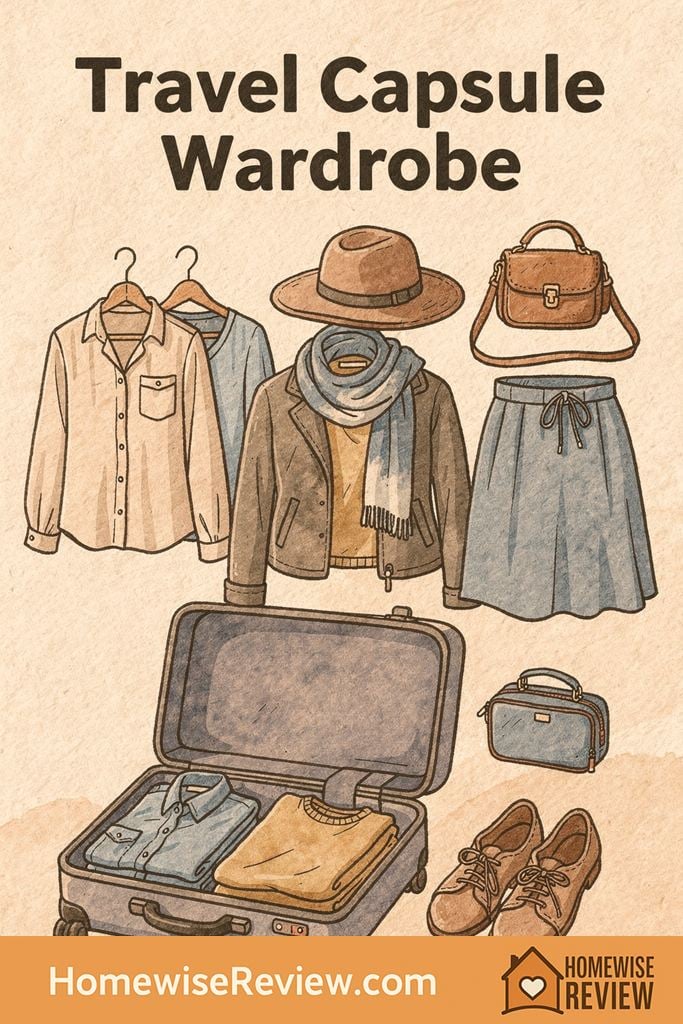
Want to pack light without feeling bored in your outfits by day three? A travel capsule wardrobe helps you bring fewer pieces that mix well, look put together, and actually fit your trip.
Packing for a trip is tricky because you are trying to predict weather, activities, and your own mood, all in one suitcase. A travel capsule wardrobe solves that by narrowing your options to pieces that work together in multiple outfits. The goal is not to pack “minimal,” it is to pack “useful.”
What is a travel capsule wardrobe?
A travel capsule wardrobe is a small, coordinated set of clothing, shoes, and accessories that can create lots of outfits with very few items. Think mix and match on purpose: every top works with every bottom, and layers fit over almost everything.
The best capsules feel boring on the hanger and great on the body. If everything coordinates, you will look consistent in photos and spend less time deciding what to wear.
Why it works (and when it is worth doing)
It reduces overpacking and decision fatigue
Most overpacking happens because we pack “just in case” outfits that only work one way. A capsule replaces single-use pieces with repeatable formulas, like “tee + trousers + light layer,” which can flex across multiple days.
It makes laundry easier
If your capsule is built around repeat-wear bottoms and quick-dry tops, a simple sink wash or one hotel laundry run becomes plenty. That is especially helpful for carry-on trips or family travel where luggage multiplies fast.
It is ideal for these trips
- 3 to 10 days: enough time for outfit variety to matter, short enough that you want to pack efficiently.
- Multi-activity itineraries: city days plus a nicer dinner, conferences, theme parks, or day trips.
- One-bag or carry-on only: strict space and weight limits.
Step-by-step: how to build your travel capsule wardrobe
Step 1: Write down the trip facts (before you touch your closet)
Start with reality, not aspirational outfits. Your capsule should reflect what you will actually do, not what would be cute if you had time and energy for outfit changes.
- Destination weather range: highs, lows, rain, wind, indoor air conditioning.
- Trip length: number of full days, plus travel days.
- Activities: walking-heavy days, workouts, dinners, work meetings, beach time.
- Laundry plan: none, sink wash, laundromat, hotel service.
- Shoes reality: how many miles you will walk, and what surfaces you will be on.
Step 2: Pick a color palette that mixes automatically
Color is the easiest lever for “more outfits with fewer pieces.” A tight palette lets you pack fewer items while still looking polished.
- Choose 2 neutrals: like black and ivory, navy and tan, gray and white.
- Add 1 to 2 accent colors: that flatter you and feel season-appropriate.
- Optional print rule: limit to 1 print that includes at least one neutral so it plays nicely with everything.
Quick palette check: If you can lay every top over every bottom and not cringe, your palette is working.
Step 3: Use a simple capsule formula (then adjust to your needs)
These numbers are a starting point for a 5 to 7 day trip with no laundry. If you will do laundry once, you can shave off 1 to 2 tops.
| Category | Suggested count | What to prioritize |
|---|---|---|
| Tops | 5 to 7 | Comfortable, layerable, not fussy, easy to re-wear |
| Bottoms | 2 to 3 | Repeat-wear, wrinkle-resistant, works with all tops |
| Layers | 2 | One light layer (cardigan or shirt-jacket) and one outer layer (coat or rain shell) |
| Dresses or one-piece outfits | 0 to 2 | Only if they can be dressed down and layered |
| Shoes | 2 (sometimes 3) | Comfort first, then versatility, then style |
| Accessories | 4 to 6 | Small items that change the look, not bulky extras |
Step 4: Choose your “core pieces” first
Core pieces are the items you will wear the most. Build around them before you add any special outfits.
- Bottoms: start here. Pick two bottoms you can wear 3 times each (for example: straight-leg jeans and tailored trousers, or a midi skirt and linen pants).
- Everyday top formula: 2 tees, 2 elevated tops, 1 warmer top (like a knit), plus one wildcard (like a tank for layering).
- Layers: one cozy mid-layer and one weather layer. If your jacket is bulky, wear it on travel days.
Step 5: Add 1 “point of interest” piece (not five)
This is the piece that makes your capsule feel like you, such as a beautiful scarf, a blazer in your accent color, or a patterned skirt. One is usually enough, because it will show up in photos and make repeats feel intentional.
Step 6: Pre-plan outfits with an outfit grid
Outfit planning is where a capsule goes from “nice idea” to “actually works.” Take 10 minutes to map outfits to activities, then pack to the plan.
- Make 3 outfit templates: casual day, nicer dinner, and travel day.
- Assign each day: which template you will use.
- Check temperature gaps: do you have a warm option and a cool option each day?
- Make sure shoes match: each outfit should work with at least one pair you packed.
Starter travel capsule examples (by season)
Use these as a framework, then swap silhouettes to match your style. The “best” capsule is the one you will truly wear.
Warm weather capsule (hot days, cool evenings)
- Tops (6): 2 breathable tees, 2 tanks for layering, 1 button-down, 1 nicer blouse
- Bottoms (2 to 3): linen pants, denim shorts or a midi skirt, optional lightweight trousers
- Layer (1): light cardigan or oversized shirt
- Outer layer (optional): packable rain jacket
- Shoes (2): walking sneakers, flat sandals
- Extra: swimsuit, cover-up that doubles as a dress, sun hat
Shoulder season capsule (spring or fall, mixed temps)
- Tops (6): 2 tees, 2 long sleeves, 1 knit, 1 nicer top
- Bottoms (3): jeans, trousers, optional skirt
- Layers (2): cardigan and a light jacket (denim jacket, blazer, or trench)
- Shoes (2 to 3): sneakers plus ankle boots or loafers
- Accessories: scarf for warmth and outfit polish
Cold weather capsule (winter travel, lots of layering)
- Tops (6): 2 base layers, 2 long sleeves, 2 knits
- Bottoms (2 to 3): jeans, warm trousers, optional leggings for under layers
- Layers (2): cardigan plus warm mid-layer (like a fleece or wool sweater)
- Outer layer (1): insulated coat suitable for wind and drizzle
- Shoes (2): waterproof boots and comfortable indoor-friendly shoes (sneakers or loafers)
- Cold-weather extras: hat, gloves, warm socks
How to make fewer pieces feel like more outfits
Use “top swapping” and “third pieces”
The easiest way to create visible variety is changing tops and adding a third piece like a cardigan, blazer, or scarf. Bottoms repeat more naturally, so lean into that and make your tops do the work.
- Repeat bottoms: plan on wearing your main bottom 3 times.
- Change the neckline: tee, button-down, knit, tank.
- Add structure: a blazer or shirt-jacket instantly reads “different outfit.”
Day to night: shift one thing
Instead of packing separate night outfits, pack one upgrade per category. For me, that is usually a nicer shoe and one elevated top that still feels comfortable.
- Swap sneakers for loafers or a low heel.
- Add a small necklace or earrings.
- Change to a better handbag or clutch.
Fabrics and fit: what travels best
Comfort matters, but so does how a fabric behaves after two hours in a suitcase. Focus on wrinkle resistance, breathability, and whether it holds odor.
| Fabric | Why it is good for travel | Watch-outs |
|---|---|---|
| Merino wool blends | Odor-resistant, re-wears well, good for layering | Can be pricey; needs gentle washing |
| Cotton jersey | Comfortable, easy to style, easy to wash | Can hold moisture and wrinkles more than blends |
| Linen and linen blends | Breathable for heat, looks relaxed and chic | Wrinkles easily unless blended; choose forgiving cuts |
| Polyester or technical blends | Wrinkle-resistant, quick-dry, often lightweight | Can trap odor; choose higher-quality blends |
| Denim | Durable, repeat-wear friendly, versatile | Heavy and slow to dry; not ideal for humid trips |
Fit tip: aim for “comfortable polish”
If an item is slightly annoying at home, it will feel unbearable on a long travel day. Prioritize pieces that move well, sit comfortably when you are seated, and do not require constant adjusting.
Shoes and accessories that do the heavy lifting
The 2-shoe rule (and when to break it)
Two pairs is usually enough: one true walking shoe and one nicer option that still allows real movement. Add a third only if your trip includes a distinct activity that truly needs it.
| Plan | Best for | Example shoe lineup |
|---|---|---|
| 2-shoe capsule | City walking, mixed casual plans | Sneakers + loafers (or flat sandals in warm weather) |
| 3-shoe capsule | Weddings, hikes, snow, or workouts | Sneakers + nicer shoe + activity shoe (boots, hiking shoe, or dress heel) |
Accessories that earn their spot
- Bag strategy: one crossbody for day, one compact nicer option if needed.
- Scarf or wrap: warmth on planes, modesty, and outfit variety in one small item.
- Jewelry: a simple set you can wear daily, plus one “dressier” piece.
- Belt: makes repeated bottoms feel styled and intentional.
How to pack it so it stays wearable
Use a simple packing workflow
- Lay everything out, then remove 20 percent before it goes in the suitcase.
- Roll knits and tees; fold structured items to reduce creasing.
- Put one complete outfit in an easy-to-reach spot for arrival.
- Wear your bulkiest pieces on the plane, especially jackets and boots.
Prevent wrinkles with smart choices
- Choose knits and blends over crisp cotton if you hate ironing.
- Pack a wrinkle-prone item between two softer pieces as a buffer.
- Hang items in the bathroom while you shower to relax light wrinkles.
Common travel capsule wardrobe mistakes (and quick fixes)
Mistake: too many “almosts”
If you pack items you do not love, you will default to the same safe outfit repeatedly. Fix it by swapping in one tried-and-true piece you already reach for at home.
Mistake: packing for fantasy dinners
Many of us pack for one imaginary night out and then never wear the outfit. Fix it by making your “nice” outfit compatible with your daytime shoes and layer, so it becomes flexible.
Mistake: ignoring the climate inside buildings
Air conditioning can be as challenging as outdoor heat. Fix it with a light layer that works with every outfit, like a neutral cardigan or button-down shirt.
Mistake: choosing shoes that are cute but untested
Unbroken-in shoes can ruin a trip. Fix it by choosing shoes you have walked in for at least a full day, and add blister care to your toiletry kit if you are prone to rubbing.
Worth Knowing Before You Buy
A travel capsule fails fast if you treat it like a minimalist challenge instead of a filter for what actually gets worn. It only works when every top goes with every bottom and each piece gets repeat use, because overpacking usually comes from "just in case" outfits and one-off items you wear once. If you still pack fantasy dinner looks, almost-right clothes, or untested shoes, you will give up options without actually making your bag lighter.
💡 Editor’s Final Thoughts
A travel capsule wardrobe works because it is built around coordination, repeat-wear pieces, and a realistic plan for your days. Start with your trip facts, choose a tight palette, and pack to a small set of outfits you already know you will wear.
See also
If you are tightening up your clothing, it helps to keep beauty streamlined too, so start with our travel makeup capsule and how to edit your travel makeup bag without forgetting essentials.
- Best travel toiletry kits for carry-on only packing
- Compact travel hair dryers that actually work
- How to build a winter capsule wardrobe
Frequently Asked Questions ▾
How many items should be in a travel capsule wardrobe?
For most 5 to 7 day trips, 12 to 20 clothing items plus 2 pairs of shoes is a practical range. The exact number depends on weather swings, dress codes, and whether you can do laundry.
What is the best color palette for a travel capsule?
Pick two neutrals you love wearing and one to two accent colors. Neutrals like black, navy, tan, and ivory tend to mix easily, and a small accent color keeps outfits from feeling flat in photos.
Can I do a capsule wardrobe for carry-on only travel?
Yes. Focus on lightweight layers, shoes that work with most outfits, and fabrics that re-wear well. Wear your bulkiest items on travel days, and plan on repeating bottoms more than tops.
How do I keep outfits from looking the same in pictures?
Use a third piece like a cardigan, blazer, or scarf, and vary your top silhouettes (tee, button-down, knit, tank). Accessories like earrings and a belt also help repeated bottoms look like new outfits.
Should I pack “just in case” items?
Pack one or two true problem-solvers, like a packable rain layer or a warmer mid-layer, then stop. Most “just in case” pieces are single-use and break the mix-and-match math of a capsule.
As an Amazon Associate, we earn from qualifying purchases made through links on our site.