

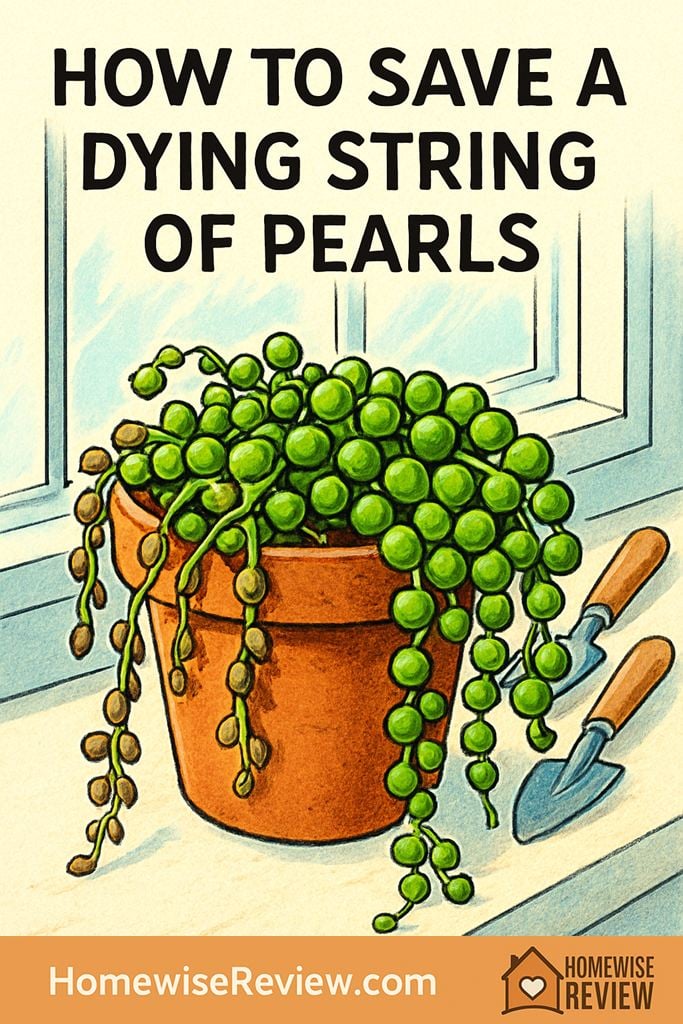
I kept “just giving it a little sip” every time my String of Pearls looked sad, and within days the crown went soft and the vines started dropping beads like it was giving up in real time. I was so frustrated I nearly tossed the whole pot, but trimming back the mushy stems and restarting the healthy strands in gritty soil felt like flipping a switch from panic to control. Watching the pearls firm up again was pure relief, and it taught me that guessing is what kills these plants, not one bad week.
A String of Pearls can go downhill quickly: one week it looks plump and trailing, the next it’s shedding beads or turning to mush. The good news is that most “dying” plants can be saved if you act early and use the right strategy for the cause.
Start with a quick diagnosis, then follow the rescue steps for your situation. Even if part of the plant is gone, you can usually restart it from healthy cuttings.
What a healthy String of Pearls should look and feel like
Knowing “normal” helps you spot the real issue. Healthy pearls are firm and plump, with a slight sheen and a clear “window” (a faint translucent stripe) on many of the beads.
Healthy baseline checklist
- Pearls: Round, full, and firmly attached to the stem.
- Stems: Flexible, not brittle, with no black or translucent sections.
- Soil: Dries out noticeably between waterings, never stays swampy.
- Color: Medium green to slightly gray-green; some sun-stress can add a soft purple tint (not scorch).
Fast diagnosis: match the symptom to the cause
Most String of Pearls problems come down to watering plus light. Use the table below, then confirm by checking the soil and a short section of stem near the crown (where vines meet the soil).
| What you see | Most likely cause | How to confirm | Best fix |
|---|---|---|---|
| Pearls look wrinkled, deflated, or “raisin-like” | Underwatering or roots not absorbing | Soil is bone dry; stems feel thin; pot feels very light | Deep rehydrate, then adjust schedule |
| Stems turn translucent, black, or mushy near the soil line | Overwatering and root rot | Soil stays wet; musty smell; roots look brown and slimy | Unpot, trim rot, repot into gritty mix |
| Pearls dropping off, bare stems, sudden collapse | Rot, cold damage, or physical stress | Check crown for softness; review recent temps and handling | Propagate healthy vines; stabilize conditions |
| Long gaps between pearls, thin growth | Not enough light | Growth is stretched toward window; pearls are smaller | Move to brighter light gradually |
| Bleached, tan patches; pearls feel tough or crispy | Sunburn or heat stress | Damage on the sun-facing side; soil dries extremely fast | Filter light, acclimate slowly, protect from hot glass |
| Sticky residue, cottony clumps, fine webbing | Pests (mealybugs, spider mites) | Inspect nodes and undersides; tap vines over white paper | Isolate and treat, then improve airflow |
First aid: stabilize your plant in 15 minutes
If your plant looks rough and you are not sure which direction to go yet, do these quick, low-risk steps first. They buy you time and prevent a small issue from becoming a total loss.
- Move it to bright, indirect light for now (near a sunny window but not pressed to hot glass).
- Check the pot weight: very light usually means dry; heavy plus limp can signal rot.
- Stop “sips” of water. With String of Pearls, frequent tiny watering often leads to weak roots and rot. You want full dry-down, then a thorough watering.
- Gently lift and inspect the crown (top of soil where stems emerge). If it is soft or dark, treat as rot.
- Pick up fallen pearls and healthy vine pieces. If they are firm, you can propagate them later.
If the soil is staying wet (most common): fix root rot
Overwatering is less about how much you pour and more about how long the roots stay wet. A dense soil mix, a pot with poor drainage, or low light can keep roots damp long enough to rot.
Step 1: Unpot and inspect roots
- Slide the plant out gently and brush away loose soil.
- Healthy roots are pale and firm.
- Rotten roots look brown to black, feel slimy, and may smell sour or musty.
Step 2: Trim back to healthy tissue
- Use clean scissors and cut off all mushy roots and any translucent or black stem sections.
- If the crown is rotting, do not try to “wait it out.” Your best chance is to propagate healthy trailing pieces (see the propagation section below).
Step 3: Repot into a fast-draining mix
String of Pearls needs air in the root zone. If your mix holds moisture like a sponge, the plant can collapse even if you water “carefully.”
- Pot: Choose a pot with a drainage hole. Terracotta is helpful if you tend to overwater.
- Soil recipe (simple and effective):
- 2 parts cactus and succulent mix
- 1 part perlite or pumice
- Optional: 1 small handful of orchid bark for extra chunk and airflow
- Depth: Plant shallow. Burying stems too deeply invites rot.
Step 4: Aftercare that prevents a relapse
- Wait to water: After repotting a plant that had rot, wait about 5 to 7 days before watering so cut roots can callus.
- Light: Give bright light so the soil dries in a reasonable window.
- Airflow: Keep it out of cramped corners where moisture lingers.
If the pearls are shriveled: fix underwatering the right way
Wrinkles usually mean dehydration, but the “fix” is not daily watering. String of Pearls does best with a soak-and-dry rhythm that encourages deeper, healthier roots.
Step 1: Confirm it is truly dry
- Stick a wooden skewer or chopstick into the pot. If it comes out clean and dry, you can water.
- Lift the pot. If it feels unusually light, it likely needs a thorough drink.
Step 2: Rehydrate deeply (one time), then return to normal
- Top-water method: Water until it runs freely out the drainage hole, then let it drain completely.
- Bottom-water method (helpful for very dry, compacted soil): Place the pot in a bowl of water for 15 to 25 minutes, then remove and drain well.
- Do not leave it sitting in water past the soak time.
Step 3: Set a watering trigger you can trust
Instead of watering by calendar, water when the plant and soil say it is time. This avoids the “dry for weeks, then panic water” cycle that stresses the roots.
- Water when the top 1 to 2 inches are dry and the pot is noticeably lighter.
- In brighter light, you might water every 10 to 21 days. In lower light, it may be 3 to 5 weeks.
- If pearls stay slightly wrinkled even after watering, suspect damaged roots or compacted soil and consider repotting.
Light problems: too dim vs too harsh
Light controls everything: growth density, pearl size, and how quickly soil dries. Most “mystery” watering issues improve once light is corrected.
Signs you need more light
- Long, bare stretches of stem between pearls
- Small pearls and thin, weak growth
- Soil staying wet for a long time because the plant is not using much water
Fix: Move it closer to a bright window with several hours of strong light. East or bright south with a sheer curtain often works well. Increase light gradually over 7 to 10 days to avoid burn.
Signs you have too much harsh sun
- Tan or bleached patches on the sun-facing side
- Crispy, tough pearls (not soft wrinkles)
- Rapid drying plus heat stress near hot glass
Fix: Pull it back from the window a bit, add a light curtain, and avoid the hottest afternoon sun until it adjusts.
Stem dieback: prune and propagate to restart
When the crown is damaged or vines are bare at the top, propagation is often the fastest “save.” String of Pearls roots readily from stems laid on soil.
Best time to propagate
- When you still have some firm, healthy strands (even if the base looks rough).
- After trimming away any mushy or black sections.
Soil propagation (most reliable)
- Cut healthy vines into 3 to 6 inch sections.
- Let the cut ends dry for a few hours so they callus.
- Lay the strands on top of a gritty succulent mix and lightly pin the stems to the surface (paper clips work) so nodes touch soil.
- Mist lightly or water sparingly just around the nodes, keeping the mix barely damp for 1 to 2 weeks, not wet.
- After you feel gentle resistance when tugging, switch to normal soak-and-dry watering.
Quick “top-up” trick for a thinning pot
If the top is bare but the plant is otherwise healthy, coil a long strand in a circle on the soil surface and tuck a few nodes into the mix. It will root along the stem and make the pot look full again.
Pests and disease checks (do not skip this)
Pests are easy to miss on String of Pearls because the beads hide the nodes where bugs like to feed. A quick inspection can save weeks of frustration.
Common pests and what to do
- Mealybugs: Cottony clumps at nodes and stem joints. Dab with 70% isopropyl alcohol on a cotton swab, then repeat checks every 5 to 7 days for a few rounds.
- Spider mites: Fine webbing and dull, stippled pearls. Rinse gently, then treat with insecticidal soap according to label directions, repeating as needed.
- Fungus gnats: Often a sign of consistently wet soil. Let the mix dry more fully and consider a grittier repot.
When you should suspect disease
- Blackening that spreads quickly up the stem
- Soft spots that reappear soon after watering
- Repeated collapse despite proper light and drying
Best move: Take clean cuttings from healthy sections, discard the rest, and start fresh in new, fast-draining mix. With succulents, restarting is often more successful than trying to “nurse” infected tissue.
Long-term care that keeps it thriving
Once your plant is stable, these habits keep it full and trailing instead of thin and temperamental.
Care rules that prevent most problems
- Pot and drainage: Always use a drainage hole. Empty the saucer after watering.
- Soil texture: Aim for gritty and fast-draining, not rich and peat-heavy.
- Watering rhythm: Let it dry, then water thoroughly. Avoid frequent small drinks.
- Light: Bright light with some gentle direct sun is ideal for dense pearls.
- Temperature: Protect from cold drafts and sudden dips. Chilly roots plus wet soil is a common rot trigger.
Fertilizer: if you use it, keep it light
String of Pearls is not a heavy feeder. Too much fertilizer can cause weak, watery growth that is more prone to pests and rot.
- Feed only during active growth (often spring and summer).
- Use a diluted balanced fertilizer (for example, half-strength) no more than monthly.
- Skip feeding entirely if the plant is stressed, freshly repotted, or recovering from rot.
Quick rescue checklist (printable mindset)
- Identify: shriveled (dry) vs mushy (wet) vs stretched (low light).
- Check crown and one stem near soil line for softness or blackening.
- If rot: unpot, trim, repot gritty, wait 5 to 7 days to water.
- If dry: deep rehydrate once, then water only after dry-down.
- Correct light: brighter for stretch, filtered for scorch.
- Propagate healthy strands to hedge your bets.
Worth Knowing Before You Buy
The fastest way to kill a String of Pearls is to keep giving it small drinks when it looks thirsty. In the article, that led to a soft crown and falling beads because the soil stayed wet long enough to start rot. Do not judge by wrinkled pearls alone. Check the soil and the stem at the crown, since a plant that looks dry can already be overwatered.
Bottom Line
A dying String of Pearls is usually suffering from roots that stayed wet too long, or from a long dry spell followed by inconsistent watering. Diagnose by checking the crown and soil, then commit to the right fix: gritty mix and dry-down for rot, or a thorough rehydrate and a smarter trigger for underwatering.
See also
If you like having a clear rescue plan for struggling houseplants, start with our guide on saving a peace lily.
- garden fertilizers that are actually worth buying
- essential garden tools for small-space plant care
- the best garden gloves for potting and soil work
- comfortable garden kneelers for repotting days
Frequently Asked Questions ▾
How long does it take a String of Pearls to recover?
If the roots are healthy and the issue was underwatering or light, you may see plumper pearls within 1 to 2 weeks. After rot and repotting, visible improvement often takes 3 to 6 weeks, especially as new roots form.
Should I cut off wrinkled pearls?
Not right away. Wrinkled pearls can plump back up after a proper watering if the roots still work. Remove sections only if stems are dead (brittle and brown) or if you see mushy, translucent tissue spreading.
Why are the pearls falling off even though I watered?
Pearls drop when stems are stressed. Common reasons include rot at the crown, rapid temperature swings, or a cycle of extreme dry then sudden soaking. Check the stem near the soil line first. If it is soft or dark, switch to a rot rescue and propagate healthy strands.
Can I save it if the top is dead but vines look okay?
Yes. Take healthy cuttings from the living vines and root them on top of fresh, gritty mix. Starting new plants from healthy sections is often more successful than trying to revive a failing crown.
Is it better to bottom-water String of Pearls?
Bottom-watering is helpful if your soil has become so dry it repels water, or if you want to avoid splashing soil onto the beads. Either method works as long as the pot drains well and the mix dries between waterings.
As an Amazon Associate, we earn from qualifying purchases made through links on our site.