

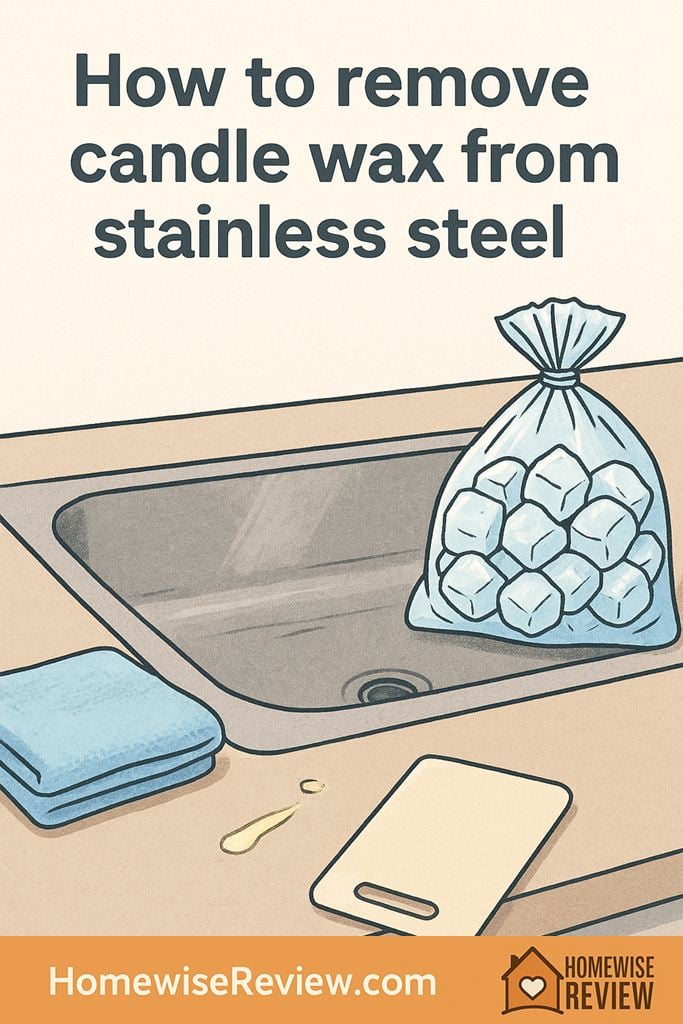
I tried to hurry a drip of candle wax off my stainless sink with hot water and a sponge, and it just turned into a greasy skate mark that caught every fingerprint. Grabbing a plastic card and a little ice felt almost too simple, but the wax popped up cleanly once it hardened. After that, a quick wipe with dish soap and a bit of rubbing alcohol handled the oily residue without leaving scratches.
Stainless steel is tough, but it is also easy to scratch and even easier to streak if you rush. The safest approach is simple: remove the bulk of the wax first, then clean the oily residue, then finish with a light polish.
Below are a few reliable methods you can pick based on whether the wax is a thick blob, a thin film, or dyed and greasy. If you follow the grain and keep your tools non-abrasive, your stainless will look normal again.
Before you start: 3 things to check
1) Is it brushed stainless (has a visible grain)?
Most sinks and many appliances are brushed stainless, which means there is a “direction” to the finish. Any scraping, wiping, or polishing should go with the grain to reduce visible streaks and micro-scratches.
2) Where is the wax?
- Sink or countertop: usually safest to use either freezing or gentle heat.
- Appliance front (fridge, dishwasher): avoid flooding seams with water or cleaner.
- Cooktop area: make sure the surface is fully cool and avoid anything abrasive that can haze the finish.
3) Was it a colored or scented candle?
Colored wax can leave a faint dye stain, and scented candles often leave an oily film. Plan on a second “degrease” step after the wax lifts.
Supplies that work (and what to avoid)
Grab these basics
- Ice cubes in a zip-top bag or an ice pack
- Plastic scraper, old gift card, or silicone spatula
- Microfiber cloths (at least 2)
- Dish soap and warm water
- Rubbing alcohol (isopropyl alcohol) for final residue
- Optional: baking soda (as a gentle paste), stainless steel polish, or a tiny bit of mineral oil
Avoid these common scratch-makers
- Steel wool or abrasive scrub pads
- Metal bench scrapers or razor blades (too risky for most stainless finishes)
- Powder cleansers that feel gritty
- Long heat exposure from a high-heat gun (can discolor and bake on residue)
Choose the right method (quick comparison)
| Wax situation | Best method | Typical time | Scratch risk |
|---|---|---|---|
| Thick blob or drip ridge | Freeze and lift | 20 to 40 minutes | Low (with plastic tool) |
| Thin smear or hazy film | Gentle heat and wipe | 5 to 15 minutes | Low (with microfiber) |
| Sticky, oily residue after wax is gone | Soap then alcohol wipe | 5 to 10 minutes | Very low |
| Colored wax shadow | Alcohol, then mild baking soda paste if needed | 10 to 20 minutes | Low (light pressure only) |
Method 1: Freeze the wax and lift it off (best for thick wax)
Freezing makes wax brittle, so it pops off instead of smearing. This is my go-to method for drips on sinks, counters, and stainless trim.
Steps
- Chill the wax: Hold a bag of ice on the wax for 5 to 10 minutes. For big blobs, repeat once more.
- Test the edge: Press your fingernail gently at the edge. If it feels hard and “clicky,” it is ready.
- Lift with plastic: Use a gift card or plastic scraper at a low angle. Work with the grain and nudge under the wax.
- Pick up crumbs: Use a dry microfiber cloth to gather brittle bits so they do not scratch if you rub later.
- Wash the area: Warm water + a few drops of dish soap, then rinse and dry.
Tips for a cleaner lift
- If the wax is in a seam or corner, use a wooden toothpick or a soft silicone tool instead of digging with anything sharp.
- Do not press hard. Let the brittleness do the work.
- Dry immediately after rinsing to prevent water spots, especially on appliance fronts.
Method 2: Gentle heat and wipe (best for thin smears)
Heat softens wax so you can blot it up. The key is low heat and a blotting motion, so you pick up wax instead of spreading it across the steel.
Steps
- Warm the wax gently: Use a hair dryer on low, held about 6 to 10 inches away. Heat for 10 to 20 seconds.
- Blot, do not rub: Press a folded paper towel or microfiber onto the softened wax to lift it.
- Repeat in short rounds: Warm briefly, blot, and refold to a clean section of towel each time.
- Finish with dish soap: Wash with warm soapy water, rinse, and dry.
If you are dealing with an appliance front
- Keep liquids minimal. Dampen a cloth rather than spraying cleaner directly onto the panel.
- Pay attention to edges, buttons, and handles where moisture can creep in.
Remove the leftover oily film (the step most people skip)
Even when the wax “looks gone,” it often leaves a thin oil layer that attracts fingerprints and dust. This is why stainless can look cloudy after you clean it.
Simple residue remover (safe for most stainless)
- Soap wash: Warm water + dish soap on a microfiber cloth, wiped with the grain.
- Rinse: Wipe again with a clean damp cloth to remove soap.
- Dry: Buff dry with a clean microfiber to prevent streaks.
- Alcohol finish: Lightly dampen a cloth with rubbing alcohol and wipe the area once more, then dry.
For stubborn sticky spots
- Hold a warm, damp cloth on the spot for 30 to 60 seconds, then wipe with a soapy cloth.
- If needed, do a second alcohol wipe. Use light pressure and keep moving with the grain.
How to handle colored wax stains on stainless steel
Stainless does not “absorb” dye like porous surfaces, but pigment can cling to oily residue or settle into micro-texture. Start gentle and step up slowly.
Step-up approach
- Alcohol first: Rub the tinted area lightly with a cloth dampened with rubbing alcohol, then wipe clean.
- Try a mild paste if needed: Mix baking soda with a few drops of water to make a soft paste. Rub very lightly with the grain using a microfiber cloth, then rinse and dry.
- Re-polish lightly: If the area looks a bit dull, buff with a dry microfiber. A tiny drop of mineral oil on a cloth can help even out the sheen.
What not to do (to avoid permanent marks)
- Do not scrape with metal tools unless you are prepared for the risk of scratching.
- Do not scour in circles on brushed stainless. It can create visible swirl marks.
- Do not use harsh oven cleaners or random chemical mixes. You can discolor or strip protective coatings on some appliances.
- Do not leave wax crumbs under a cloth and then “buff.” That is how tiny scratches happen.
Troubleshooting: common after-cleaning issues
The stainless looks streaky
- Cause: soap film or leftover wax oil.
- Fix: wipe with a cloth dampened with rubbing alcohol, then buff dry with a clean microfiber.
The area looks cloudy or dull compared to the rest
- Cause: too much pressure, mild abrasion, or residue left behind.
- Fix: clean with warm soapy water, dry thoroughly, then buff with the grain. If needed, use a tiny amount of stainless polish on a microfiber cloth.
Wax is stuck in a seam, edge, or around a faucet base
- Cause: wax flowed into a tight crevice before hardening.
- Fix: freeze first, then use a wooden toothpick or soft silicone tool to lift it out. Finish with a soapy cloth wrapped around the toothpick for a careful wipe.
It keeps feeling sticky even after soap
- Cause: fragrance oils or dye binders left behind.
- Fix: alcohol wipe, then rinse with a clean damp cloth and dry. Repeat once if needed.
What Most Reviews Miss
The real problem is not the wax. It is the oily film left behind after the visible wax is gone. If you hit it with hot water and scrubbing, a small drip spreads into a greasy smear that shows fingerprints fast, especially on brushed stainless. The fix is simple: harden and lift off the bulk with ice and a plastic card, then wipe with dish soap or rubbing alcohol, following the grain.
Bottom Line
For candle wax on stainless steel, remove the bulk first using freezing for thick drips or gentle heat for thin smears, then clean the oily residue with dish soap and an alcohol wipe. Work with the grain, use plastic tools, and finish by drying and buffing so you do not trade wax for scratches and streaks.
See also
If the wax is on a different surface, start with how to remove candle wax from glass, and for kid-related waxy messes, how to remove crayon wax is a helpful companion.
- How to remove grease for tackling the oily film candles often leave behind
- See our stain-rescue decision tree when you are not sure which method is safest
- Dupray Neat steam cleaner review if you are considering steam for stuck-on residue in crevices
Frequently Asked Questions ▾
Can I use a razor blade to scrape wax off stainless steel?
It is not my first choice because it can scratch quickly, especially on brushed finishes. If you do use one, keep it nearly flat, move with the grain, use almost no pressure, and stop the moment you feel dragging. A plastic scraper is safer for most situations.
Will vinegar remove candle wax from stainless steel?
Vinegar can help with water spots and some smudges, but it does not dissolve wax well. You will get better results by lifting the wax with freezing or gentle heat, then removing residue with dish soap and a small amount of rubbing alcohol.
What if the wax is on a stainless steel pan?
Let the pan cool fully, then freeze the wax and pop off what you can. After that, wash with hot water and dish soap. If there is still a slick film, wipe with rubbing alcohol, then wash again before cooking with it.
How do I keep stainless from looking greasy after I clean wax?
Two steps help the most: an alcohol wipe to remove the last oily layer, and a thorough dry buff with a clean microfiber cloth. If you like a more even sheen, use a tiny amount of mineral oil on a cloth and buff with the grain, then immediately buff again with a dry cloth to avoid a slippery finish.
As an Amazon Associate, we earn from qualifying purchases made through links on our site.