

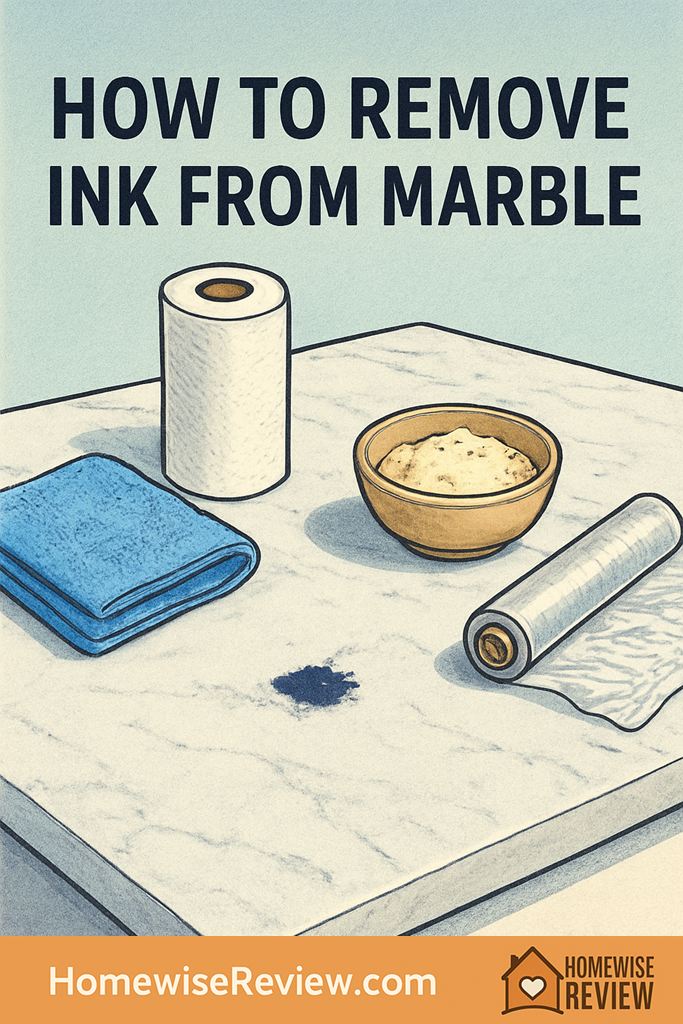
I grabbed a vinegar spray when a pen line showed up on our marble coffee table, and the ink looked lighter but the spot turned dull in the light. That was the moment I learned marble can punish the wrong cleaner faster than it fixes the stain. Now I treat ink like a blot-and-lift job, not a scrub-and-hope situation, and I test anything on an inconspicuous corner before it ever touches the mark.
Ink on marble feels like a worst-case stain because it can wick into the pores in minutes. The good news is most ink stains can be removed or dramatically lightened with the right approach and a little patience. The key is choosing products that lift dye without etching the stone.
Why ink is so stubborn on marble
Marble is a calcium-based stone, which means it is easily damaged by acids and many aggressive cleaners. Ink is typically a dye or pigment carried by solvents, so it can soak into tiny pores and leave color behind even after the surface looks clean.
Stain vs. etch: what you are seeing matters
It helps to know whether you are dealing with a stain (color in the stone) or an etch (a dull spot where the surface was chemically damaged). Ink causes staining, but a wrong cleaner can add etching on top of the stain, making the area look worse.
- Stain: color remains, surface still feels smooth.
- Etch: area looks dull or whitish, often feels slightly different under angled light.
- Both: color plus a dull halo around it.
Before you start: protect the finish and improve your odds
Most marble damage happens in the first five minutes, usually from scrubbing too hard or grabbing the wrong bottle. A careful setup keeps you from spreading the ink or creating a permanent dull spot.
What to do right away
- Blot, do not wipe: Press a clean white paper towel or cloth onto fresh ink to pull upEM, not smear.
- Rinse the area: Wipe lightly with water on a soft cloth to remove what is sitting on the surface.
- Dry completely: Drying helps you judge stain depth and keeps solvents working as intended.
Quick safety rules (worth following)
- Skip acids: No vinegar, lemon juice, or bathroom descalers.
- Avoid abrasive tools: No Magic Eraser-type melamine pads, scouring powders, or rough scrub sponges.
- Do not mix chemicals: Especially anything involving bleach or ammonia.
- Test first: Always test your method in a hidden spot (or the least visible edge of the stain).
Supplies to gather
- Soft microfiber cloths (white or light colored)
- Paper towels
- Plastic wrap
- Painter’s tape
- A plastic spoon or spatula (not metal)
- One solvent option: isopropyl alcohol (70% to 91%) or acetone
- For a poultice: baking soda (for peroxide method) or talc/diatomaceous earth (for acetone method)
- Hydrogen peroxide (3%) for light-colored marble (optional, see notes below)
Pick the right method for your ink and your marble
Ink type and stone color influence which remover is safest and most effective. If you are unsure what kind of ink it is, start with the gentlest option and step up only as needed.
| Situation | Best starting option | Why it works | Watch-outs |
|---|---|---|---|
| Fresh ballpoint ink on sealed marble | Isopropyl alcohol blotting | Dissolves ink oils and dyes on the surface | Do not flood seams; blot in place |
| Older ink stain that has soaked in | Poultice (solvent + absorbent powder) | Draws ink out of pores as it dries | Needs time; may require multiple rounds |
| Light marble with dark ink shadow | Peroxide + baking soda poultice | Peroxide helps break down dyes; poultice lifts | Peroxide can lighten surrounding stone; test first |
| Dark marble where lightening is a concern | Acetone + talc poultice | Solvent lifts ink with less bleaching risk | Acetone is flammable; ventilate and avoid flames |
| Marker or felt-tip on marble | Alcohol first, then poultice if needed | Many markers are alcohol-soluble | Some permanent markers need repeated treatments |
A note on sealers
A good sealer buys you time but does not make marble stain-proof. If ink sank in quickly, your sealer may be worn, or the marble may be naturally more porous. Either way, stain removal still works, but you may need a poultice instead of simple wiping.
Step-by-step: remove ink from marble safely
Work from least aggressive to more intensive. Stop as soon as the stain is gone, and avoid repeated scrubbing that can dull polished marble.
Step 1: Try alcohol blotting for surface ink
This is the best first move for fresh ink and many marker marks. Blotting pulls ink up into the towel instead of pushing it deeper.
- Fold a paper towel into a small pad.
- Dampen it with isopropyl alcohol (do not soak to dripping).
- Press it onto the stain for 10 to 20 seconds, then lift straight up.
- Move to a clean spot on the towel and repeat until you stop seeing ink transfer.
- Wipe with a cloth dampened with water, then dry thoroughly.
- If the stain is lighter but still visible: move to a poultice.
- If nothing changes: the ink is likely deeper or not alcohol-soluble, so skip ahead to the poultice step.
Step 2: Make a poultice (the most reliable option)
A poultice is a paste that holds a solvent against the stain and pulls it out as it dries. It is slower than wiping, but it is often what finally clears ink from marble pores.
Poultice recipe options
- Option A (light marble): baking soda + 3% hydrogen peroxide to a thick peanut-butter paste.
- Option B (dark marble): talc or diatomaceous earth + acetone to a thick paste.
Why two options: peroxide can lighten some dark stones or resin-filled areas, so acetone is the safer default when color shift would be noticeable. Always test on a hidden spot first.
Step 3: Apply and cover the poultice
- Clean the area lightly with water and dry it so you are not sealing in grime.
- Spread the poultice about 1/4 inch thick over the stain.
- Extend the poultice 1 inch beyond the stained area to catch wicking.
- Cover with plastic wrap and tape down the edges with painter’s tape.
- Poke 2 to 4 small holes in the plastic (a toothpick works) so it can dry slowly.
- Let it sit 24 to 48 hours, until fully dry.
Step 4: Remove, rinse, and evaluate
- Peel off the plastic.
- Use a plastic spoon or spatula to lift the dried poultice.
- Rinse with water and wipe with a soft cloth.
- Dry completely and check the stain in good light.
If the stain is improved but still visible, repeat the poultice. Deep ink often needs 2 to 3 rounds, especially on honed marble or older, unsealed stone.
Troubleshooting: what to do if the ink will not come out
When ink lingers, it usually means either the stain is deep, the solvent choice is wrong for that ink, or the marble has an existing etch that is making the spot look darker.
Use this quick checklist before you repeat
- You saw no improvement: switch solvents (alcohol to acetone, or acetone to alcohol) and try again.
- The stain lightened but stopped improving: extend the dwell time to 48 hours and make the poultice slightly thicker.
- The area looks dull now: you are dealing with etching, not just staining. Stop using stronger cleaners and consider marble polishing powder or a pro.
- The stain keeps reappearing after drying: it is wicking from deeper pores. Repeat poultice and cover beyond the visible edge.
When to call a stone pro
- Ink stain is large or in a high-visibility spot (like the center of an island).
- You see widespread etching or a rough feel developing.
- Your marble is antique, highly veined, or you suspect it is not true marble (some stones react differently).
Prevention that actually helps (without babying your counters)
Ink stains are a good reminder that marble does best with quick wipe-ups and a little protection in the spots where life happens. In our house, the simplest fix has been keeping pens and craft markers at the table, not the kitchen counter.
Simple habits that reduce repeat stains
- Use a tray or catchall where mail and pens land.
- Keep a pH-neutral stone cleaner for daily wipe-downs (avoid citrus and vinegar formulas).
- Reseal on a realistic schedule: many marble surfaces need sealing every 6 to 12 months, depending on use and product.
- Wipe spills fast: even water can darken porous marble temporarily, and it helps stains travel.
Worth Knowing Before You Buy
Ink on marble is not just a stain problem. It can soak into the stone, and if you scrub it or use vinegar or other acidic cleaners, you can leave a dull etched patch even after the ink fades. This is why the guide tells you to blot and use a poultice. If the mark looks lighter but the surface looks dull in the light, the ink is not your only problem anymore.
Bottom Line
Start with gentle blotting using isopropyl alcohol, then move to a poultice for any ink that has soaked into the marble. Match the poultice to your marble color, give it a full day to work, and repeat as needed instead of scrubbing harder.
See also
If you are not sure what kind of stain you are dealing with, start with our stain-rescue decision tree for quick steps and, for kid-related marks, compare it with how to remove crayon stains safely.
- How to remove grease: practical steps for kitchens
- Method all-purpose cleaner review (is it marble-safe?)
- Mrs. Meyer’s multi-surface cleaner review and best uses
Frequently Asked Questions ▾
Will vinegar remove ink from marble?
No. Vinegar is acidic and can etch marble, leaving a dull spot that is often more noticeable than the ink stain. Use alcohol or a poultice instead.
Can I use acetone on marble?
In many cases, yes, acetone is commonly used for stain removal on natural stone because it evaporates quickly and helps dissolve ink. Use it with good ventilation, keep it away from flames, and always test first because surrounding fillers or coatings can react.
Is hydrogen peroxide safe for marble?
Hydrogen peroxide (3%) is often used on light-colored marble to help lift organic stains and some inks. It can lighten some dark stones or resin-filled areas, so test in a hidden spot and avoid overusing it.
Why does the ink look gone, then come back later?
That is usually wicking. The surface dries first, then remaining ink deeper in the pores migrates back toward the top. A poultice that extends past the stain edge and dries fully is the best fix.
How many times should I repeat a poultice?
Two to three rounds is common for ink. If you see no improvement after two attempts with the right solvent, or if the surface is starting to look dull, it is time to stop and consult a stone professional.
As an Amazon Associate, we earn from qualifying purchases made through links on our site.