

Repeatable fence, solid power, and a rolling stand for straight rips and fast setup whether in a garage or on site.
We may earn a small referral fee
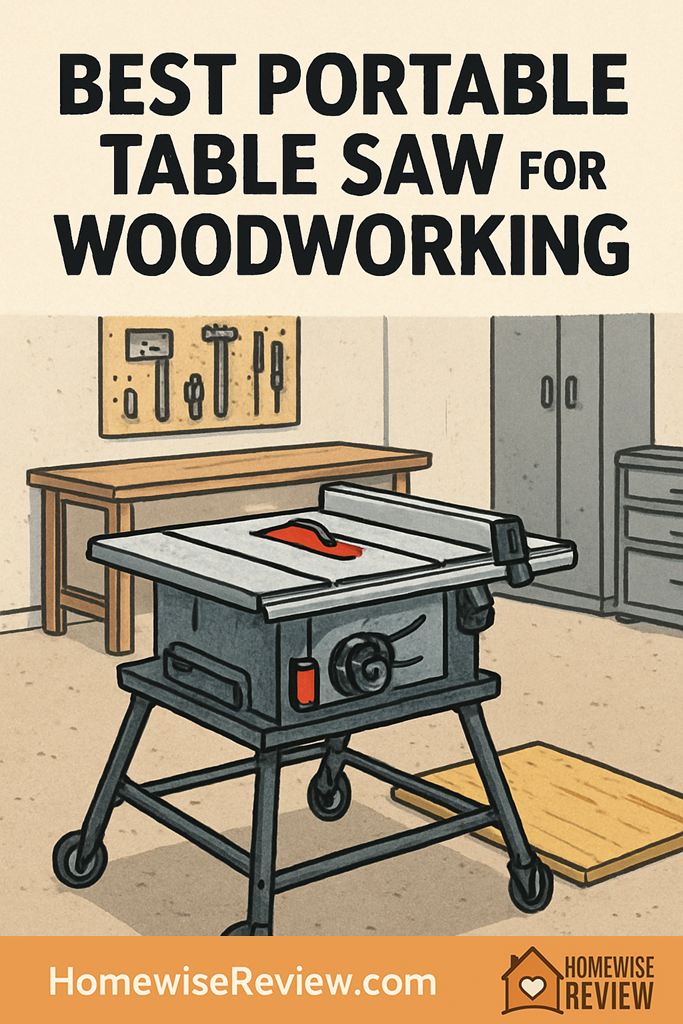
You want clean, repeatable cuts without wrestling a heavy cabinet saw or constantly re-squaring a sloppy fence. The right portable table saw makes plywood, trim, and hardwood projects feel predictable again.
In-depth Reviews
DeWalt DWE7491RS 10-Inch Jobsite Table Saw with Rolling Stand
- Very repeatable fence adjustments for clean, consistent rips
- Solid cutting feel with less fussing during setup
- Rolling stand is genuinely practical for small shops
- Dust collection is only average without a good shop vac
- Noise level is typical for jobsite-class saws
SawStop CTS-120A60 Compact Table Saw
- Industry-leading safety system for real risk reduction
- Fence and controls feel precise and predictable
- Strong overall fit and finish for a portable unit
- Higher ongoing cost if the brake ever activates
- More expensive than most portable saws
Bosch 4100XC-10 Worksite Table Saw with Gravity-Rise Stand
- Stand is fast to deploy and stable under load
- Smooth start-up and steady cutting feel
- Good all-around performance for mixed woodworking
- Fence may need a little more initial tuning for perfect repeatability
- Bulkier footprint when stored than compact options
SKILSAW SPT99-11 10-Inch Worm Drive Table Saw with Stand
- Strong torque feel for demanding rip cuts
- Stays composed when cutting thicker stock
- Stand feels solid and supportive
- Heavier and less convenient to lift into a vehicle
- Louder, more industrial sound profile
Metabo HPT C10RJ 10-Inch Jobsite Table Saw with Fold and Roll Stand
- Generous rip capacity for panel work
- Stable stand for larger stock handling
- Good value for the amount of capability
- Heavier to maneuver compared with compact saws
- Fence feel is good, but not the most refined of the group
Buying Guide
What We Wish We Knew Before Buying a Portable Table Saw
The fence is your woodworking experience. A portable table saw can have plenty of power and still leave you frustrated if the fence does not lock square every time. Before you buy, read reviews specifically for fence drift, locking consistency, and whether the measurement scale stays true after normal transport. After you buy, spend a little time calibrating the fence to the blade and you will get far more reliable results.
Budget for a blade and a proper support plan. Most stock blades are fine for rough work, but a quality combination blade can noticeably improve cut quality and reduce burning. Also plan your infeed and outfeed support, even if it is just a roller stand or a simple outfeed table. Portable saws are compact, but your workpieces are not, and good support is what keeps cuts straight and hands safe.
Dust collection is not optional in a small shop. Portable saws throw a surprising amount of dust, and fine dust settles everywhere. Pair your saw with a shop vac, keep the interior clear so adjustments stay smooth, and make a habit of quick cleanups. Your lungs and your future projects will both benefit.
Worth Knowing Before You Buy
Fence accuracy matters more than motor power on a portable table saw. A saw can feel strong and still be a bad buy if the fence drifts, locks out of square, or needs recalibration every time you move it. For woodworking, that means plywood and hardwood cuts stop being repeatable, and the saw becomes hard to trust.
💡 Editor’s Final Thoughts
Final Verdict: For most woodworkers, the DeWalt DWE7491RS is the best portable table saw because the fence is consistently accurate, the cut feels strong and steady, and the rolling stand makes it genuinely usable in real life. If safety is your top priority, the SawStop CTS is the upgrade that changes how you work day to day.
See also
If your workshop gets stuffy while you’re ripping sheet goods, these portable fans and cooling gadgets can make longer build sessions a lot more comfortable.
- Shampoo options for thinning hair (a helpful detour)
- Eyeshadow picks that flatter green eyes
- Supportive bras for sagging breasts
Frequently Asked Questions ▾
What rip capacity do I actually need for woodworking?
For furniture and cabinet-style projects, bigger is usually better because it determines how easily you can rip plywood and break down panels. If you regularly work with full sheets, look for a saw that can rip at least halfway across a 4×8 sheet when you use a track saw or straightedge to rough-cut first. If you mostly build small projects (boxes, shelves, trim work), a smaller rip capacity can still be perfectly workable and easier to store.
Are portable table saw fences accurate enough for joinery?
They can be, but it depends on the fence design and how well it stays parallel when you lock it. Rack-and-pinion or well-supported T-style fences tend to be more repeatable because they self-align as you adjust. Even with a great fence, plan to verify squareness during setup, and use a good blade plus a dialed-in miter gauge or sled for tight joinery.
Can I run a dado stack on a portable jobsite saw?
Some portable saws support dado stacks, and some do not, so you have to check the arbor length and the manufacturer’s guidance. Even when it’s supported, jobsite saws are best with lighter dado setups and reasonable feed rates. If dado work is a big part of your workflow, prioritize a saw that explicitly supports dado blades and budget for a quality throat plate.
What matters more: motor power or the blade you use?
For most woodworkers, the blade choice makes the biggest immediate difference in cut quality, noise, and effort. A sharp, purpose-built blade (rip, crosscut, or combination) reduces burning and bogging even on a modest saw. Motor strength still matters for thick hardwood and long rips, but a premium blade plus correct alignment often feels like a bigger upgrade than a small jump in motor performance.
How do I keep a portable table saw cutting straight over time?
Start with the basics: keep the top clean and waxed, periodically check the fence for parallel, and confirm the blade is aligned to the miter slot. Vibration and transport can slowly loosen fasteners, so a quick monthly check of fence lock, bevel stops, and blade-to-slot alignment saves a lot of frustration. Good dust management also helps, since packed sawdust can interfere with height and bevel mechanisms.
As an Amazon Associate, we earn from qualifying purchases made through links on our site.