

Secure, non-restrictive harness with a top handle to steady unbalanced seniors and reduce twisting on walks.
We may earn a small referral fee
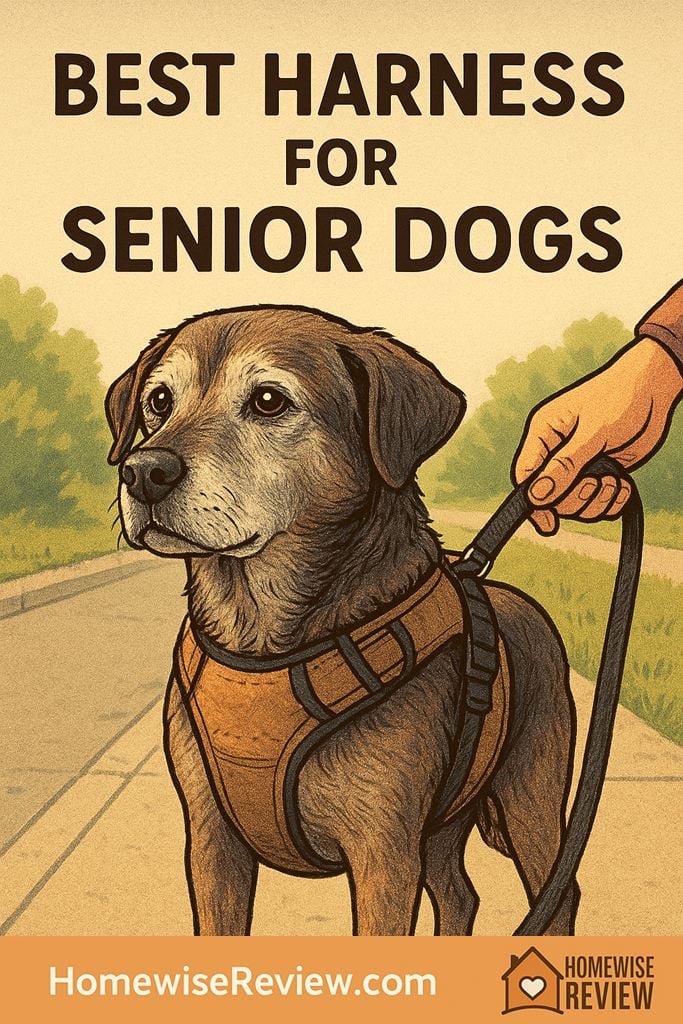
When your dog gets older, a “fine” harness can suddenly cause rubbing, wobbliness, or stressful leash handling. These picks focus on comfort, stability, and easy on and off so walks stay safe and enjoyable.
In-depth Reviews
Ruffwear Web Master Dog Harness
- Very stable on the body, even with uneven gait
- Handle is genuinely useful for quick assist moments
- Secure design helps prevent backing out
- More straps than minimalist harnesses, so fitting takes a few tries
- Overkill for calm, slow neighborhood strolls
Help ‘Em Up Harness (Front + Rear Lift Support)
- Provides true lifting support where seniors need it most
- Makes stairs, car entry, and slippery floors safer
- More comfortable than lifting by collar or under the belly
- More involved to size and put on than a simple walking harness
- Not the lightest option for long, easy walks
Blue-9 Balance Harness
- Highly adjustable for changing senior body shapes
- Can reduce armpit rubbing with careful fitting
- Light, non-bulky feel for sensitive dogs
- No built-in lift handle for quick assists
- Takes a careful initial fitting to get the best results
Kurgo Tru-Fit Enhanced Strength Dog Harness
- Solid, supportive feel for dogs who move slowly or carefully
- Convenient for dogs who frequently ride in the car
- Good all-around control for everyday leash walking
- More structured than ultralight harnesses, which some seniors dislike
- Can feel warm or bulky in hot weather
2 Hounds Design Freedom No Pull Harness
- Helps reduce pulling without neck pressure
- Soft chest strap is kinder to thin skin and bony areas
- Gives you two connection options for better control
- Like most no-pull setups, can twist if fitted loosely
- Not designed for lifting assistance
Buying Guide
Quick Comfort Check: Preventing Pressure Points on Older Dogs
Do a “two-minute coat check” after the first few wears. Senior skin is often thinner and less forgiving. After a short walk, run your hands under each strap and look for flattened fur, warm spots, or redness. If you see irritation, the fix is usually strap placement (especially keeping straps behind the front legs), not simply loosening everything until the harness slides around.
Use the handle like a safety rail, not a suitcase handle. For a walking harness with a top handle, the safest habit is a light upward stabilizing cue when your dog slips or steps up, then release. If you need to lift real weight regularly, switch to a mobility harness designed for that job so you are not pulling on a single point or stressing shoulders.
Make “gear time” predictable. Older dogs often dislike surprises. Put the harness on in the same spot, with the same sequence, and reward calm stillness. If your dog is stiff in the mornings, schedule longer walks later in the day and use the harness for short, easy outings early, so the harness stays associated with comfort instead of a challenging start.
One Thing Worth Knowing
The handle is for quick steadying, not for lifting a dog’s weight. The Ruffwear Web Master works for helping a wobbly senior keep balance on walks, but using it to pull a dog up stairs or into a car puts the load on the shoulders. If your dog has real rear-leg weakness, skip a walk harness with a handle and get a mobility harness like the Help 'Em Up.
💡 Editor’s Final Thoughts
Final verdict: For most senior dogs, the Ruffwear Web Master is the best all-around choice because it stays put, adds stability with a secure frame, and gives you a reliable handle without feeling bulky. If your dog needs real lift help for stairs, cars, or weak hind legs, jump straight to the Help ’Em Up Harness for safer support.
See also
If you want more walk-focused options beyond senior-specific picks, start with Best harnesses for safe, comfortable walks, and pair it with our guide to treats for senior dogs to support gentle training and confidence on outings.
- Harness picks that fit Golden Retrievers comfortably
- Supportive harness options for German Shepherd builds
- Secure, chest-friendly harnesses for Pitbull-type dogs
Frequently Asked Questions ▾
Should a senior dog wear a harness instead of a collar?
For most seniors, yes. A harness spreads leash pressure across the chest and torso instead of concentrating it on the neck, which can matter more as dogs develop stiffness, coughing, or weaker balance. It also gives you better control during slips or curbs without needing to yank upward. If your dog has any history of tracheal irritation, neck pain, or unsteady walking, a harness is usually the safer default.
What type of harness helps most with arthritis or hind-end weakness?
Look for a true support harness that includes a rear (and ideally front) lift option, not just a walking harness with a top handle. A rear lift helps you steady your dog over thresholds, stairs, and slick spots while keeping their spine in a more natural position. For dogs that sometimes need partial carrying, a two-piece system that supports both the front and rear tends to feel more stable and less “twisty” than lifting from one point.
How do I know the harness fits correctly on an older dog?
A good fit keeps straps off the soft armpit area, stays behind the front legs, and does not shift side-to-side when your dog turns. You should be able to slide two fingers under most straps, but the harness should not rotate when you gently guide the leash left and right. On seniors, also watch for hidden trouble spots: under the elbows, along the breastbone, and anywhere your dog is losing muscle or has thinner skin. After the first few walks, check the coat for rub marks and the skin for redness.
Are front-clip (no-pull) harnesses safe for senior dogs?
They can be, as long as the harness stays centered and does not twist your dog’s shoulders. Front-clip designs work by redirecting forward motion, so they are helpful for seniors whose pulling puts them at risk of slipping, coughing, or losing balance. The trade-off is that a poorly fitting front-clip harness can shift and rub, especially on thin-coated or bony dogs. If you choose a front clip, prioritize adjustability and a stable frame, and keep leash handling gentle and steady rather than abrupt.
What’s the easiest way to put a harness on a dog who hates being handled?
Start by choosing a design that matches your dog’s tolerance: step-in styles reduce head handling, while a harness with a wide neck opening can be easier for dogs who dislike paws being lifted. Do short “dress rehearsals” indoors with high-value rewards: touch harness, treat; buckle one clip, treat; take it off, treat. Keep sessions under a minute, and avoid chasing or pinning your dog, which can make handling sensitivity worse. If your senior has pain, talk with your vet, because discomfort is a common reason older dogs suddenly resist gear.
As an Amazon Associate, we earn from qualifying purchases made through links on our site.