

Comfortable all day, holds its shape under a tug-test, resists twisting on walks, and keeps ID tags separate from the leash.
We may earn a small referral fee
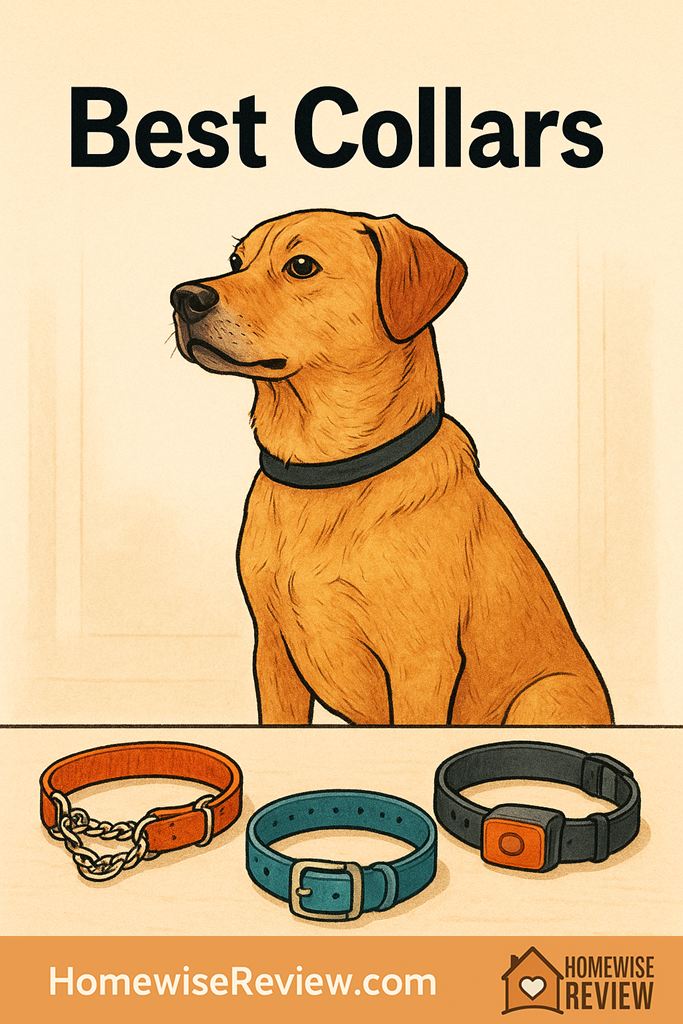
A collar should feel comfortable all day, stay secure on leash, and make ID easy. These top picks help you choose confidently, whether you need waterproof durability, an escape-resistant fit, or GPS tracking.
In-depth Reviews
Ruffwear Front Range Dog Collar
- Comfortable for all-day wear with minimal twisting
- Secure leash connection that feels stable in motion
- Separate ID attachment keeps the main clip point cleaner
- Not the best choice for dogs who consistently back out of flat collars
- Webbing can pick up odor over time without regular washing
LupinePet Original Designs Dog Collar
- Soft webbing that stays comfortable behind the ears
- Easy adjustments that do not feel finicky
- Built for long-term daily use
- Not ideal for dedicated “escape artists” without a martingale design
- Fabric collars can hold onto “wet dog” smell if not washed
2 Hounds Design Martingale Collar
- Helps prevent backing out during spooks or sudden turns
- More controlled feel than a flat collar for slippery fits
- Releases back to a relaxed fit when tension stops
- Not meant for unsupervised wear due to snag risk
- Requires careful fitting for proper limited-slip behavior
Kurgo Muck Collar
- Wipes clean fast after mud, salt, or lake water
- Does not stay waterlogged after swims
- Good for households that want less odor buildup
- Some dogs need a break-in period to get used to the stiffer feel
- Less “cozy” than soft fabric webbing for all-day lounging
Fi Series 3 Smart Dog Collar
- Adds an extra layer of security for dogs who may roam
- App-based location tools are practical during a real escape
- More informative than a standard ID tag alone
- Requires a paid subscription for tracking features
- Bulkier than a standard collar and can feel heavy on small dogs
Buying Guide
Quick Fit and Safety Check (Do This in 60 Seconds)
1) Fit it, then tug-test it. After adjusting the collar, do the two-finger check, then gently pull upward as if your dog backed out. If the collar slides toward the ears and looks like it could slip over the head, you likely need a better fit or a martingale style.
2) Clip your leash to the right ring. Many collars have a separate small ring for ID tags. Keep tags there, but clip your leash to the main D-ring only. This reduces the chance of hardware bending and keeps your leash connection consistent when your dog lunges or changes direction.
3) Know when to remove it. Any collar can snag on a crate wire, furniture edge, or another dog’s mouth during play. If your dog is crated, roughhousing, or unattended in the yard, it is often safer to remove the collar and rely on a microchip plus supervised ID when you are together.
Worth Knowing Before You Buy
Do not clip the leash to the small ID-tag ring. It is only for tags, and leash pressure can bend it and make the connection unreliable when a dog lunges or jerks sideways. This matters most if your dog pulls hard or tries to back out when the leash goes tight.
💡 Editor’s Final Thoughts
Final verdict: If you want one collar that works for most dogs with minimal fuss, the Ruffwear Front Range Dog Collar is the top pick for comfort, secure hardware, and smart everyday details. If your dog has a history of slipping out, step up to the 2 Hounds Design Martingale Collar for added security without harsh training tools.
See also
For breed-specific sizing and strength considerations, start with Best collars for German Shepherds and Best collars for Pitbulls.
- See our harness roundup for dogs who pull or need better body control
- Best harness for Pitbulls for secure, chest-friendly walking
- Best harness for German Shepherds for strong, active dogs and training
Frequently Asked Questions ▾
How tight should a dog collar be?
Use the two-finger check: you should be able to slide two fingers comfortably between the collar and your dog’s neck, without forcing it. If you can fit more than two fingers easily, the collar can rotate and slip over the head, especially on dogs with narrow heads or slick coats. If you cannot fit two fingers, it can rub, mat fur, and create pressure points.
Recheck fit after grooming, seasonal coat changes, weight changes, or switching from indoor to winter walks. For long-haired dogs, part the fur and check against the skin, since fluff can hide a too-tight fit.
Is a collar or a harness better for walking?
For many dogs, a collar is fine for calm leash walking and everyday ID. A harness is often the better choice if your dog pulls, coughs on leash, is small or has a delicate trachea, or is learning leash skills. Harnesses spread force across the chest and shoulders instead of concentrating it on the neck.
Even if you walk with a harness, keep a collar on for ID (or use an ID panel on the harness). If you do clip a leash to a collar, use the main D-ring, not the separate tag ring, and avoid hard corrections that can strain the neck.
What is a martingale collar, and is it safe?
A martingale is a limited-slip collar designed to tighten slightly when tension is applied, helping prevent dogs from backing out. When fitted correctly, it gives you extra security without the extreme tightening of a slip or choke collar. It is especially useful for sighthounds, narrow-headed breeds, and any dog who has learned to reverse out of a flat collar.
Safety depends on fit and supervision. A martingale should tighten only enough to prevent escape, not to keep tightening. Do not leave it on during unsupervised crate time or play with other dogs, since any collar can snag.
What features matter most for strong pullers or big dogs?
Start with hardware and webbing that stay stable under load: a sturdy main D-ring for leash clipping, a buckle that does not flex open, and webbing that does not collapse or curl at the edges. A wider collar can distribute pressure better than a narrow one, which helps reduce rubbing during daily wear.
Also look for good “day to day” details that prevent small failures: a separate attachment point for ID tags (so leash wear does not grind on tag hardware), adjusters that do not creep looser over time, and stitching that stays flat so it does not create hot spots behind the ears.
When should you replace a collar, and how do you clean it?
Replace a collar if the webbing is fraying, the buckle sticks or cracks, the D-ring is bent, or the adjuster no longer holds its position. Also replace if the collar has been involved in a serious tangle or has visible bite damage. For growing dogs, reassess sizing often, since a collar that “used to fit” can become too tight quickly.
For nylon collars, hand wash with mild soap, rinse well, and air dry. For waterproof collars, a quick rinse and wipe usually does the job. After beach trips, rinse hardware thoroughly to reduce corrosion and gritty buildup.
As an Amazon Associate, we earn from qualifying purchases made through links on our site.