

Powerful glass-jar blender that crushes frozen fruit into drinkable smoothies. Just avoid sudden hot-to-cold swings to protect the jar.
We may earn a small referral fee
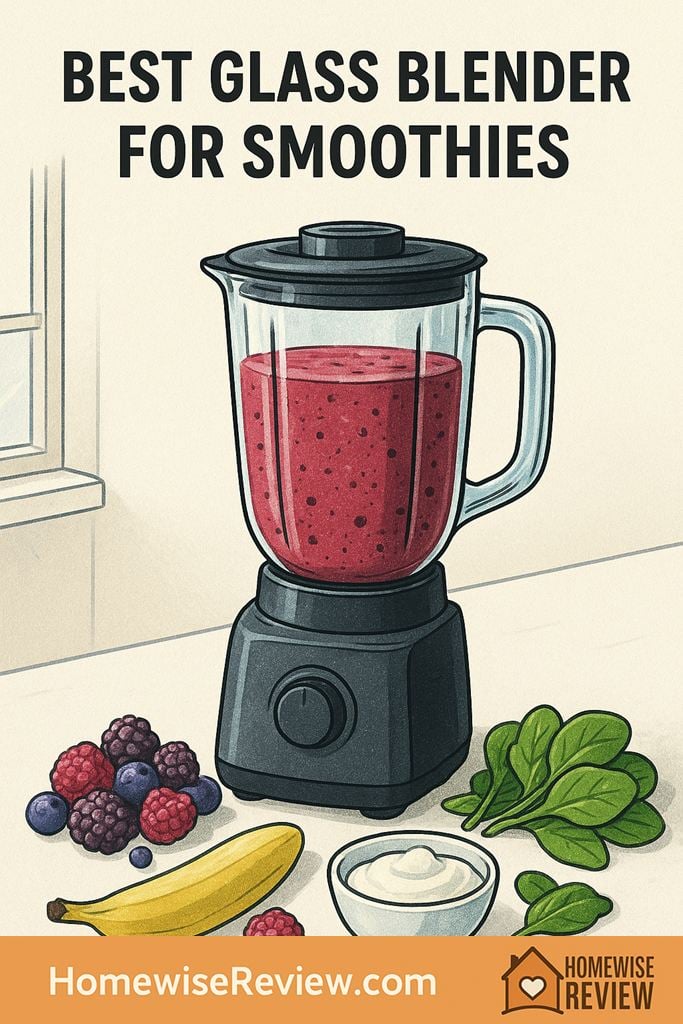
You want a glass jar blender that actually turns frozen fruit into a smooth, drinkable smoothie without leaking, stalling, or leaving chunks. These are the glass-pitcher models worth narrowing your cart to.
In-depth Reviews
Oster Pro 1200 Blender with Glass Jar
- Strong vortex for frozen fruit smoothies
- Glass jar stays clearer and less smelly over time
- Easy, repeatable results with preset cycles
- Noisy at higher speeds
- Glass pitcher is heavy to pour one-handed
Cuisinart SmartPower Duet Blender/Food Processor (BFP Series)
- Doubles as a compact food-prep helper
- Good everyday smoothie texture with common ingredients
- Simple controls that do not require a learning curve
- Not as strong as higher-power smoothie-first blenders
- May need stops and scrapes with thick, low-liquid blends
Black+Decker PowerCrush Multi-Function Blender (Glass Jar Models)
- Handles typical frozen smoothie ingredients well
- Pulse control helps prevent stalling
- Glass pitcher cleans up easily
- Struggles with very thick, spoonable blends
- Texture can be slightly grainy with tough greens
Hamilton Beach Wave Crusher Blender (Glass Jar Models)
- Easy to get consistent results for standard smoothies
- Jar circulates ingredients well with minimal babysitting
- Straightforward controls
- Can stall on thick, low-liquid blends
- Not ideal for daily heavy-duty green smoothies
Oster Classic 8-Speed Blender with 6-Cup Glass Jar
- Simple controls and easy daily operation
- Great for softer-ingredient smoothies and shakes
- Glass jar resists staining
- Not strong enough for frequent thick frozen blends
- May leave small bits with tough skins and greens
Buying Guide
Glass Jar Smoothie Tricks (So You Don’t Crack It or Burn Out the Motor)
Prevent cracks with temperature discipline. Glass is tough, but it hates sudden swings. Let a hot, freshly washed jar cool before adding frozen ingredients. If you are blending something warm (like a protein hot chocolate), warm the jar first with tap water, dump it, then blend. That small habit prevents stress fractures that show up later as mystery cracks.
Use the “liquid first” rule, then build a raft. Pour in your milk or juice, add yogurt or nut butter, then your fresh fruit, and put frozen items on top. This helps the blades grab liquid immediately and start a vortex that pulls frozen chunks down. If the blender sounds high-pitched (blades spinning but nothing moving), stop early and stir once rather than letting the motor strain.
Fix most leaks with one 60-second check. If a blender starts dripping, the culprit is often a twisted gasket, residue on the sealing surface, or a blade base that is not snug. Take it apart, rinse the threads and gasket area, reseat the gasket flat, then tighten until firmly seated (not forced). Keeping the seal clean does more for leak prevention than tightening harder ever will.
Worth Knowing Before You Buy
Most glass-jar blender problems start with how you load it, not the motor. Put frozen ingredients into a hot jar and you can crack it; skip adding liquid first and the blades can just spin in place, stall, and leave chunks behind. If you make smoothies often, this matters as much as the wattage.
💡 Editor’s Final Thoughts
Final verdict: The Oster Pro 1200 is the best glass blender for most smoothie drinkers because it balances real blending power with a stable glass jar at a sensible price. If you want a blender that also tackles quick food-prep jobs, the Cuisinart SmartPower Duet is the most practical step up.
See also
If you are also weighing blended drinks versus pressed juice, start with our guide to the best home juicers for smoothies and juice.
- Kitchen gadgets that actually earn counter space
- Kitchen tools home cooks reach for daily
- Kitchen scales for accurate measuring and meal prep
- Ninja CREAMi ice cream maker review
Frequently Asked Questions ▾
Is a glass blender jar actually better for smoothies?
Glass is great if you hate odor retention and staining, and it usually feels more stable on the counter. The trade-off is weight and break risk: glass is heavier to lift and can crack if you shock it with temperature swings or drop it in the sink. For most adults making daily smoothies, glass is “better” if your priority is taste neutrality and easy-looking cleanliness, and you are willing to treat it a little more carefully.
Can you blend ice and frozen fruit in a glass jar without cracking it?
Yes, but technique matters. Avoid thermal shock: do not go from hot dishwasher heat to ice-cold ingredients immediately, and do not pour boiling liquid into a cold jar. When blending, add liquid first, then soft ingredients, then frozen items on top, and start on low or use pulse to get circulation going before ramping up. If ice rides on top and the blades are “spinning free,” stop and redistribute rather than letting the motor strain.
How much motor power do you need for smooth, non-gritty smoothies?
Power helps most when you blend tough greens, chia or flax, and lots of frozen fruit. That said, power alone does not guarantee smoothness; blade design and how quickly the blender creates a vortex matter just as much. If your smoothies are mostly yogurt, banana, and fresh berries, a midrange motor can be plenty. If you regularly do frozen mango, pineapple, kale, or ice-heavy blends, prioritize a stronger motor and a jar shape that pulls ingredients down into the blades quickly.
What features reduce leaks and messy cleanups on glass-jar blenders?
Look for a base that seats firmly and does not wobble, plus a blade assembly that tightens cleanly without cross-threading. A removable gasket (that you can rinse and occasionally replace) is a good sign, and it helps to have grippy handles so you are not over-tightening the jar out of frustration. Also consider whether the jar and lid edges rinse clean easily; complex lid shapes can hide smoothie residue and lead to lingering smells around the seal.
How do you clean a glass blender so it does not keep old smoothie smells?
Rinse right after blending, then do a quick “self-clean” cycle with warm water and a drop of dish soap. For buildup around the blade base or gasket, disassemble and hand-wash those parts instead of relying on a quick rinse. If smells show up, soak the jar and lid in a baking-soda solution, then rinse thoroughly. Glass itself rarely holds odors, but gaskets and lids can, so those are the parts to focus on.
As an Amazon Associate, we earn from qualifying purchases made through links on our site.