

Delivers quiet, commercial-level blending that powers through ice and frozen fruit without stalling.
We may earn a small referral fee
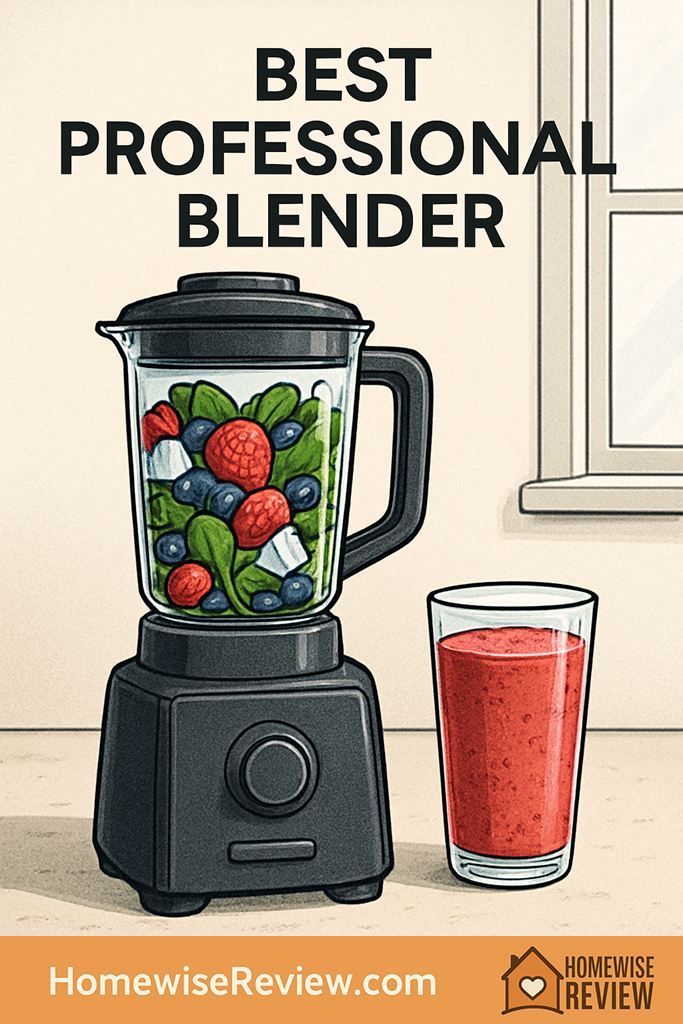
Need bar-smooth results fast and consistently, without burning out a home blender? These professional-grade blenders are built for heavy loads, thick blends, and repeatable performance.
In-depth Reviews
Vitamix The Quiet One
- Noticeably quieter while staying extremely powerful
- Excellent consistency with frozen and fibrous ingredients
- Repeatable results thanks to practical preset cycles
- Takes up more counter height due to the enclosure
- Premium pricing compared with open-top commercial models
Vitamix Vita-Prep 3
- Fast, reliable blending for repeated batches
- Great texture control for purees and emulsified sauces
- Streamlined workflow for prep kitchens
- Noticeably loud in a home setting
- No enclosure for noise reduction
Blendtec Stealth 885
- Very consistent results once cycles are dialed in
- Strong performance with ice-heavy blends
- Enclosure helps keep volume down during busy use
- Cycle-first workflow can feel less hands-on than a variable dial
- Large footprint on the counter
Waring CB15 Heavy-Duty Commercial Blender
- Handles very large batches efficiently
- Simple, no-nonsense controls
- Strong choice for soups and big drink rounds
- Loud and more industrial in day-to-day home use
- Needs adequate liquid for best circulation in thick blends
Hamilton Beach Commercial HBH850 Tempest Blender
- Excellent for ice-dominant frozen beverages
- Quick output for repeated drink rounds
- Easy to operate without a learning curve
- Not as quiet as enclosed competitors
- Less satisfying for ultra-thick spoonable blends without extra liquid
Buying Guide
Pro Workflow Tips: Get Smoother Blends in Less Time
Load order is the fastest “upgrade.” Start with liquids, then soft ingredients, then powders and sticky add-ins (nut butter, dates), and finish with frozen items and ice on top. That stack encourages a vortex and reduces the odds you will get a stubborn air pocket that sounds like the blender is working hard but is not actually moving food.
Use short ramps, not instant full speed. Begin low, let ingredients catch and circulate, then ramp up. This approach is easier on the motor, reduces cavitation in thick blends, and often gets you a smoother texture faster than flooring it immediately.
Clean like a pro to prevent off-flavors. Right after blending, add warm water and a drop of dish soap, then run a quick cycle and rinse. For oily blends (nut butters, dressings), finish with a second rinse so the jar does not hold a film that makes your next smoothie taste “stale,” even if the ingredients are fresh.
What Most Reviews Miss
The real divide is noise versus output, not power. The Quiet One is the best pick if you need a blender that can handle commercial-style work without overwhelming a home kitchen or customer-facing counter, but it is the wrong buy for nonstop prep or larger batches because you will hit its limits sooner than expected. If that is your workload, skip it and go straight to the Vita-Prep 3 or Waring CB15.
💡 Editor’s Final Thoughts
Final Verdict: The Vitamix The Quiet One is the top pick for most people who want truly professional blending at home or in a client-facing space, thanks to its consistently smooth results and dramatically lower noise. If you prioritize maximum batch capacity and nonstop prep work, step up to the Vitamix Vita-Prep 3 or Waring CB15 for a more production-minded workflow.
See also
If your goal is drink prep beyond smoothies, see the best home juicers for green juice and smoothies to round out your setup.
- Best home ice cream makers for pints, families, and parties
- Ninja CREAMi ice cream maker review for frozen dessert prep
- Kitchen tools every home cook actually uses
- Kitchen gadgets that truly earn counter space
Frequently Asked Questions ▾
What makes a blender “professional,” beyond the price?
Professional blenders are designed to run harder and longer without overheating or losing consistency. In practice, that means stronger motors and drivetrains, blades and jars that tolerate repeated ice impacts, better airflow and thermal protection, and controls that make repeatable results easier (timers, presets, or programmable cycles). They also tend to be easier to service, which matters once you are using a blender daily.
Do I really need a sound enclosure?
If you blend early mornings, share a space, or run multiple blends back-to-back, a sound enclosure can be the difference between “annoying” and “fine.” It also helps if you are frequently crushing ice, since that is when blenders spike in volume. If noise is not a concern, you can often save money by choosing a powerful open-top model and getting similar blending results.
Will a professional blender actually make smoothies smoother than a strong home blender?
Usually, yes, especially with fibrous ingredients (kale, celery, ginger), dense frozen fruit, nut butters, and seeds. The difference shows up in fewer “micro bits,” better mouthfeel, and less need to add extra liquid just to keep the blend moving. That said, ingredient order, batch size, and using the right cycle matter as much as raw power.
What jar size should I buy for daily use?
A mid-size jar is the most flexible for most households and many small-batch needs because it handles single servings without forcing you to overfill with liquid. Go larger if you routinely batch smoothies for the week, make soups for a family, or blend party drinks. The key is matching jar volume to your usual fill level, since blenders perform best when ingredients circulate easily instead of riding above the blades.
How do I keep thick blends from stalling or leaving chunks?
Start with liquids and soft ingredients near the blades, then add powders and sticky items (nut butter, dates), and put frozen ingredients on top. Use the low-to-high ramp approach so the vortex forms before you push hard. If your model supports it, a tamper is the cleanest way to keep thick blends moving without watering them down.
As an Amazon Associate, we earn from qualifying purchases made through links on our site.