

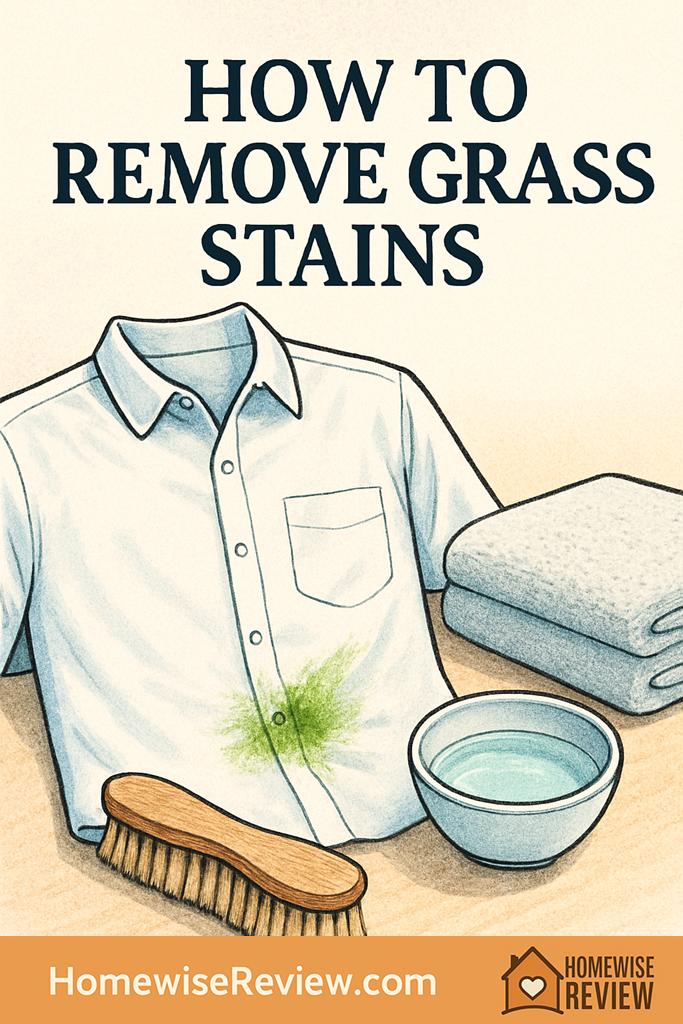
Grass stains can look permanent, especially on light fabrics and carpet. The fix is fast pretreatment, the right cleaner for the material, and avoiding heat until the stain is gone.
Grass stains are some of the most stubborn everyday stains because they are not just “dirt.” They are a mix of plant pigment (chlorophyll), proteins, and soil that can bond to fibers fast. With the right approach, most grass stains come out completely, even after they dry.
What makes grass stains so hard to remove
Grass stains usually contain chlorophyll (green pigment), plant proteins, and fine soil. That combination acts like a dye plus a grime stain, so plain water often lightens it but does not remove it.
Heat makes it worse. Hot water, a hot dryer cycle, or ironing can set the pigments deeper into the fibers, making the stain much harder to lift later.
Start here: a quick triage that prevents permanent staining
Before you do anything, check these three things
- Is it washable? Check the care label. “Dry clean only” and delicate fibers need gentler spot treatment.
- Is the stain fresh or dried? Fresh stains usually lift with enzyme detergent. Dried or “through the dryer” stains often need soaking.
- What color is the item? Whites can tolerate stronger oxidizers. Brights and darks need a more careful approach to avoid fading.
Fast actions that help (and one that hurts)
- Do: Blot or scrape off any clumps of grass or mud before adding liquid cleaners.
- Do: Rinse from the back of the fabric with cool water to push the stain out, not deeper in.
- Do: Pretreat as soon as possible, even if you cannot wash right away.
- Do not: Use hot water or put the item in the dryer until the stain is completely gone.
How to remove grass stains from washable clothes (step by step)
This method works for most cotton, denim, and common blends. It is also the safest place to start before trying stronger spot treatments.
For fresh or lightly set stains
- Rinse: Run cool water through the stain from the back side for 15 to 30 seconds.
- Pretreat: Apply a small amount of liquid laundry detergent (preferably enzyme-based) directly to the stain.
- Work it in: Gently rub the fabric against itself or use a soft toothbrush for 30 to 60 seconds.
- Wait: Let it sit 10 to 15 minutes. Keep it damp so the detergent stays active.
- Wash: Launder on the coolest temperature that still matches the care label, using your regular detergent.
- Check before drying: If you still see green, repeat pretreat and wash. Air dry until it is gone.
For dried stains or stains that did not budge
- Pre-rinse: Rinse with cool water to rehydrate the stain.
- Soak: Soak in cool water with oxygen bleach (color-safe) for 1 to 6 hours, following the product directions.
- Pretreat again: After soaking, apply liquid detergent directly to the remaining stain and gently agitate.
- Wash: Wash as usual. Check before drying and repeat if needed.
If the item already went through the dryer
Dryer heat can lock in chlorophyll like a dye. You can still improve it, but expect multiple rounds.
- Soak with oxygen bleach (color-safe) for several hours.
- Wash, then inspect in bright light.
- Repeat 2 to 3 cycles as needed, and air dry between cycles so you can clearly see progress.
Choose the right pretreatment: quick comparison
If detergent alone is not cutting it, match the method to the material and stain severity.
| Option | Best for | How to use | Avoid on |
|---|---|---|---|
| Enzyme laundry detergent | Most washable fabrics, fresh stains | Pretreat 10 to 15 minutes, then wash | Silk and wool (enzymes can damage protein fibers) |
| Oxygen bleach (color-safe) | Dried stains, whites and colorfast items | Soak 1 to 6 hours, then wash | Silk, wool, leather; anything not colorfast |
| Isopropyl alcohol (70%) | Stubborn green pigment on sturdy fabrics | Dab, blot, rinse, then wash | Acetate, some rayons; test first for dye transfer |
| White vinegar + water | Light stains, odor, quick pre-soak | Soak 15 to 30 minutes, then detergent wash | Some natural stone surfaces (not relevant for laundry), and always test on dyed items |
| Ammonia solution (diluted) | Very stubborn stains on sturdy, colorfast cottons | Spot treat briefly, rinse thoroughly, then wash | Wool, silk, and never mix with bleach |
Fabric and color adjustments that prevent damage
White cottons and socks
- Start with enzyme detergent pretreatment.
- If green remains, use an oxygen bleach soak (follow label directions).
- Skip chlorine bleach for grass unless you have no other option, since it can weaken fibers and sometimes yellow fabrics over time.
Denim and sturdy work clothes
- Pretreat with enzyme detergent and gently scrub.
- If needed, spot dab with isopropyl alcohol, blotting onto a clean towel, then wash.
- Turn inside out for washing to reduce visible fading on the outer surface.
Athletic wear and synthetics (polyester, spandex blends)
- Use cool water and enzyme detergent. Heat can trap odors and set stains.
- Avoid heavy fabric softener. It can create a film that holds onto stains and smells.
- Air dry until the stain is gone. Many synthetics “hide” faint green until they are fully dry.
Wool and silk (or anything labeled delicate)
- Do not use enzyme detergent or oxygen bleach unless the label explicitly allows it.
- Blot with cool water and a small amount of gentle soap, then rinse by blotting again with clean water.
- If the stain remains, consider professional cleaning to avoid fiber damage.
Bright colors and prints
- Test any spot treatment on an inside seam first, especially alcohol or oxygen bleach solutions.
- Use the shortest effective contact time, then rinse well to prevent lightening around the stain.
How to remove grass stains from shoes, hats, and gear
Canvas shoes, fabric sneakers, and baseball caps
- Dry brush: Brush off dried grass and soil first so you do not grind it in.
- Pretreat: Apply a small amount of liquid laundry detergent to the stain and gently scrub with a soft brush.
- Rinse: Use cool water and blot with a towel.
- Clean overall: For shoes, wipe the whole area so you do not leave a “clean spot ring.”
- Dry: Air dry away from direct heat. Stuff shoes or caps with towels to hold shape.
Leather and suede shoes
- Leather: Wipe with a barely damp cloth, then use a small amount of gentle soap on the cloth if needed. Dry immediately, then condition after fully dry if the leather feels stiff.
- Suede: Let mud dry completely, then use a suede brush to lift residue. Avoid soaking suede; moisture can create dark marks.
How to remove grass stains from carpet and rugs
For carpet, the goal is to lift pigment and soil without spreading it or over-wetting the padding. Work slowly and use small amounts of solution.
Step-by-step for most synthetic carpets
- Vacuum or pick up debris: Remove loose grass blades and dry soil first.
- Blot moisture: If the stain is damp, press with a white towel to absorb, do not rub.
- Mix a gentle solution: In a bowl, combine cool water with a few drops of clear dish soap. Optionally add a small splash of white vinegar if the stain is stubborn.
- Apply and blot: Dab solution onto the stain with a towel, then blot with a dry towel. Repeat until you see less transfer.
- Rinse: Blot with plain cool water to remove soap residue (soap left behind attracts soil).
- Dry: Press with dry towels and allow to air dry. A fan helps. Vacuum afterward to lift the pile.
Wool rugs and specialty fibers
- Use less water and less agitation to avoid fuzzing and distortion.
- Stick with a very mild soap solution and blotting.
- If color runs onto your towel, stop and consider professional cleaning to prevent spreading dye.
How to remove grass stains from upholstery
Upholstery can trap stain residue in foam, so minimal moisture and thorough blotting matter. Always check the tag codes if you can find them, since some fabrics should not be cleaned with water.
Step-by-step for water-safe upholstery
- Remove solids: Lift off grass bits with a dull edge or vacuum with an upholstery tool.
- Blot: Press with a white towel to absorb any moisture and loose pigment.
- Spot clean: Dab a small amount of mild dish soap solution onto the stain. Work from the outside in to prevent spreading.
- Rinse carefully: Blot with a towel dampened with plain water, then blot dry.
- Dry fully: Keep air moving until completely dry to avoid water rings.
Common mistakes that set grass stains
- Using hot water early: Heat can lock in green pigment.
- Rubbing aggressively: It frays fibers and drives pigment deeper, especially on carpet and upholstery.
- Skipping the rinse step: Leaving detergent or soap behind can attract more dirt and create a dull spot.
- Drying before inspecting: If the stain is still there, dryer heat makes the next attempt much harder.
- Mixing chemicals: Never mix ammonia with bleach, and avoid stacking multiple strong cleaners without a thorough rinse between them.
When it is time to escalate (or call a pro)
- Delicates and “dry clean only”: If home spot testing causes color transfer, stop.
- Large carpet stains: If the stain spread into padding, a deeper extraction may be needed to prevent lingering odor.
- Repeated failures: If three careful rounds did not improve it, you may be dealing with dye transfer, fiber damage, or a set stain that needs professional chemistry.
Bottom Line
Grass stains come out best when you treat them like a dye and a grime stain: rinse cool, pretreat with an enzyme detergent, and avoid heat until the stain is gone. For dried stains, an oxygen bleach soak is often the difference-maker, while carpets and upholstery do better with gentle blotting and minimal moisture.
See also
If you are not sure which stain method fits your situation, start with our stain-rescue decision tree for quick, low-risk next steps.
- How to get hair dye out of clothes without spreading the color
- Carpet stain removal guide for fast spills and set stains
- How to remove greasy spots from carpet fibers
- How to remove slime from upholstery without damaging fabric
Frequently Asked Questions ▾
Does vinegar remove grass stains?
Vinegar can help loosen residue and reduce odor, but it is usually not strong enough on its own for deep green pigment. Use it as a short pre-soak or as part of a gentle carpet solution, then follow with detergent and a thorough rinse.
What is the best detergent for grass stains?
A liquid detergent with enzymes is usually the best first choice because it targets the protein and organic components in grass. Apply it directly to the stain, gently work it in, and give it 10 to 15 minutes before washing.
Can I use bleach on grass stains?
Oxygen bleach (color-safe) is a smart option for many washable fabrics and is less risky than chlorine bleach. Chlorine bleach can weaken fabric and may discolor some items, so reserve it for white cottons only if the care label allows it and other methods failed.
How do I remove grass stains that went through the dryer?
Plan on repeated treatments. Start with an oxygen bleach soak, then wash and air dry so you can inspect. Repeat the soak and wash cycle until the green fades, and avoid the dryer until it is fully gone.
Why did my carpet stain come back after it dried?
That is often wicking, where leftover stain in the backing or pad rises back to the surface as it dries. Use less liquid next time, blot more thoroughly, and place dry towels with weight on top to pull moisture up while it dries.
As an Amazon Associate, we earn from qualifying purchases made through links on our site.