

Reliable 8-cup processor that chops and shreds evenly for weeknight meals. It works best when ingredients are kept cold to prevent smearing.
We may earn a small referral fee
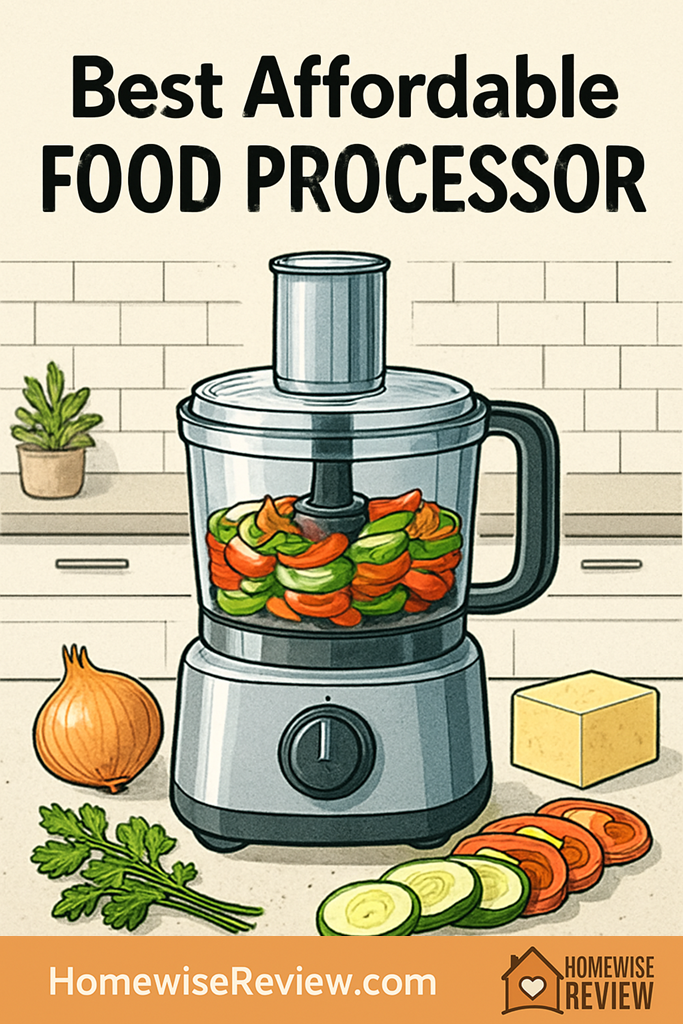
You want a food processor that chops evenly, grates fast, and does not stall on everyday prep, but you do not want to pay premium-appliance prices. These picks focus on performance per dollar, not flashy extras.
✨ 2026 Spotlight
2026 Spotlight: Budget shoppers are paying closer attention to bowl capacity, dishwasher-safe parts, and simple pulse control rather than extra attachments they may never use. Compact options like the KitchenAid 3.5-Cup Food Chopper (KFC3516) and Cuisinart Mini-Prep Plus (DLC-2A) still deserve a look for small kitchens, while full-size value picks such as the Ninja Professional Plus Food Processor (BN601) remain especially appealing for batch prep. One 2026 buying tip stands out: if you regularly shred cheese or make dough, models with wider feed chutes and sturdier lids tend to feel more convenient day to day.
In-depth Reviews
Cuisinart Elemental 8-Cup Food Processor (FP-8SV)
- Consistent chopping with fewer mid-batch scrapes
- Strong slicing and shredding performance for everyday prep
- Good balance of capability and footprint
- Not ideal for tiny batches
- Lid and parts take a little practice to align quickly
Ninja Professional Plus Food Processor (BN601)
- Handles thicker mixtures with less bogging down
- Fast processing for large prep sessions
- Good all-around versatility
- Can be loud compared with lighter-duty models
- Easy to over-process if you hold the controls too long
Hamilton Beach 10-Cup Food Processor (70725A)
- Excellent value for large-batch prep
- Simple controls that are easy to use mid-cooking
- Good shredding for cheese and potatoes
- Chopping can be less uniform if the bowl is crowded
- Feels less refined than pricier options
KitchenAid 3.5-Cup Food Chopper (KFC3516)
- Convenient for small, frequent tasks
- Great for emulsified sauces and dips
- Quick cleanup so it gets used more often
- Not built for shredding/slicing discs
- Can struggle with larger, dry batches like big nut chopping
Cuisinart Mini-Prep Plus (DLC-2A)
- Compact enough to live on the counter or in a small cabinet
- Reliable for aromatics, nuts, and small dips
- Fast to set up and clean for weeknights
- Limited capacity for family-size batches
- Not a substitute for a full-size shredding and slicing setup
Buying Guide
What We Wish We Knew Before Buying: 5 Tricks That Make Any Food Processor Work Better
Use the freezer strategically. For cleaner shredding, chill soft cheese for a few minutes so it does not smear into paste. For pie dough, start with cold butter and a cold bowl if possible, then stop as soon as the dough forms clumps. Most “my processor is weak” complaints are really “my ingredients were too warm.”
Pulse like a pro. Think in bursts, not time. For onions, do a few quick pulses, shake the bowl once, then pulse again. For nuts, stop just before it looks perfect because carryover chopping continues after you release the button.
Prevent the dreaded sauce leak. If you are making dressings, add thicker ingredients (mustard, mayo, yogurt) before thinner ones (vinegar, citrus). That helps emulsify faster and reduces the chance of liquid sloshing up into the lid during early pulses.
💡 Editor’s Final Thoughts
Final Verdict: The Cuisinart Elemental 8-Cup Food Processor (FP-8SV) is the best affordable choice for most kitchens because it delivers the most consistent all-around performance for chopping, slicing, and shredding without feeling fussy. If you want the strongest processing power for thicker mixes, step up to the Ninja Professional Plus (BN601).
Winners podium
If you only skim one section, make it this one. These are the best-value performers across the most common home-cooking tasks: chopping, shredding, slicing, and quick mixing.
- Best Overall: Cuisinart Elemental 8-Cup Food Processor (FP-8SV) for the most balanced mix of consistent results, useful discs, and everyday reliability.
- Best for Power: Ninja Professional Plus Food Processor (BN601) when you want faster processing and strong performance on denser mixes.
- Best Value Workhorse: Hamilton Beach 10-Cup Food Processor (70725A) for big-batch prep and simple, no-fuss controls at a low price.
Need something compact for sauces and dressings, not full-on shredding? Skip down to the mini picks.
What “affordable” should still get you
Price is only a deal if the machine saves time and frustration. In the affordable range, the best processors share a few traits that matter more than fancy presets.
1) Even chopping (not puree on the bottom, chunks on top)
Inconsistent chopping is the number-one complaint with cheaper processors. Look for a bowl and blade design that keeps food circulating. In practice, that means you can pulse onions or nuts without babysitting, scraping, and re-pulsing over and over.
Tip: even great machines chop more evenly when you cut ingredients to similar starter sizes and avoid overfilling.
2) Shredding and slicing that feels stable
If you want a processor for meal prep, the shredding disc and feed tube matter as much as the motor. A wider, sturdier feed tube helps you get cleaner slices and reduces the “wobble” that can cause uneven thickness. For shredding cheese and potatoes, stability and a disc that does not clog quickly will decide whether you actually use the machine.
3) A dough “assist,” not necessarily a stand-mixer replacement
Many affordable processors can handle quick dough tasks like pie crust and shortbread. What’s less realistic is expecting repeated, heavy bread dough batches without the machine walking on the counter or heating up. If dough is a weekly staple, prioritize a stronger, more stable model and keep batch sizes reasonable.
4) Cleaning that does not feel like punishment
You will use a food processor more if cleanup is fast. Dishwasher-safe parts help, but what really matters is whether the bowl locks and lid seals without fiddling, and whether the nooks around the blade hub trap gunk. Also consider storage: if the discs and blade live in a drawer safely, the processor is more likely to stay in rotation.
Quick comparison: which type fits your kitchen?
Use this as a shortcut, then rely on the awards and trade-offs to pick confidently.
| Type | Great for | Typically frustrating for |
|---|---|---|
| 8–10 cup full-size | Shredding a block of cheese, slicing cucumbers, chopping onions for a week | Storing on small counters, tiny batches like one-serving pesto |
| 3–4 cup mini | Dressings, salsa, garlic, nuts, small dips | Shredding and slicing, large batches, dough |
| Power-focused full-size | Thicker mixes, faster processing, less stalling | Quieter operation, smaller footprint |
How we judge value (so “cheap” does not become a regret buy)
Affordable processors earn their spot by doing common jobs well, not by promising everything. We prioritize (1) consistent chopping without constant scraping, (2) shredding and slicing that do not jam easily, (3) usable controls you can operate mid-cooking, and (4) parts and assembly that make you want to pull it out on a Tuesday night.
We also treat “value” as long-term value. A slightly higher-priced model can be the better deal if it produces cleaner results, stays stable on the counter, and avoids the small annoyances that lead people to abandon the appliance in a cabinet.
Common mistakes that make an affordable food processor feel underpowered
- Overfilling the bowl: It prevents circulation, so food rides the walls instead of hitting the blade. Work in batches for cleaner, faster results.
- Holding the pulse too long: Long pulses quickly turn “chopped” into “mushy.” Use short pulses and stop as soon as it looks close, because carryover mixing continues for a second.
- Skipping pre-cuts on hard foods: Big chunks of carrots, cheese, or cold butter force the machine to fight. Smaller starter pieces reduce stalling and improve texture.
- Using the wrong tool: The S-blade is for chopping and mixing; discs are for slicing and shredding. If you try to “chop” cabbage for slaw with only the blade, it will take longer and come out less even.
- Not drying parts fully before storage: Moisture can create odors fast. A quick air-dry routine keeps the bowl and lid from getting that stale smell.
See also
If you are building a short list of appliances you will actually use, start with best kitchen gadgets that actually earn counter space and pair it with our guide to kitchen accessories that upgrade everyday cooking.
- Kitchen tools home cooks reach for every day
- Kitchen scales for accurate baking and meal prep
- Time-saving kitchen gadgets for busy moms
Frequently Asked Questions ▾
Is a mini food processor good enough, or do I need a full-size?
A mini is “enough” if your main goal is sauces, dressings, salsa, nuts, garlic, and small-batch dips. It is faster to rinse and easier to store, so you may use it more often. Choose a full-size if you want shredding and slicing discs for meal prep, if you cook for a family, or if you regularly process bulky foods like cabbage, potatoes, or blocks of cheese.
What bowl size is the sweet spot for most households?
For most people, an 8–10 cup bowl hits the best balance. It is large enough to shred cheese and slice vegetables efficiently, but still manageable to wash and store. If you mostly cook for one or two and do small batches, a mini plus a sharp knife can be the better combo. If you batch-cook weekly, lean toward the bigger end so you are not constantly working in batches.
Can an affordable food processor make dough?
Yes, especially for doughs that benefit from quick mixing, like pie crust and shortbread, where pulsing matters more than heavy kneading. For pizza dough or simple bread dough, many affordable processors can handle an occasional batch if you keep it reasonable and stop as soon as the dough comes together. If you push large, stiff dough batches repeatedly, the processor may bog down, heat up, or walk on the counter.
Why does my chopped food come out watery or smeared?
Watery results usually come from over-processing (too long between checks) or from starting with wet ingredients that need drying. For salsa, pat tomatoes dry and seed if needed. For herbs, spin them dry first. Smeared nut butters and pastes happen when you run continuously instead of pulsing and scraping strategically. Short pulses with pauses keep texture cleaner and help you stop at the right moment.
What features are actually worth paying a little more for?
Pay extra for stability (a base that does not scoot), a lid and bowl that lock without fuss, and discs that slice and shred cleanly without constant jams. A wider feed tube can also be a noticeable upgrade for slicing. Fancy presets usually matter less than straightforward controls and consistent results. If you are torn between two models, choose the one you believe you will use weekly because it is easier to set up, run, and clean.
As an Amazon Associate, we earn from qualifying purchases made through links on our site.