

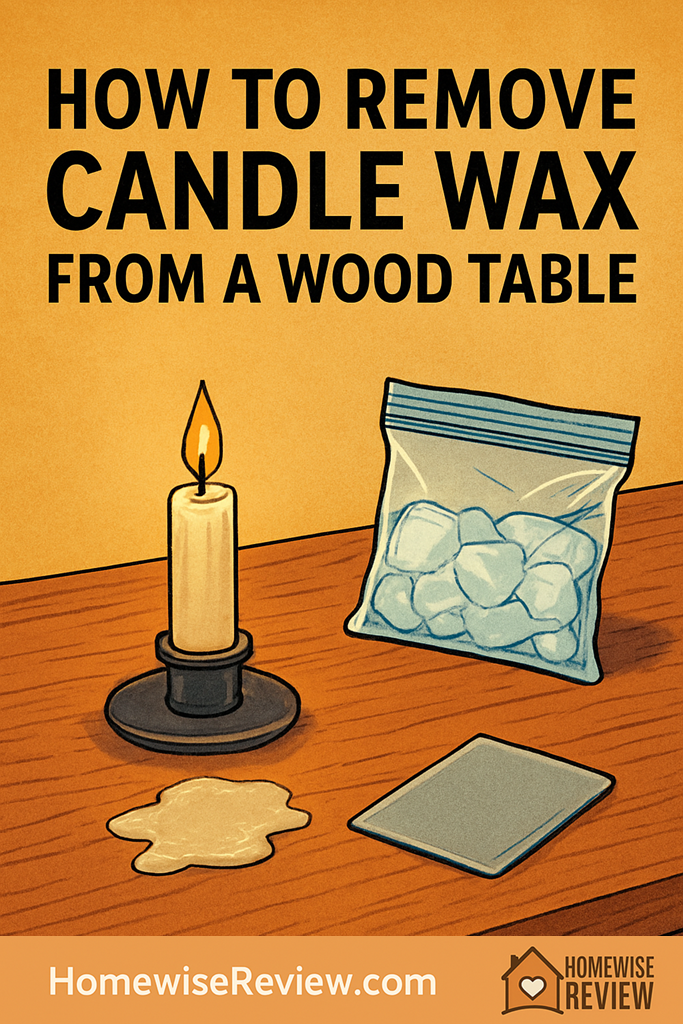
Spilled candle wax on your wood table and now you’re worried about scratches or a cloudy finish. With the right order of steps, you can lift the wax and clear the residue without damaging the surface.
Candle wax is one of those messes that feels permanent, especially on a wood table you actually care about. The good news: wax usually sits on top of the finish, so careful removal is more about patience than elbow grease.
The trick is doing it in the right order: harden the wax, lift it without gouging the wood, then remove the last thin film of wax and oil. Heat and solvents can help, but only when used gently and with the right safeguards.
Before you start: identify what you’re working with
How aggressive you can be depends on two things: the table’s finish and what kind of candle wax spilled (plain, dyed, heavily scented). If you’re unsure, assume the finish is sensitive and start with the gentlest method.
Common wood table finishes (and why they matter)
| Finish type | How it behaves | Safest wax-removal approach | Avoid |
|---|---|---|---|
| Polyurethane or varnish (most modern tables) | Durable, water-resistant, wax usually sits on top | Freeze and lift, then gentle heat with blotting; mild cleaner for residue | Scraping with metal, soaking with solvents, high heat |
| Lacquer (some mid-century pieces) | Can soften or haze with heat/solvents | Freeze and lift; very low heat only if needed; minimal solvent, spot-test | Alcohol, acetone, aggressive solvent rubbing |
| Shellac (older furniture) | Very sensitive to alcohol and heat marks easily | Freeze and lift; use the lowest heat possible; spot-test everything | Alcohol-based cleaners, heavy heat, steam |
| Oil or hardwax oil (matte, “natural” look) | More absorbent; can darken with oils/dyes | Freeze and lift; blot with gentle warmth; treat remaining stain carefully | Flooding with water, harsh degreasers, aggressive scrubbing |
| Unfinished or raw wood | Absorbs wax and dye quickly | Freeze and lift; minimal heat; expect spot-cleaning then sanding/refinishing | More heat (drives wax deeper), soaking the area |
Quick reality check: what kind of wax is it?
- Plain white wax: easiest, usually comes up clean.
- Dyed wax: can leave color behind, especially on lighter wood or porous finishes.
- Heavily scented or oily candles: more likely to leave an oily ring or darkened spot.
Tools and supplies (use what you already have)
You do not need specialty products for most wax spills. Start with household basics and upgrade only if residue remains.
Gather these first
- Ice cubes in a zip-top bag (or a gel ice pack)
- A plastic scraper (old credit card, plastic putty knife)
- Soft, lint-free cloths (microfiber is ideal)
- Paper towels or plain brown paper (for blotting)
Optional, if residue persists
- Hair dryer (low heat) or a clothing iron with steam turned off
- A few drops of dish soap in warm water
- Mineral spirits (for stubborn waxy film on sealed finishes), plus gloves and ventilation
- Furniture polish or the finish’s recommended maintenance oil (only after the wax is fully gone)
Step-by-step: remove hardened candle wax without scratching wood
Your goal is to lift the wax off the surface in chunks, not smear it around. Always start with cold, not heat.
Checklist: the safest removal sequence
- Step 1: Let molten wax cool completely (don’t wipe it while it’s soft).
- Step 2: Freeze the wax for 5 to 10 minutes with an ice pack in a bag.
- Step 3: Gently lift the edge with a plastic card and pop off chunks.
- Step 4: Clear crumbs with a soft cloth (no gritty scrubbing).
- Step 5: Treat the thin leftover film using gentle heat and blotting.
Step 1: cool, then freeze
If wax is still soft, leave it alone. Wiping warm wax spreads it into the wood grain and into tiny finish pores where it’s harder to remove.
Put ice in a zip-top bag and set it on the wax for 5 to 10 minutes. The bag prevents water from sitting on the finish while the cold makes wax brittle.
Step 2: lift with plastic, not metal
Use an old credit card or plastic putty knife at a low angle, almost flat to the table. Nudge under the edge and lift slowly. If it resists, freeze a few minutes longer instead of forcing it.
- Work from the outer edge toward the center to avoid digging in.
- Use short, controlled movements rather than long scrapes.
- Skip knives, razor blades, and metal spatulas (they can cut the finish fast).
How to remove the wax residue (the invisible, slippery part)
After the chunks are gone, you may still feel a slightly draggy or greasy spot. That is a thin wax film, sometimes mixed with candle oils, and it needs a different approach.
Option A (best first): gentle heat + blotting
This method pulls wax up into paper instead of driving it down. Keep heat low and move constantly.
- Lay a folded paper towel or plain brown paper over the residue.
- Hair dryer method: Use low heat, hold it 6 to 10 inches away, and warm the area for 10 to 20 seconds.
- Iron method: Set iron to low (no steam). Tap and lift for 1 to 2 seconds at a time, never leaving it parked.
- As wax transfers, replace the paper with a clean section and repeat.
Stop as soon as the surface feels normal. Overheating is how you get white haze, a softened finish, or a heat ring, especially on lacquer or shellac.
Option B: mild soap wipe for oily candles
If you removed the wax but the spot still feels greasy, you may be dealing with fragrance oils. Use the gentlest cleaner that can cut oil.
- Mix a few drops of dish soap into a bowl of warm water.
- Dampen (do not soak) a microfiber cloth and wipe the spot with the grain.
- Immediately buff dry with a clean cloth.
This is usually safe for polyurethane and varnish finishes. For shellac or unknown finishes, test a tiny spot underneath the table first.
Option C: mineral spirits for stubborn wax film (sealed finishes only)
If you still feel a waxy drag after heat and blotting, mineral spirits can dissolve leftover wax on many sealed finishes. Use it sparingly and only after spot-testing.
- Ventilate the room and keep away from flame.
- Put a small amount on a cloth (never pour directly onto the table).
- Wipe lightly with the grain for 5 to 10 seconds.
- Switch to a clean, dry cloth and buff.
Important: Mineral spirits can affect some finishes and can strip wax-based furniture polishes. If the table is antique, lacquered, shellacked, or valuable, consider stopping here and consulting a furniture pro after spot-testing.
If candle wax left a stain, dull patch, or ring
Wax removal is often straightforward. Fixing what the wax or heat did to the finish is the next layer, and the solution depends on what you see.
Problem: colored wax stain on the finish
If the table is sealed and the color is sitting on top, you can often reduce it with repeated blotting and very light cleaning.
- Repeat the gentle heat + blotting method with fresh paper to lift more dye.
- Follow with a mild soap wipe, then buff dry.
- If you see color coming up on the cloth, keep sessions short and controlled.
If dye has penetrated into raw wood or an oil finish, it may not fully come out without sanding or refinishing. In that case, your best move may be to minimize the spot, then blend the sheen with the finish’s maintenance product.
Problem: a cloudy white haze (heat mark)
White haze often means moisture or heat got trapped in the finish, not that wax remains. First, confirm the wax is fully removed by lightly rubbing the spot with a dry microfiber cloth. If it feels slick or waxy, go back to blotting.
If the surface feels clean but looks cloudy:
- Let it rest for 24 hours. Some haze dissipates as the finish re-hardens.
- Buff gently with a clean microfiber cloth to restore sheen.
- If your table normally uses a specific polish or maintenance oil, apply a tiny amount and buff (only after you are sure wax is gone).
Problem: a dark spot (oil absorption)
A dark mark is more likely with scented candles and more absorbent finishes. Start conservative to avoid spreading it.
- Try the mild soap wipe and dry immediately.
- If the finish is oil-based and you maintain it with a hardwax oil, re-oiling the entire section (like the whole tabletop) can sometimes even out appearance.
If the dark spot is in raw wood, it may require light sanding and refinishing to truly remove. At that point, you’re no longer just cleaning, you’re repairing the surface.
What not to do (common mistakes that make wax worse)
- Don’t scrape with metal. One slip can cut through the finish and expose raw wood.
- Don’t use high heat. High heat can soften lacquer, blush shellac, and create a permanent-looking haze.
- Don’t flood the area with water. Standing water can swell wood and stress the finish at seams.
- Don’t reach for harsh solvents first. Acetone, alcohol, and aggressive cleaners can strip or smear finishes.
- Don’t “polish over” wax. Furniture polish can seal in wax residue and create a smeary, dirt-attracting patch.
Prevention: keep future candle wax off your wood table
If candles are part of your routine, a few small habits prevent repeat cleanups and protect the finish long-term.
- Use a candle plate that extends at least 1 to 2 inches beyond the candle’s edge.
- Trim the wick to about 1/4 inch to reduce soot and uneven melting.
- Keep candles away from vents and open windows (drafts cause dripping).
- For dinner parties, place candles on a washable runner or tray instead of directly on the wood.
Bottom Line
To remove candle wax from a wood table safely, freeze it, lift it with a plastic edge, then use low heat and blotting to pull up the leftover film. Only step up to mild soap or a carefully spot-tested solvent if residue remains.
If you’re dealing with dye, haze, or a dark oil spot, slow down and match the fix to the finish. Most damage happens from rushing with too much heat, too much scraping, or the wrong cleaner.
See also
If the wax left a stain or haze and you’re not sure what to try next, start with our stain-rescue decision tree with quick steps, then choose products from our non-toxic cleaning products guide if you prefer gentler options.
- Dupray Neat steam cleaner review for careful spot work
- Rowenta professional steam station review (for controlled iron-style heat)
- housekeeping shortcuts that are easier on allergies and sensitive skin
Frequently Asked Questions ▾
Can I use an iron to remove candle wax from a wood table?
Yes, but only with caution. Use the lowest setting, turn steam off, and touch the iron to the paper towel for 1 to 2 seconds at a time, then lift and check. Keep the iron moving and stop as soon as the wax transfers to the paper.
Will vinegar remove candle wax from wood?
Vinegar is not a reliable wax remover. Wax is better handled by freezing and lifting, then gentle heat and blotting. Vinegar can also be risky on certain finishes, so it’s not a great first choice.
What if wax got into the wood grain?
If the table is sealed, wax is usually still on the finish, and repeated low-heat blotting can pull it out. If the wood is unfinished or very porous, wax can soak in; you may only be able to reduce it through gentle blotting, then consider light sanding and refinishing for a complete fix.
How do I remove colored candle wax stains from a wood table?
Start by removing all wax residue (freeze, lift, then blot with low heat). If color remains, continue with short blotting sessions using fresh paper, then wipe lightly with a barely damp cloth with a few drops of dish soap and buff dry. If dye penetrated raw wood, full removal may require sanding.
Is steam safe for removing wax from wood furniture?
Steam can add heat and moisture, which can haze or soften sensitive finishes. If you use steam at all, keep it brief, avoid lingering in one spot, and test in an inconspicuous area first. For many tables, low dry heat with blotting is the safer option.
As an Amazon Associate, we earn from qualifying purchases made through links on our site.